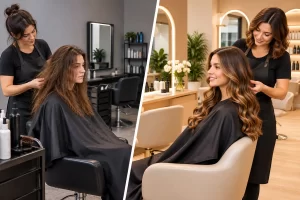

Curtain bangs can make a haircut feel softer, more current, and more personal without committing to a full, straight-across fringe. But the best version is never copied exactly from a photo. A thoughtful guide to curtain bangs starts with your face shape, hair texture, daily routine, and how much styling you genuinely want to do each morning.
These face-framing bangs part near the center and sweep outward, usually becoming longer as they blend into the rest of the haircut. They can be subtle and airy or more defined and dramatic. The difference comes down to placement, length, density, and the way your stylist customizes the cut for you.
Why Curtain Bangs Need a Personalized Cut
Curtain bangs are often described as low maintenance, but that is only partly true. They grow out more gracefully than blunt bangs because the longest pieces blend into the haircut. Still, they need the right shape to sit well between salon visits.
A good curtain bang should work with the way your hair naturally falls. Cowlicks, hairline density, parting habits, and texture all affect whether the fringe separates evenly and frames the face as intended. Cutting the same bangs on fine, straight hair and thick, wavy hair would rarely produce the same result.
The overall haircut matters, too. Curtain bangs usually look most natural when they connect to face-framing layers, whether the rest of the hair is a bob, medium-length cut, or long layered style. If the bangs are cut separately from the rest of the shape, they can look disconnected once styled at home.
A Guide to Curtain Bangs by Face Shape
Face shape is a useful starting point, not a rulebook. The goal is to create balance and draw attention to the features you love, rather than trying to force your face into a particular category.
Round and square face shapes
For rounder or squarer face shapes, longer curtain bangs often create a flattering vertical line. Starting the shortest point around the cheekbones or slightly below can help elongate the appearance of the face. Soft, tapered ends are usually more forgiving than a heavy, short fringe.
A stylist may also keep the center opening a little wider so the bangs do not add unnecessary width across the forehead. The right balance still depends on your hairline and personal style. A bold, fuller curtain bang can look beautiful when it is cut with intention.
Oval and heart-shaped faces
Oval face shapes have flexibility with bang length and fullness. A shorter center section can highlight the eyes and brows, while longer pieces can create a relaxed, blended effect.
For heart-shaped faces, curtain bangs can soften a broader forehead and bring attention toward the cheekbones. A slightly fuller fringe that opens gradually at the center often works well. Avoiding overly wispy ends may help the bangs retain enough presence to frame the face.
Long or rectangular face shapes
If you want to reduce the appearance of length, curtain bangs can be especially effective. A fuller fringe with more width through the cheekbones may create balance. Depending on your features, your stylist may recommend a shorter starting point rather than very long, narrow pieces that further lengthen the face.
Bring inspiration photos, but focus on the qualities you like: softer cheekbones, more volume at the crown, a visible brow line, or an easy grow-out. This gives your stylist better information than asking for an exact copy of someone else’s bangs.
Hair Texture Changes the Result
Your hair texture determines how curtain bangs behave after you leave the salon. Straight hair often shows every detail of the cut, so precision and subtle texturizing matter. Fine hair may benefit from a lighter fringe that does not remove too much density from the rest of the hair.
Thick hair can create beautiful, full curtain bangs, but it may need internal weight removal to prevent the fringe from feeling bulky. The right amount of softness helps the hair bend away from the face rather than forming a heavy wall across the forehead.
Wavy and curly hair can wear curtain bangs well, but the cut should respect shrinkage and natural movement. If you usually wear your texture natural, your stylist should assess how the fringe dries and springs up. A bang that looks perfect when wet can become much shorter than expected once it is dry.
If you alternate between smooth blowouts and natural texture, say so during your consultation. You may need a length that works across both styling routines, which can mean choosing a slightly longer, more versatile cut.
What to Ask for During Your Consultation
The consultation is where a trend becomes a haircut that fits your life. Be honest about how often you heat-style, whether you wear glasses, how frequently you pull your hair back, and how you typically part it. Those small details affect the best length and shape.
Ask your stylist where the shortest piece should fall, how the fringe will connect to your layers, and what maintenance schedule they recommend. It is also helpful to ask whether your hairline has a cowlick that will influence the part. A trained stylist can explain what is realistic before the cut begins, rather than after the first shampoo.
At Visions Hair Studio, a personalized consultation can help you decide whether a soft, long curtain bang or a more defined face-framing fringe suits your hair goals. The best appointment includes clear communication about your daily routine, not just the look you want on day one.
How to Style Curtain Bangs at Home
Curtain bangs rarely need a complicated routine, but they do respond best to a few minutes of intentional styling. After washing, dry the bang area first. If it air-dries before you style it, it may settle into an unwanted part or emphasize a cowlick.
Use a small round brush or a medium round brush, depending on the length and density of your fringe. Blow-dry the bangs forward first, then direct each side away from the face. This simple step creates the soft opening that gives curtain bangs their signature shape.
For a less polished finish, use a flat brush and your dryer to guide the fringe side to side before separating it at the center. This can reduce awkward bends and add natural movement. Finish with a light styling cream, flexible hairspray, or dry texture product if needed. Heavy oils and thick creams can make bangs look separated or greasy quickly.
If your bangs lose their shape between washes, lightly mist them with water and restyle only the fringe. A full wash is not always necessary. Many people find that a quick refresh takes less than five minutes once they learn the direction their hair wants to move.
Maintenance: The Part That Makes Them Feel Easy
Plan on bang trims more often than full haircuts. For many guests, a trim every three to six weeks keeps the fringe from dropping into the eyes or losing its face-framing shape. The exact timing depends on how fast your hair grows and whether you prefer your bangs shorter or longer.
Curtain bangs can be a good choice if you like flexibility, but they still require some attention. They may need washing more often than the rest of your hair because they sit against the forehead, especially in Florida’s humidity. Keeping styling products light and protecting the hair from excess heat can help them stay fresh and touchable.
When Curtain Bangs May Not Be the Best Choice
If you strongly dislike any daily styling, a full curtain bang may feel like more effort than expected. A longer face-framing layer can offer a similar effect with less upkeep. Likewise, if you frequently wear your hair tightly pulled back for work or exercise, shorter pieces may fall loose around the face.
That does not mean you have to skip the look entirely. Longer, cheekbone-skimming curtain bangs are often the better compromise for active schedules, humid weather, or anyone trying bangs for the first time. They offer movement and softness while remaining easier to tuck behind the ears.
Curtain bangs should make your haircut feel like it belongs to you, not like a style you have to fight every morning. Choose a shape that suits your texture, ask for styling guidance before you leave the salon, and give yourself room to adjust the length as you learn what feels best.