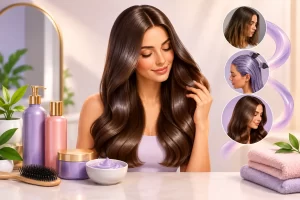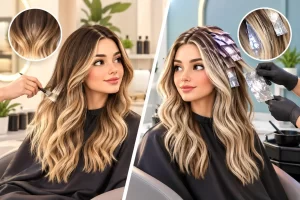
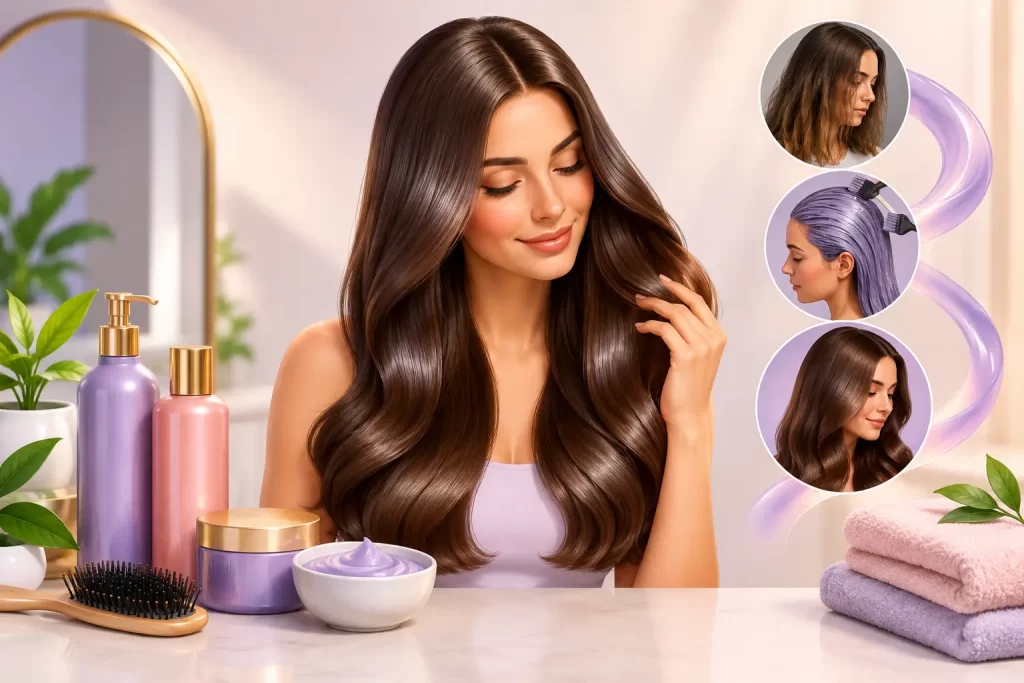
Fresh color can look beautiful on day one, then slowly lose its brightness as shampooing, heat styling, sun exposure, and mineral buildup take their toll. This hair gloss guide explains why a professional gloss is one of the most useful services for restoring a polished finish without committing to a major color change.
A gloss appointment can add noticeable shine, refine unwanted warmth or dullness, and make hair feel more conditioned. It is also highly customizable. The right formula depends on your existing color, your hair’s porosity, the tones you want to enhance or soften, and how often you are comfortable maintaining the result.
What Is a Hair Gloss?
Hair gloss is a professional, demi-permanent color service designed to enhance the look and feel of the hair. It can be clear for shine alone or tinted to adjust tone. A gloss does not typically create a dramatic lightening effect, but it can make color look richer, more balanced, and more reflective.
For blondes, a gloss may soften yellow or brassy tones and restore a cooler, creamier, or more neutral finish. For brunettes, it can deepen dimension, reduce unwanted red or orange tones, or add a warmer, more luminous look. On red hair, it can revive vibrancy that tends to fade more quickly between appointments. Clear glosses are a good choice for natural or color-treated hair that simply needs added shine and a smoother appearance.
You may hear the words “gloss,” “glaze,” and “toner” used in similar ways. Their exact meaning can vary by salon and product line. In practical terms, they all refer to services that refine tone and improve the finish of the hair. During a consultation, your stylist can explain which formula and application approach best supports your goal.
Why a Professional Hair Gloss Can Make a Difference
At-home shine products can temporarily coat the hair, but a salon gloss is selected and applied with your individual color history in mind. That matters, especially when hair has highlights, gray blending, previous color, or uneven porosity. Hair does not always absorb tone evenly, and a formula that looks right in a box can produce unexpected results on compromised or heavily processed sections.
A stylist assesses the underlying warmth in your hair before choosing tones. For example, someone with highlighted blonde hair may want brightness without an overly gray or violet cast. Someone with medium brown hair may want to neutralize brassiness while keeping the color warm enough to look natural. These distinctions are subtle, but they are what separate a color refresh from a flat or over-toned result.
A gloss can also help hair look healthier because its conditioning ingredients and smoothing effect improve light reflection. It does not repair severe damage or replace a treatment plan, but it can make the hair appear more polished while supporting a softer feel.
When to Book a Gloss Appointment
A gloss is often a smart choice when your color still looks generally right but has lost its fresh-from-the-salon finish. Many guests schedule one between highlight, balayage, or all-over color appointments to extend the look they love. Depending on your hair, shampoo routine, heat styling habits, and the formula used, results often last about four to six weeks.
Consider a gloss if your blonde is becoming yellow or dull, your brunette color is pulling warm, your red has faded, or your gray blend has lost its softness. It is also useful before a wedding, vacation, photos, holiday event, or any occasion when you want hair to look especially reflective and well maintained.
Timing depends on your larger color plan. If you are planning significant highlights or a major correction soon, your stylist may recommend waiting and completing the gloss as part of that service. If your goal is to maintain shine and tone without changing your overall color placement, a standalone gloss may be exactly what you need.
A Gloss Is Not the Same as a Major Color Change
A hair gloss has limits, and realistic expectations lead to better results. It will not lift dark hair several shades lighter, remove old permanent color, or fully correct banding from previous color services. It may soften the appearance of gray hair, but it is not generally a substitute for permanent gray coverage when that is your goal.
If your hair has strong orange bands, uneven spots, breakage, or a color result you are unhappy with, book a consultation rather than choosing a quick tonal service on your own. Corrective color may require a more detailed plan, multiple appointments, or a period of conditioning care before additional processing. A trusted stylist will be clear about what can be accomplished safely in one visit.
What Happens During a Salon Gloss Service
Your appointment should begin with a conversation about what you see in your current color and what you would like to change. Bring up details that may seem small, such as whether your blonde looks too gold in outdoor light, your brown looks reddish near the ends, or your color seems dull only after a few washes. These observations help guide the formula.
Your stylist will consider your natural level, previous color services, current condition, and the way different areas of your hair are fading. A gloss may be applied at the shampoo bowl or throughout the hair, depending on the service and desired result. It processes for a controlled amount of time, then is rinsed and finished with products selected for your hair type.
The result should look refined rather than obvious. A well-chosen gloss enhances what is already there. Your hair may look brighter, smoother, and more dimensional, but it should still feel like you.
How to Make Your Gloss Last Longer
The way you care for your hair after an appointment influences how long your tone stays fresh. Wash with a color-safe shampoo and conditioner, and avoid cleansing more often than your scalp and lifestyle require. Very hot water can contribute to faster fading, so lukewarm water is a better choice when possible.
Heat protectant is essential if you blow-dry, curl, or straighten regularly. High heat affects both the condition of the hair and the longevity of your color. If you spend time outdoors in South Florida, protect your hair from prolonged sun exposure with a hat or a UV-focused hair product when appropriate.
Pool water is another consideration. Chlorine and minerals can alter the look of lightened hair, especially blonde shades. Wetting your hair with clean water before swimming, using a protective leave-in conditioner, and rinsing promptly afterward can help reduce exposure. If your hair starts to feel coated, dry, or discolored, ask your stylist whether a clarifying or mineral-removal treatment is suitable before your next gloss.
Purple, blue, or color-depositing shampoos can be helpful for some guests, but they are not one-size-fits-all. Overusing them may leave light hair looking muted, uneven, or overly cool. Ask your stylist how often to use one, if at all, based on your specific tone.
Is Hair Gloss Right for Your Hair Type?
Most hair types can benefit from a gloss, including fine, thick, curly, straight, natural, and color-treated hair. The formulation and service timing should be tailored to the hair rather than based on a trend or a standard schedule.
Fine hair may benefit from a clear or subtle tinted gloss that boosts reflection without making the hair feel weighed down. Thick or textured hair may need extra attention to ensure even saturation. Highly porous hair can absorb color quickly, so a stylist may adjust the formula or processing time to prevent the ends from becoming too dark or cool.
If your hair is very dry, fragile, or recently chemically treated, disclose that during your consultation. A gloss is often gentle, but the healthiest choice may be to pair it with conditioning care, delay additional color, or create a gradual plan that protects the integrity of your hair.
Questions to Ask at Your Consultation
A productive consultation does not require knowing salon terminology. Start by explaining what you like about your current hair and what you want to see less of. You can ask whether a clear or tinted gloss makes more sense, how long your expected result should last, and whether the service will affect your next highlight or color appointment.
It also helps to ask about maintenance. Your stylist can recommend the right shampoo routine, heat protection, and ideal timing for your next visit. If you have inspiration photos, use them to show the finish you like, whether that is icy, buttery, rich, coppery, neutral, or high-shine. Photos are a starting point, not a promise, because your existing hair color and condition will always shape the final result.
At Visions Hair Studio, a personalized consultation helps ensure your gloss supports your color goals, your routine, and the health of your hair. A small tonal adjustment can make a meaningful difference when it is chosen with care. If your color no longer reflects the way you want to feel, a gloss appointment may be the simple refresh that brings back your confidence.