Fine hair can look polished and soft one day, then flat and shapeless the next. That is why choosing the best haircuts for fine hair is less about chasing trends and more about creating structure in the right places. A strong cut can make hair look fuller, hold its shape longer, and simplify your daily styling routine.
At the salon, this is one of the most common consultation topics for a reason. Fine hair responds quickly to the wrong kind of layering, over-texturizing, or a length that pulls everything down. The right haircut works with your density, growth pattern, face shape, and how much styling you actually want to do at home.
What makes a haircut work for fine hair
Fine hair refers to the diameter of each strand, not necessarily how much hair you have. You can have a lot of fine hair, or fine hair with lower density. That distinction matters because the best result is rarely about following one universal rule.
In most cases, fine hair looks best when the perimeter stays strong. Clean lines create the appearance of thickness, while too many broken-up ends can make the hair look wispy. Some layering can absolutely help, but it needs to be placed with intention. The goal is movement and lift without sacrificing fullness.
Your daily habits matter too. If you air dry, need a quick routine, or wear your hair up often, the best cut for you may be different from someone who heat styles every morning. A good stylist should weigh all of that before recommending length or shape.
Best haircuts for fine hair that actually add shape
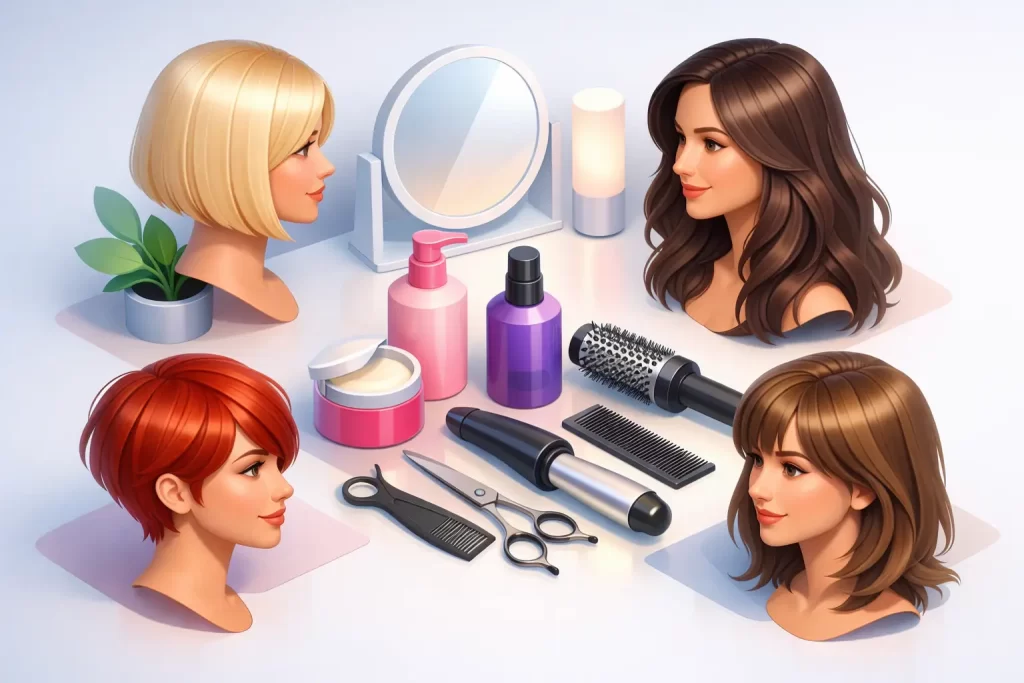
Blunt bob
A blunt bob is one of the most reliable choices for fine hair. Because the ends are cut clean and even, the hair immediately looks denser. This shape can sit at the jawline, just below the chin, or graze the shoulders depending on your features and styling preference.
This cut works especially well if your hair tends to fall flat by midday. It gives the eye a clear, full outline. The trade-off is that a bob usually needs regular maintenance to keep that crisp shape, so it is ideal for clients who like consistent trims.
Lob with a strong baseline
If you want some length without losing fullness, a lob can be the sweet spot. The key is keeping the bottom line solid rather than thinning out the ends. A collarbone-length cut often gives enough movement while still looking substantial.
This is a practical option for anyone who wants versatility. You can wear it smooth, softly waved, or pulled back. For many adults balancing work, family, and events, it offers a polished look without feeling too short.
Soft textured bob
Not every bob has to be sharp and blunt. A softly textured bob can work beautifully on fine hair when the texture is subtle and controlled. This approach adds movement without removing too much weight.
It is a better fit for clients who want a lived-in finish rather than a sleek one. The difference between flattering texture and thinning the hair out comes down to technique, which is why precision matters here.
Pixie with a fuller crown
A pixie can make fine hair look surprisingly full when the shape is customized properly. Keeping more volume at the crown and avoiding overly shredded ends helps the style look modern and soft rather than sparse.
This cut is often a strong choice for clients who want less styling time and a confident, clean shape. It does require regular reshaping, but many people find the daily ease worth it.
Bixie cut
The bixie, a blend of a bob and pixie, offers softness and lift in one shape. For fine hair, it can create natural body around the crown while keeping some length through the sides and nape.
This is a good middle ground if you are curious about going shorter but do not want a very cropped result. It can feel fresh and current without being hard to wear.
Long layers for fine hair
Long hair is possible with fine strands, but the cut has to protect fullness. Long layers should be minimal, soft, and focused around the face or mid-lengths rather than carved all the way through.
When clients ask for movement in long fine hair, this is often where restraint gives the best result. Too many layers can make the bottom look thin. A few well-placed layers can keep the hair from feeling heavy while preserving body.
One-length cut
A one-length haircut is often overlooked, but it can be one of the smartest options for fine hair. With no layers to break up the shape, the hair looks thicker from root to end.
This works especially well on straight or slightly wavy textures. If you prefer a simple, healthy-looking finish and want your hair to appear denser, a one-length cut deserves serious consideration.
Curtain bangs with shoulder-length hair
Curtain bangs can add softness and shape without committing to a full fringe. Paired with shoulder-length hair, they can make fine hair feel styled even on lower-effort days.
The important part is keeping the fringe airy but not too thin. If there is not enough density in the bang area, it can separate too much. Done well, though, curtain bangs can frame the face and add interest without costing overall fullness.
Side-swept bangs with a bob or lob
Side-swept bangs are flattering, easy to grow out, and often kinder to fine hair than a heavy straight fringe. They create movement at the front and can help the haircut feel more dynamic.
This option is especially helpful if you want to soften features or add shape around the face without a dramatic change. It also tends to blend well into bobs and lobs.
Chin-length French bob
A chin-length French bob gives fine hair a refined, fuller look because it keeps the shape compact and intentional. It often pairs well with a slight bend or natural texture, which helps create the appearance of body.
This style has personality, but it is still wearable for everyday life. If you like elegant cuts that feel current without trying too hard, this is a strong contender.
Shag-inspired cut for fine hair
A shag can work on fine hair, but only with moderation. The modern version for finer textures usually has softer layers, less aggressive texturizing, and more support through the ends.
This is one of those cuts where it depends heavily on your natural texture. If you have some wave and enjoy styling with texture spray or a diffuser, it can look effortless. If your hair is very straight and flat, it may need more styling than you want.
Shoulder-length cut with internal layering
Internal layering removes bulk from within the haircut without making the perimeter look thin. On fine hair, this technique has to be very controlled, but when done well, it can create movement and help the hair sit better.
For clients who want shape without obvious layers, this can be an excellent custom approach. It is especially useful when the hair has enough density to support it but still needs a little lift.
How to choose the best haircuts for fine hair for your routine
The best haircut is not just the one that looks good in photos. It is the one that works on your actual hair, on your actual mornings. If you do not want to round brush and style every day, a cut that depends on constant volume at the crown may frustrate you.
Face shape matters, but not in a rigid way. A skilled stylist will consider your cheekbones, jawline, forehead, and profile, then adjust the haircut rather than forcing you into a rule. Hairline, cowlicks, and where your hair naturally parts can affect the final result just as much.
This is why consultation matters so much with fine hair. Small decisions make a visible difference. The length of your bang, whether the ends are point-cut or blunt, and how much weight is left around the perimeter all influence whether the hair looks fuller or thinner.
A few styling realities worth knowing
Even the best cut benefits from the right styling habits. Fine hair usually responds better to lightweight volumizing products than rich creams or heavy oils. Too much product can collapse the shape you are trying to create.
Blow-drying with lift at the root can make a major difference, but a good cut should still fall into place with minimal effort. If it only looks right after twenty minutes of styling, the shape may need adjustment. In a consultation-led salon setting, that practical side should always be part of the conversation.
For clients in Wellington dealing with humidity, the finish matters too. A haircut that looks beautiful in controlled conditions but expands or separates quickly outdoors may need a different approach. Often, keeping the shape a bit more polished and the ends stronger helps the style hold up better.
A flattering haircut for fine hair should never feel like a workaround. It should feel like your hair finally makes sense – fuller, easier to style, and more like you. If you are unsure which direction to take, start with a professional consultation and bring honest details about how you wear your hair day to day. That is usually where the best results begin.