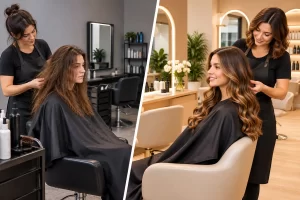
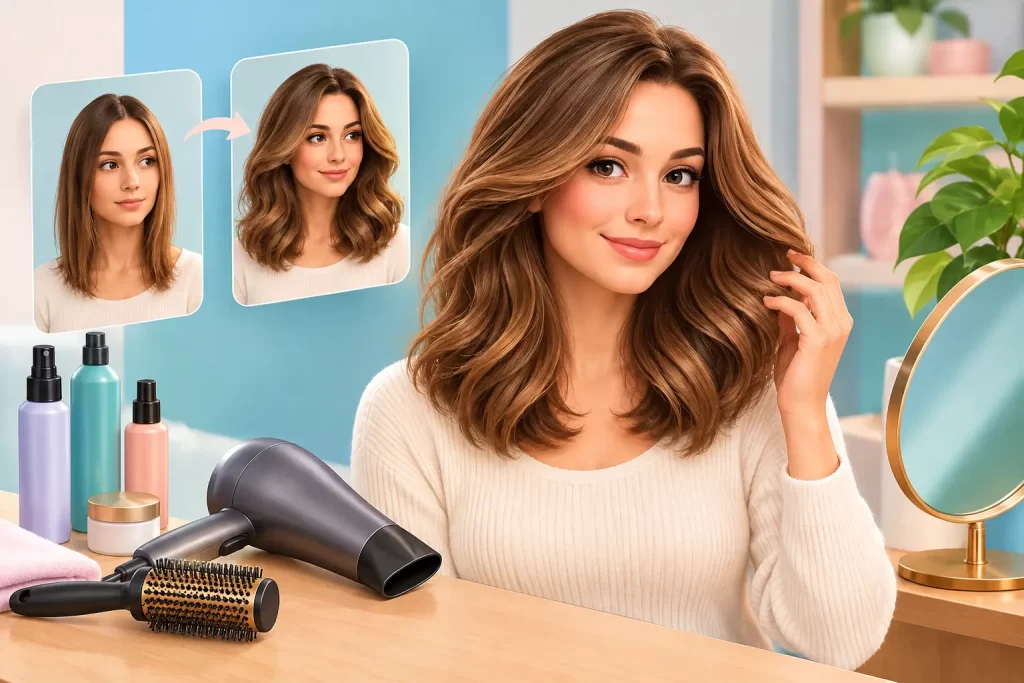
Fine hair can look polished, soft, and beautifully full, but it often needs a more intentional approach than thicker textures. If you are wondering how to style fine hair without weighing it down or spending an hour chasing volume that falls flat by lunch, the answer begins with the cut, the products, and the way you dry it.
Fine hair refers to the diameter of each strand, not necessarily the amount of hair you have. You may have a full head of fine hair, or fine hair that is also less dense. That distinction matters because the styling plan should be personal. A thoughtful consultation can identify where your hair needs support, whether that is at the roots, through the ends, or around the face.
Start With a Cut That Supports Fine Hair
The right haircut does much of the work before you ever pick up a blow dryer. Fine hair tends to look its fullest when the perimeter feels healthy and substantial. Over-layering can make ends appear sparse, especially when hair is worn straight or at shoulder length and below.
For many clients, a blunt or softly textured baseline creates the appearance of more density. A bob, lob, or medium-length cut with minimal layers can make fine hair look notably thicker. If you prefer long hair, strategic long layers can add movement without removing too much weight from the ends. The goal is not to avoid layers completely. It is to place them where they create shape rather than thinness.
Face-framing pieces can also be useful, but they should be tailored to your density and daily styling routine. A style that looks airy after a professional blowout may not feel practical if you prefer to air-dry at home. Be honest with your stylist about how much time you want to spend styling each morning. The best cut is one that works with your real life.
Choose Lightweight Products, Not More Products
Fine hair is easily overwhelmed. Heavy creams, rich oils, thick masks, and too much dry shampoo can leave strands separated, limp, or greasy at the roots. Product choice is less about using a long list of formulas and more about using a small amount of the right ones.
Start with a volumizing shampoo and a lightweight conditioner, concentrating conditioner from mid-lengths to ends. If your scalp gets oily quickly, be especially careful not to apply conditioner near the root area. Clean roots create the foundation for lift.
After washing, use a small amount of mousse or root-lifting spray on damp hair. These products provide structure without the heaviness that can come with a dense styling cream. A heat protectant is also essential when you blow-dry or use hot tools. Fine strands can be more vulnerable to breakage, and damaged ends rarely look fuller.
A simple styling order can keep fine hair from becoming overloaded:
- Apply root lift or mousse to damp roots and distribute any remaining product through the lengths.
- Use a lightweight heat protectant before blow-drying.
- Add a dry texture spray only after hair is completely dry.
- Finish with a flexible hairspray if you need hold, keeping it away from the scalp.
Use products sparingly at first. You can always add more, but removing excess product usually means starting over.
Be Careful With Oils and Leave-Ins
Hair oils can add shine to fine hair, but they are best used as a finishing touch rather than a daily treatment. Warm a tiny amount between your hands and smooth it only over dry ends. If your hair is naturally straight and fine, even one extra pump can make it look flat.
The same principle applies to leave-in conditioners. They can be helpful for color-treated or porous hair, but choose a mist or weightless formula and apply it lightly. Your stylist can recommend an option based on your hair’s condition, not just its texture.
How to Style Fine Hair With a Better Blow-Dry
The way you dry fine hair often determines whether the style lasts. Letting it air-dry completely and then trying to create volume with a hot tool can work, but a root-focused blow-dry generally gives more reliable lift.
Begin by rough-drying your hair until it is about 70 to 80 percent dry. Use your fingers to lift the roots as you dry, directing airflow upward and away from the scalp. This prevents the roots from drying flat against the head.
Then work in manageable sections with a round brush. Lift each section upward at the root and direct the dryer nozzle down the hair shaft. That downward airflow helps smooth the cuticle while the brush creates lift. Once a section is dry, let it cool in the shape you created before brushing it out. Cooling is what helps set the volume.
For extra body at the crown, change your part while drying. If you normally part your hair on the left, dry the roots in the opposite direction first, then return the hair to its usual part once it is cool. It is a small technique with a noticeable payoff.
If you do not enjoy round-brush styling, use a blow-dry brush with care. It can be convenient, but too much tension and heat can stress delicate strands. Work with small sections, keep the tool moving, and use the lowest effective heat setting.
Use Hot Tools for Shape, Not Just Curl
Fine hair does not need tight curls to look full. In fact, soft bends and lifted roots often create a more modern, natural result. A curling iron or wand can add dimension, but the technique matters more than the barrel size.
For shoulder-length hair and longer styles, alternate the direction of your curls and leave the ends slightly straighter. Once the hair cools, loosen the curls gently with your fingers or a wide-tooth comb. This creates movement without making the hair look overly styled.
A flat iron can also add volume when used to create a subtle bend near the root or through the mid-lengths. Avoid repeatedly passing any hot tool over the same section. Fine hair responds quickly to heat, so lower temperatures and fewer passes are usually the smarter choice.
Velcro rollers are another helpful option for clients who want a fuller blowout look. Place them at the crown and around the face while your hair is still warm from blow-drying, then allow the hair to cool completely. They create lift without adding another round of direct heat.
Make Volume Last Beyond the First Hour
Volume often disappears because of humidity, oil buildup, or touching the hair too often. In Wellington’s warm, humid climate, a style may need a little more support than it would in a dry environment. That does not mean piling on product. It means choosing a lightweight hold product and using it with purpose.
After styling, mist flexible hairspray underneath the lifted crown sections instead of coating the entire surface. This gives support where it is needed while keeping the finish touchable. A light texture spray through the mid-lengths can also make fine hair appear fuller by creating soft separation.
For second-day hair, dry shampoo can refresh the roots and restore some lift. Apply it before your hair looks oily, ideally at night or early in the day, then work it in thoroughly. Too much dry shampoo can create a dull, stiff feeling, so use a small amount and brush or massage out any residue.
Try not to run your hands through your hair all day. Natural oils from your hands transfer easily to fine strands, causing the roots to lose their freshness sooner. A loose clip or soft scrunchie can be a better choice than repeatedly restyling with your fingers.
Color Can Create the Look of More Dimension
Well-placed color can make fine hair look more dimensional, especially when a single all-over shade makes the hair appear flat. Soft highlights, lowlights, or a subtle root shadow can create contrast that gives the eye more movement and depth.
This should always be approached with hair health in mind. Fine hair can be colored beautifully, but aggressive lightening or frequent chemical processing may compromise the very fullness you are trying to create. A professional color plan should consider your starting color, maintenance preferences, and the condition of your hair.
When Fine Hair Needs More Than Styling Advice
If your hair suddenly feels thinner, sheds more than usual, or changes in texture, it is worth discussing with a medical professional. Stress, hormonal changes, medications, nutrition, and scalp concerns can all affect hair density. Styling techniques can improve the appearance of fine hair, but they should not replace attention to a significant change in your hair health.
For everyday fine hair concerns, personalized guidance makes a real difference. A skilled stylist can adjust your cut, color, product choices, and styling method around your hair’s texture, density, and goals. At Visions Hair Studio, that kind of consultation-led approach helps turn fine hair from a daily frustration into a style that feels easy, healthy, and confidently yours.