The right extensions should feel like an enhancement, not a daily struggle to hide or manage. This guide to hair extension methods explains how the most common options work, who they tend to suit, and why a thoughtful consultation matters before any hair is installed. Length, fullness, color, lifestyle, and the condition of your natural hair all shape the best choice.
Start With Your Hair and Your Goal
Extensions are not one-size-fits-all. A method that gives one person beautiful, comfortable fullness may be too heavy, visible, or high-maintenance for someone else. Fine hair, a sensitive scalp, frequent workouts, a short haircut, color-treated lengths, and a preference for wearing hair up can all affect the recommendation.
It also helps to be clear about the result you want. Are you hoping to add volume to a bob, create dramatic length, fill in thinning around the sides, or experiment with a richer color without coloring your natural hair? The answer influences the placement, amount of hair, and attachment method.
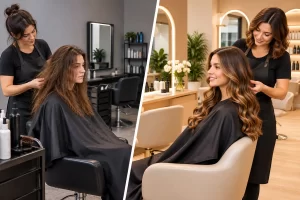
A professional consultation should include an assessment of your hair density, scalp health, texture, current color, and at-home routine. It is also the time to discuss realistic upkeep. Great extension results depend on both skilled application and a maintenance plan you can comfortably follow.
Guide to Hair Extension Methods: The Main Options
Tape-In Extensions
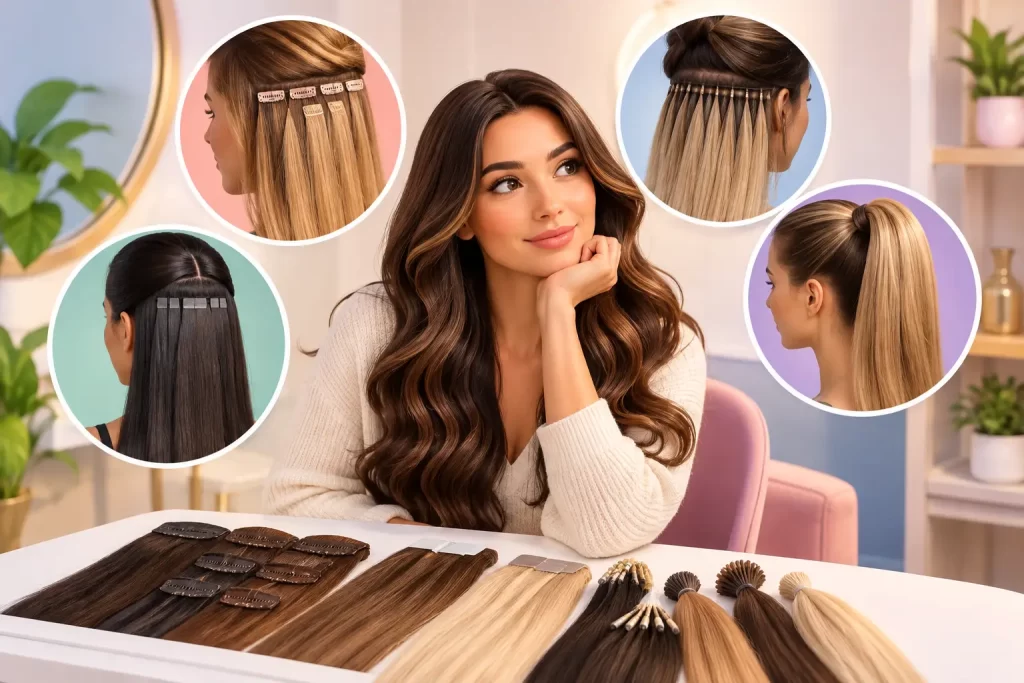
Tape-in extensions are applied in thin, flexible panels that sandwich small sections of natural hair. They lie relatively flat, making them a popular choice for adding fullness and length with a natural-looking finish. Because the panels distribute weight over a wider area, they can be a good option for many clients with fine to medium hair when properly placed.
Appointments are generally efficient compared with more detailed strand-by-strand methods. Tape-ins are also reusable when the extension hair remains in good condition, although they need to be moved up as your natural hair grows, often every six to eight weeks.
The trade-off is that tape-ins need careful product use near the adhesive. Oils, heavy conditioners, and certain styling products can weaken the bond. They may also be less ideal for clients who regularly wear very high ponytails or buns, depending on placement and hair density.
Hand-Tied and Beaded Weft Extensions
Hand-tied extensions use rows of weft hair that are secured with small beads and a supporting foundation. They are known for creating significant fullness and length without using adhesive or heat at the attachment point. With the right installation, the rows can blend beautifully and move naturally through the hair.
This method is especially appealing for clients who want a fuller overall transformation or who prefer the feel of weft hair. It can work on a range of hair types, but the rows must be customized carefully. Hair that is very fine or fragile may not support the same number of rows as thicker, denser hair.
Maintenance appointments are usually needed every six to 10 weeks. During those visits, the stylist removes and repositions the wefts closer to the scalp. At home, clients need to brush thoroughly and gently, including around the row, to prevent tangling and matting. A beaded weft method may not be the best fit if you are unable to commit to regular maintenance or if scalp sensitivity makes the foundation uncomfortable.
Keratin Bond Extensions
Keratin bond extensions, sometimes called fusion extensions, attach small strands of extension hair to sections of natural hair using a keratin-based bond. The strand-by-strand approach allows for highly customized placement, which can be especially helpful around the face, through layers, or in areas that need targeted fullness.
The finished result can be very discreet and versatile. Because the bonds are small, they can work well for many styling preferences when installed with appropriate spacing. They are usually worn for several months rather than moved up and reused in the same way as tape-ins or wefts.
Installation takes longer, and removal should always be handled professionally to protect your natural hair. Keratin bonds also require diligence with brushing and product placement. They are not automatically better than other options, but they can be an excellent choice for someone who wants detailed customization and is comfortable with a longer salon appointment.
I-Tip and Micro-Bead Extensions
I-tip extensions are individual strands attached with small beads or cylinders. No adhesive is required, and no heat is typically used during installation. Like keratin bonds, this gives the stylist flexibility to place hair precisely where it is needed.
I-tips can be adjusted as your natural hair grows, which may make them appealing for clients who prefer a reusable option. Still, the individual attachment points require consistent brushing and careful sectioning while washing. If beads are installed too close to the scalp, too heavily, or on hair that cannot support the weight, discomfort and stress can occur. Proper technique matters as much as the method itself.
Clip-In and Halo Extensions
Clip-ins and halo extensions are temporary options that clients can put in and remove at home. They are useful for special events, occasional volume, or trying a longer look before committing to a professional installation. Because they are not worn continuously, they do not require move-up appointments.
That convenience comes with limits. Clip-ins can be difficult to blend without the right cut and color match, and repeated placement in the exact same spot can cause tension. Halo extensions are often gentler because the hair rests on a nearly invisible wire, but they may not feel secure enough for every activity or hairstyle. Both options should be removed before sleeping.
Choosing the Right Extension Hair
The attachment method gets attention, but the quality and match of the extension hair are equally important. Human hair extensions generally offer the most natural movement and styling flexibility. They can be curled, straightened, and toned when appropriate, though they still need gentle care and heat protection.
A careful color match is more than choosing one shade. Natural hair often includes dimension from highlights, lowlights, and lighter ends. Blending two or more extension shades can create a softer, more believable result than a single flat color. The haircut matters, too. Extensions should be shaped into your natural hair so the transition looks intentional rather than bulky at the ends.
Texture should not be overlooked. Straight extensions placed into naturally wavy hair can require frequent heat styling to blend, while a closer texture match can make everyday styling easier. Your stylist can help you balance the look you want with the amount of maintenance you are willing to take on.
Healthy Wear Is the Priority
Extensions should never hurt, cause persistent headaches, or create excessive pulling. Mild awareness during the first day or two can happen with a new installation, but ongoing tenderness is a reason to contact your stylist promptly. Waiting for discomfort to “settle” can allow a small issue to become unnecessary stress on your hair.
At home, brush before washing and before bed, holding the hair near the roots as you work through the lengths. Use a salon-recommended shampoo and conditioner, keeping conditioner and oils away from attachment points unless your stylist advises otherwise. Dry the roots and bonds completely after washing, especially with wefts, to reduce the chance of tangling or trapped moisture.
Sleeping with hair in a loose braid or low ponytail can help reduce friction. Avoid going to bed with wet hair, and do not skip move-up or removal appointments. Extensions that have grown out too far can place uneven tension on your natural hair.
Questions Worth Asking at Your Consultation
Before choosing a method, ask how often you will need maintenance, what the appointment schedule will look like, and whether the hair can be reused. Ask how the method works with your normal workout routine, preferred hairstyles, and color services. You should also understand the expected investment, since pricing can vary based on the amount of hair, length, density, color customization, and installation complexity.
Most importantly, ask what your stylist would recommend for the current condition of your hair, not simply what is most popular online. A trustworthy recommendation may mean choosing fewer extensions, a lighter method, or waiting until your hair is stronger. That is not a compromise in service. It is professional care.
At Visions Hair Studio, a personalized consultation can help turn inspiration photos into a plan that respects your hair, routine, and comfort. The best extension method is the one that lets you enjoy fuller, longer hair while still feeling confident every time you run your fingers through it.