A great salon appointment should leave you thinking about your color, cut, or style – not questioning the tools, stations, or surfaces around you. This guide to salon sanitation standards explains what thoughtful cleanliness looks like behind the chair and why it is a meaningful part of professional hair care.
For clients, sanitation creates peace of mind. For stylists, it protects the people who trust them every day. At a professional salon, clean practices are not a closing chore or a detail reserved for inspections. They are part of every consultation, service, and reset between appointments.
What Salon Sanitation Really Means
Salon sanitation is often used as a catch-all phrase, but several practices work together to maintain a clean, safe environment. Cleaning removes visible hair, product buildup, dust, and debris. Disinfecting uses an approved product to reduce germs on nonporous surfaces and reusable tools. Sterilization is a more intensive process used in certain medical settings and is not the standard requirement for most hair salon services.
That distinction matters. A brush free of visible hair may look clean, but it still needs to be properly disinfected before another client uses it. Likewise, wiping a countertop is useful, but the disinfectant must remain on the surface for the manufacturer’s stated contact time to work as intended.
Requirements can vary by state licensing rules and the service being performed. In Florida, licensed salons and professionals must follow applicable state sanitation regulations, along with product instructions and common-sense procedures that protect clients and staff. A responsible salon does not treat the minimum requirement as the finish line. It builds reliable habits that clients can see and feel.
The Guide to Salon Sanitation Standards Clients Can See
You should not have to inspect a salon like an auditor to recognize good hygiene. The strongest signs are usually simple and consistent.
A stylist should begin with clean hands and maintain hand hygiene throughout the service, especially after handling used towels, cleaning a station, eating, using a phone, or stepping away from the chair. Handwashing remains especially valuable when hands are visibly soiled; hand sanitizer can be useful when washing is not immediately practical.
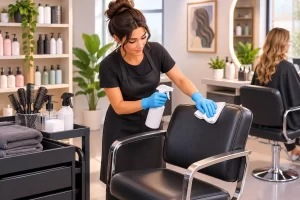
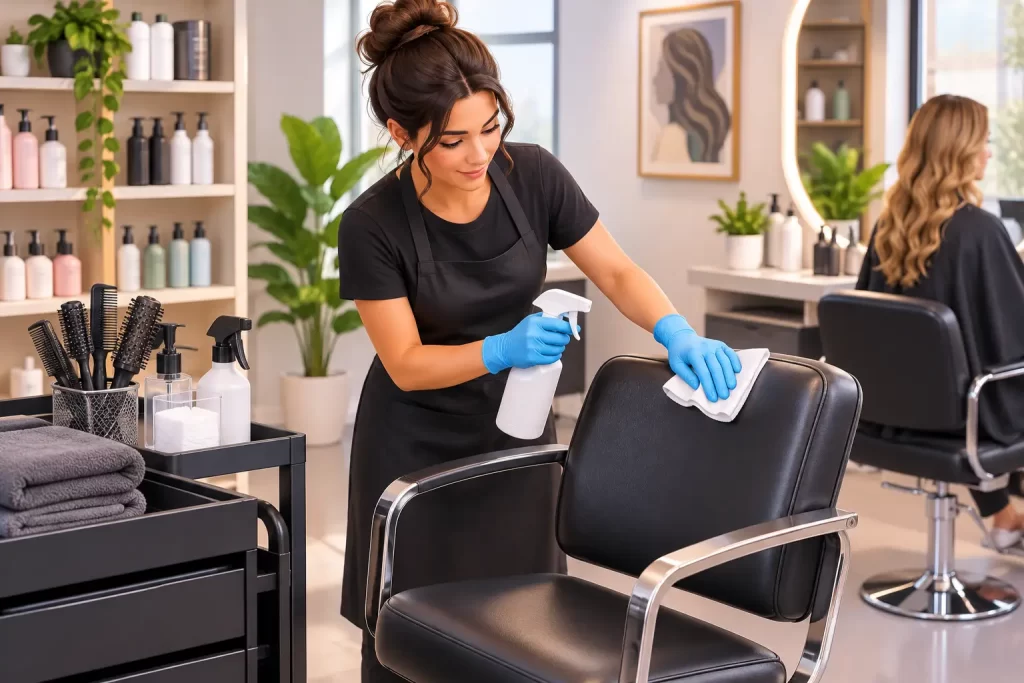
Workstations should be reset between clients. That means removing cut hair, wiping and disinfecting the styling surface, and replacing used capes, towels, neck strips, and other single-client items. A clean station also helps a stylist stay organized, which supports more precise work during detailed color applications, cutting, and styling.
Tools deserve the same attention. Combs, brushes, clips, shears, razors, and other reusable implements should be cleared of hair and product residue, cleaned as needed, then disinfected according to the appropriate procedure. Once disinfected, they should be stored in a clean, covered area rather than returned to a drawer with used tools.
Fresh linens are another visible indicator. Towels and capes that have contacted a client should be placed in a designated closed container or laundry area, not reused or left on a styling chair. A clean neck strip or protective barrier should be used for each guest when a cape is applied around the neck.
Why Disinfection Is More Than a Quick Wipe
Disinfecting is one of the areas where good intentions can fall short. The product must be appropriate for salon use, mixed correctly when dilution is required, and used for the full contact time on its label. Spraying a surface and immediately wiping it dry may remove product, but it may not provide the disinfection the product is designed to deliver.
The same care applies to tools. Some items can be immersed in an approved disinfectant solution after being cleaned. Others require a different method because of their materials or moving parts. Electrical tools such as clippers, trimmers, dryers, and curling irons should be cleared of hair and disinfected using a method that is safe for the equipment.
There is a practical balance here. Overexposing tools to a chemical solution can damage them, while rushing the process can undermine sanitation. Well-trained stylists understand both the health purpose and the manufacturer guidance behind their products. Ongoing education helps ensure that procedures keep pace with updated regulations, product formulas, and service techniques.
Single-Use Items Should Stay Single Use
Certain supplies are designed for one client only. Disposable neck strips, cotton, applicators, gloves, waxing sticks, nail files, and similar porous or difficult-to-disinfect items should not be shared between guests when their intended use calls for disposal.
For color services, clean bowls, brushes, and applicators matter as much as the formula itself. Cross-contamination can affect both sanitation and service quality. Preparing color with clean tools, wearing gloves where appropriate, and keeping used materials separate from fresh supplies supports a more controlled, comfortable appointment.
Cleanliness During Haircuts, Color, and Styling
Different services create different sanitation needs. During a haircut, stylists manage loose hair, sanitize tools between guests, and keep razors or blades properly handled. If a service requires a blade, a fresh disposable blade should be used, and used blades should be discarded safely.
Color services require careful attention to bowls, brushes, gloves, capes, and surfaces that may come into contact with product. While color stains can happen in a working salon, residue should not be allowed to build up on chairs, countertops, or shared tools. A professional environment feels orderly even during a busy day of transformations.
Shampoo areas need particular care because they involve close contact and moisture. Bowls, headrests, chairs, and surrounding surfaces should be cleaned and disinfected on schedule and whenever contamination occurs. Fresh towels and clean hands are essential. The goal is for the shampoo experience to feel relaxing, never questionable.
Blow-dry and styling stations also need regular attention. Brushes, combs, irons, clips, and dryer attachments can collect hair and product quickly. A salon that uses these tools all day needs a clear system for separating used items from disinfected, ready-to-use ones.
What Happens When a Client Has a Scalp Concern?
A caring salon puts health ahead of completing a service. If a stylist observes signs of a contagious condition, an open wound, an active infection, or significant skin irritation, the appropriate response may be to pause or decline the service and recommend that the client consult a qualified healthcare professional.
This can feel disappointing when you have an appointment on the calendar, especially before an event or vacation. Still, it is a professional decision that protects you, other clients, and the salon team. It is not about embarrassment or judgment. It is about providing services only when doing so is safe and appropriate.
Clients can help by mentioning sensitivities, allergies, recent scalp treatments, or areas of discomfort during the consultation. Clear communication gives your stylist the information needed to adapt the service, choose products thoughtfully, or recommend a different approach.
Questions Worth Asking Your Salon
You do not need to be an expert to advocate for a clean experience. If you are trying a new salon, notice whether the staff resets the station before seating you, uses a fresh neck strip and clean cape, and reaches for tools from a clearly clean storage area. You can also ask how tools are disinfected or how the salon manages towels and capes.
The answer should be direct and confident, not defensive. Professional salons understand that questions about cleanliness come from a reasonable desire to feel comfortable and cared for. The best response is often visible in the routine itself: a stylist who works neatly, explains what they are doing when appropriate, and never makes sanitation feel optional.
At Visions Hair Studio, the client experience is built around attentive consultations, skilled service, and the kind of clean, welcoming environment that helps you settle into the chair with confidence. Beauty services are personal, and the standards behind them should feel personal, too.
The next time you book a cut, color, or styling appointment, let cleanliness be part of what you look for. A salon that respects the details behind the chair is better positioned to respect the details of your hair, your comfort, and your time.