You may love the idea of lighter, brighter hair and still feel stuck when your stylist asks one simple question: balayage or highlights? The balayage vs highlights difference comes down to how the color is applied, how it grows out, and what kind of result you want to see every day in the mirror. Both can be beautiful. The right choice depends on your hair, your maintenance routine, and how soft or bold you want your color to look.
Balayage vs highlights difference at a glance
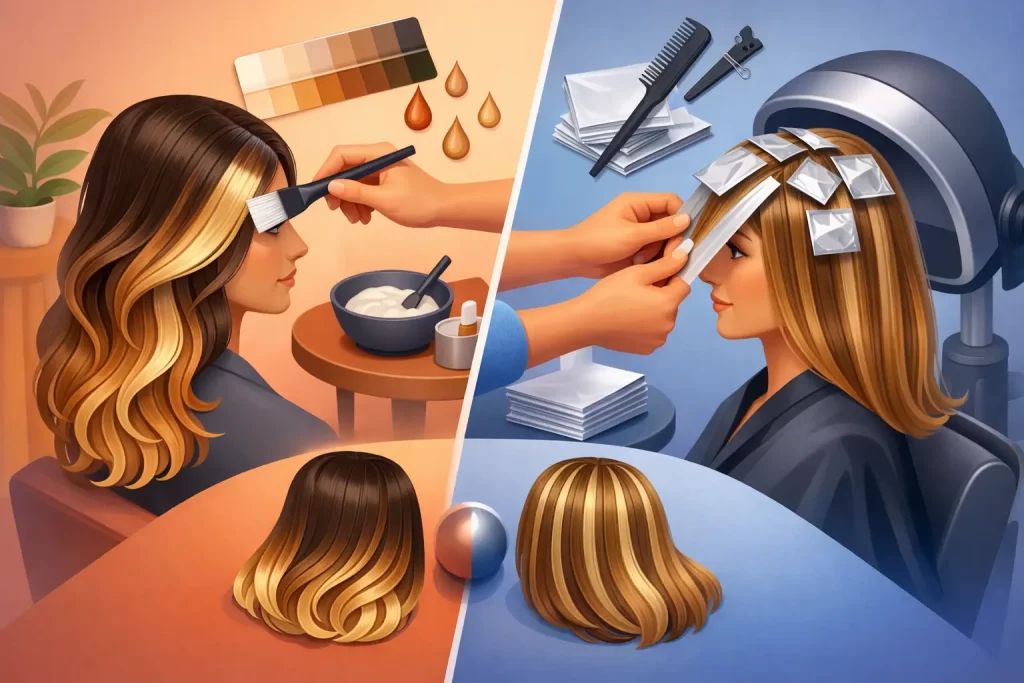
Balayage is a hand-painted lightening technique that creates a softer, more blended finish. Highlights usually involve sectioning the hair and applying lightener from closer to the root in a more structured pattern, often with foils. That difference in application changes almost everything else, including the final look, maintenance schedule, and level of contrast.
If you want color that looks sun-kissed and grows out with less of a visible line, balayage is often the better fit. If you want brighter lift from root to end or a more uniform blonde effect, traditional highlights may be the better service.
What balayage really looks like
Balayage is designed to create movement and dimension without harsh lines. Because the lightener is painted by hand, your stylist can place brightness exactly where it flatters your haircut, face shape, and natural depth. The result is usually softer at the root and brighter through the mid-lengths and ends.
A lot of clients choose balayage because it looks lived-in from the start. It can be subtle and natural, or it can be built up for a brighter result over time. That flexibility is one reason it remains so popular.
Balayage is not one exact shade or formula. It is a technique. Your stylist may create a caramel brunette balayage, a beige blonde balayage, or a cooler toned finish depending on your goals and your starting color.
What traditional highlights look like
Highlights create brightness in a more defined way. In most cases, the hair is sectioned and woven or sliced, then wrapped in foils to process. This allows for more lift and more consistent placement from root to end.
If you want to feel noticeably lighter after one appointment, highlights often deliver that faster. They can create a polished, fresh color with strong brightness around the face and throughout the crown. For clients who like a cleaner, more “done” blonde look, highlights are often the clear choice.
Highlights can still be soft. They do not always have to look stripey or dramatic. A skilled stylist can tailor foil placement to create either a delicate blended effect or a brighter, higher-contrast result.
The biggest balayage vs highlights difference: application and grow-out
The most important difference is not just how the hair looks on appointment day. It is how the color wears in the weeks after.
With balayage, there is usually a softer transition from your natural base into the lighter pieces. That means grow-out is typically less noticeable. Many clients appreciate that because they can go longer between appointments without feeling like they have a strong root line.
With highlights, especially when they start close to the scalp, regrowth appears more clearly as your hair grows. That is not a flaw. It is simply part of the look. Some clients prefer it because they like consistent brightness from the root area and do not mind more regular maintenance.
So if your lifestyle favors longer stretches between salon visits, balayage may suit you better. If you want brighter color all the way up and are comfortable keeping a schedule, highlights may be worth it.
Which one gives more brightness?
In many cases, highlights can create more overall lift in one session. Foils trap heat and help the lightener process more efficiently, which can make it easier to achieve a lighter blonde result. This is especially helpful if your hair is naturally darker or if you want a more dramatic transformation.
Balayage can absolutely get bright, but its effect is usually more diffused and strategically placed. Think ribbons of lightness rather than full saturation. If your goal is soft dimension with brightness concentrated in key areas, balayage often gives a more natural-looking finish.
This is where consultation matters. The same inspiration photo can require very different techniques depending on your current color, hair history, and condition.
Which one is lower maintenance?
Balayage is usually considered lower maintenance because of the softer root area. Since there is less of a hard starting point near the scalp, it tends to grow out gracefully. Many clients can go longer between major color appointments while still feeling polished.
Highlights usually need more frequent upkeep if you want them to stay fresh from root to end. That may include partial highlight appointments, toning services, or both. For someone who likes predictable maintenance and a consistently bright look, that schedule can be perfectly manageable.
Lower maintenance does not always mean less care, though. Both services may need toner, conditioning treatments, and quality home care to keep the tone looking fresh and the hair feeling healthy.
Is balayage always more natural?
Usually, but not automatically.
Balayage often reads as more natural because the color placement is softer and less uniform. But natural-looking hair color depends on more than technique. Tone selection, depth contrast, haircut, and styling all matter. A balayage that is too light for your base color can still look harsh. Highlights done with thoughtful placement can still look very soft.
This is why an experienced stylist does not choose a service by trend alone. The best approach considers your skin tone, your natural level, your maintenance preference, and how you wear your hair most often.
Cost and appointment time
Clients often ask whether balayage or highlights cost more. The honest answer is that it depends. Pricing can vary based on hair thickness, length, how much lightening is needed, and whether toning or extra finishing steps are involved.
Balayage can take time because it is customized by hand and often requires careful placement for a blended result. Highlights can also be time-intensive, especially for full-head services or corrective color. Neither service is truly one-size-fits-all, which is why personalized consultation is so important.
If you are deciding based on budget, it helps to think beyond the first appointment. A service that costs more upfront but needs fewer touch-ups may fit your routine better than a service that starts lower but requires more frequent maintenance.
How to choose the right service for your hair
The best choice starts with your goal, not the name of the service. If you want soft dimension, a sun-kissed finish, and easier grow-out, balayage may be ideal. If you want noticeable brightness, stronger lift, and a more consistent blonde effect from root to end, highlights may be the better fit.
Hair type matters too. Fine hair can look fuller with the right dimensional placement. Thick hair may need a more strategic plan to avoid looking too heavy or too patchy. Previous color, box dye history, and the overall condition of your hair also affect what is realistic in one visit.
A good stylist will also ask practical questions. How often do you want to come in? Do you wear your hair straight, curled, or air-dried? Are you hoping to cover gray while adding dimension? Those details influence whether balayage, highlights, or a combination service makes the most sense.
Sometimes the best answer is both
It is very common to blend techniques. Many modern color services use highlights for lift and balayage for softness and detail. Face-framing pieces may be foiled for extra brightness while the rest of the hair is hand-painted for a more natural transition.
This customized approach often gives clients the best of both worlds. You can get brightness where it matters most and still keep a softer grow-out. At a consultation-led salon, that kind of combination is often what creates the most flattering, realistic result.
What to ask at your consultation
Bring inspiration photos, but be open to professional feedback. Photos help show the level of brightness and contrast you like, but your stylist also has to interpret what your hair can safely and beautifully achieve.
Ask what level of maintenance your desired look will require. Ask whether your hair may need more than one session. Ask how to care for the color at home. These are the conversations that lead to better results and fewer surprises.
At Visions Hair Studio, that personalized approach matters because great color is not just about technique. It is about listening carefully, choosing the right plan for the individual client, and protecting the health of the hair along the way.
If you are choosing between balayage and highlights, the goal is not to pick the trendier option. It is to choose the service that fits your hair, your schedule, and the version of yourself you want to see when you leave the salon.