A glossy finish can look similar in the salon mirror, but keratin treatment vs smoothing treatment is not a simple either-or choice. The best option depends on your curl pattern, color history, porosity, daily styling routine, and how much texture you want to keep. A professional consultation matters because the words on a service menu do not always describe the exact same formula or result.
At Visions Hair Studio, the goal is not to make every client’s hair look the same. It is to help you achieve smoother, more manageable hair while respecting its condition, movement, and long-term health.
What Is a Keratin Treatment?
A keratin treatment is a professional service designed to reduce frizz, add shine, and make hair easier to style. Keratin is a protein naturally found in hair, skin, and nails. In salon formulas, conditioning and smoothing ingredients work with heat to coat and help refine the hair’s surface.
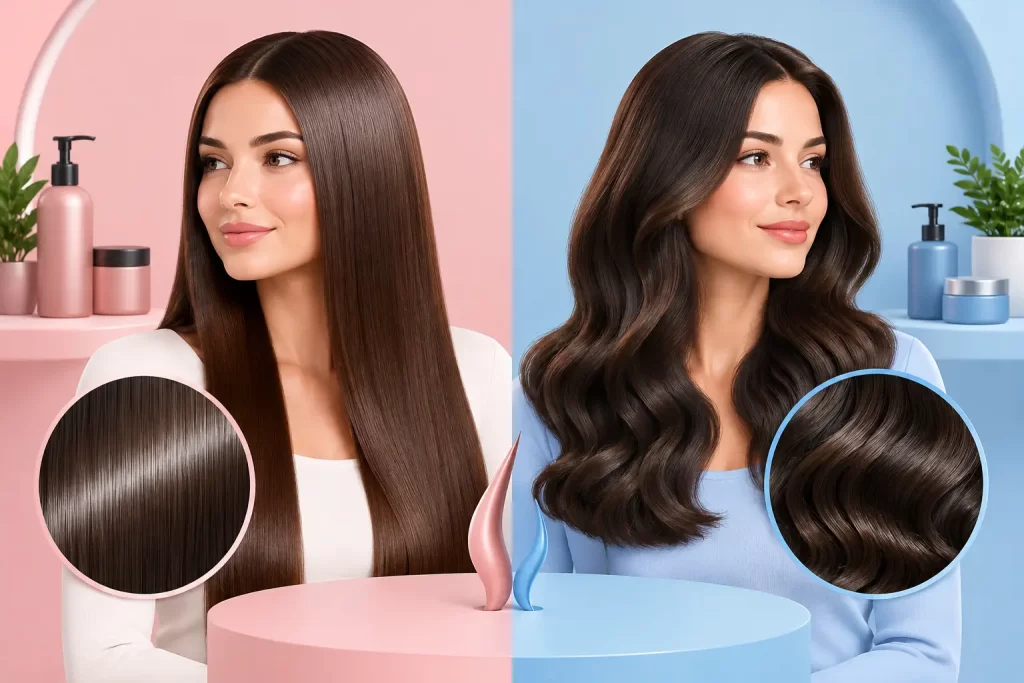
Most clients choose a keratin service because they want their natural hair to remain recognizable. Curls and waves may relax somewhat, especially when hair is blow-dried smooth, but a keratin treatment is generally not intended to create permanently straight hair. The result is often softer texture, less humidity-related frizz, and shorter blow-dry time.
Results typically last around two to five months, though this varies with the formula used, your hair type, washing frequency, home care, and heat styling habits. Sulfate-free, salon-recommended maintenance products can help preserve the finish.
Who may like a keratin treatment
Keratin can be a strong fit for someone with frizzy, coarse, wavy, or curly hair who wants more control without fully giving up volume or natural pattern. It can also be useful for clients who spend a lot of time blow-drying or flat-ironing and would like their styling routine to feel less demanding.
That said, “keratin” does not automatically mean gentle for every head of hair. Highly lightened, fragile, or overprocessed hair needs an especially careful assessment. The formula, application method, heat level, and timing all affect the experience and result.
What Is a Smoothing Treatment?
“Smoothing treatment” is a broader category. It can describe several professional services that reduce frizz, improve manageability, and add polish without necessarily relying on the same active ingredients or processing approach as a traditional keratin treatment.
Some smoothing services are designed to leave a fairly natural wave or curl pattern in place. Others provide a more noticeable relaxing effect. Certain formulas focus on conditioning and surface smoothing, while others use bonding, amino acids, glyoxylic acid derivatives, or other technology. Because the category is so broad, the name alone is not enough to tell you exactly what to expect.
A smoothing treatment may last from several weeks to a few months. It may be a practical choice for someone who wants easier styling and better humidity resistance but prefers a lighter or more flexible result. For clients who color their hair, a stylist can also help determine how to schedule smoothing and color services in a way that supports the integrity of the hair.
Keratin Treatment vs Smoothing Treatment: The Real Differences
The biggest difference is not always the label. It is the specific product system and the outcome you want. A keratin treatment usually refers to a more defined type of frizz-reducing service that uses heat to help create a smooth, polished finish. A smoothing treatment may refer to keratin-based services or to entirely different formulas that offer a similar goal with a different level of texture change.
In practical terms, keratin treatments often appeal to clients seeking a longer-lasting reduction in frizz and a noticeable decrease in daily styling time. Smoothing treatments may appeal to clients who want soft, manageable hair but do not want their curls or waves altered as much.
Neither service should be confused with a traditional chemical relaxer. Relaxers permanently change the hair’s internal structure and are intended to straighten tightly curled or textured hair. Keratin and many smoothing services are temporary, gradually fading as the hair is washed and as new growth comes in. Still, the amount of visible straightening can vary significantly from one formula and hair type to another.
Consider Your Hair History Before Choosing
Your hair’s history is as important as its current appearance. Color, highlights, bleach, previous smoothing services, extensions, and frequent heat styling can all affect which service is appropriate. Fine hair may need a lighter approach than dense, coarse hair. A client with bright blonde highlights may need a different plan than someone with virgin, naturally curly hair.
Porosity also matters. Porous hair can absorb and release moisture differently, which may affect how evenly a treatment processes and how long the result lasts. Hair that feels rough, tangles easily, or dries very quickly may need conditioning support before or alongside any smoothing service.
A thoughtful stylist will ask about your goals, not just your frustration with frizz. Do you want to air-dry your hair and still enjoy your curls? Are you hoping to cut blow-dry time in half? Do you swim regularly? Are you maintaining gray coverage, balayage, or a major blonde transformation? These answers guide a safer, more satisfying recommendation.
Safety and Formula Transparency Matter
Professional smoothing services should always begin with clear communication about the product being used and the service process. Some formulas can release irritating fumes when heated, and ingredients vary by brand and treatment type. If you have sensitivities, asthma, are pregnant, or have concerns about fragrance or chemical exposure, raise them during your consultation.
Your stylist should be able to explain the expected effect, how long it may last, whether heat is required, and what aftercare is recommended. A well-ventilated salon environment, proper application, and trained service providers are part of responsible care, not optional extras.
It is also wise to be cautious about at-home smoothing kits or services that promise dramatic results with no assessment. Hair may look strong enough for a treatment while still carrying hidden stress from bleach, repeated color applications, or previous chemical work. Professional evaluation helps prevent an avoidable setback.
What Maintenance Looks Like After the Appointment
Both services require some home care if you want the finish to last. Your stylist may recommend waiting a specific amount of time before washing, depending on the formula. After that, use products suited to treated hair and avoid harsh cleansing habits that can strip the finish quickly.
Chlorine, saltwater, frequent shampooing, and very hot tools can shorten the life of a treatment. This does not mean you cannot enjoy the pool or the beach, especially in South Florida. It simply means your maintenance plan should reflect your lifestyle. Rinsing hair after swimming, using a protective leave-in product when recommended, and scheduling timely maintenance can make a visible difference.
You should also expect new growth to retain its natural texture. A smoothing or keratin service does not permanently alter hair that grows in after your appointment. Clients who love the result often schedule maintenance based on how their hair feels and styles, rather than waiting for it to become difficult again.
Which Service Is Right for You?
Choose a keratin treatment if your main priority is stronger frizz control, faster smooth styling, and a polished finish that lasts for months. Choose a smoothing treatment if you want a more flexible approach, potentially less texture change, or a service selected around a particular hair concern and formula preference.
There is no universal winner between the two. The right choice is the one that fits your hair condition, desired level of straightness, color routine, and willingness to maintain the result. A service that gives a friend perfectly sleek hair may feel too flattening on someone who loves volume, or too intensive for someone with delicate highlights.
Bring photos of results you like to your consultation, but also be ready to talk honestly about your hair’s history and your morning routine. With the right assessment and a realistic plan, smoother hair can feel like an ease in your day rather than another compromise.