The most flattering hair color rarely comes from covering every silver strand or chasing a shade that worked ten years ago. The best hair color trends for mature women are personal: they bring light to the face, add believable dimension, and fit comfortably into real life between salon visits. A thoughtful consultation makes the difference, especially when texture, density, natural gray pattern, skin tone, and maintenance preferences all deserve a place in the decision.
Hair Color Trends for Mature Women That Feel Current
Soft gray blending
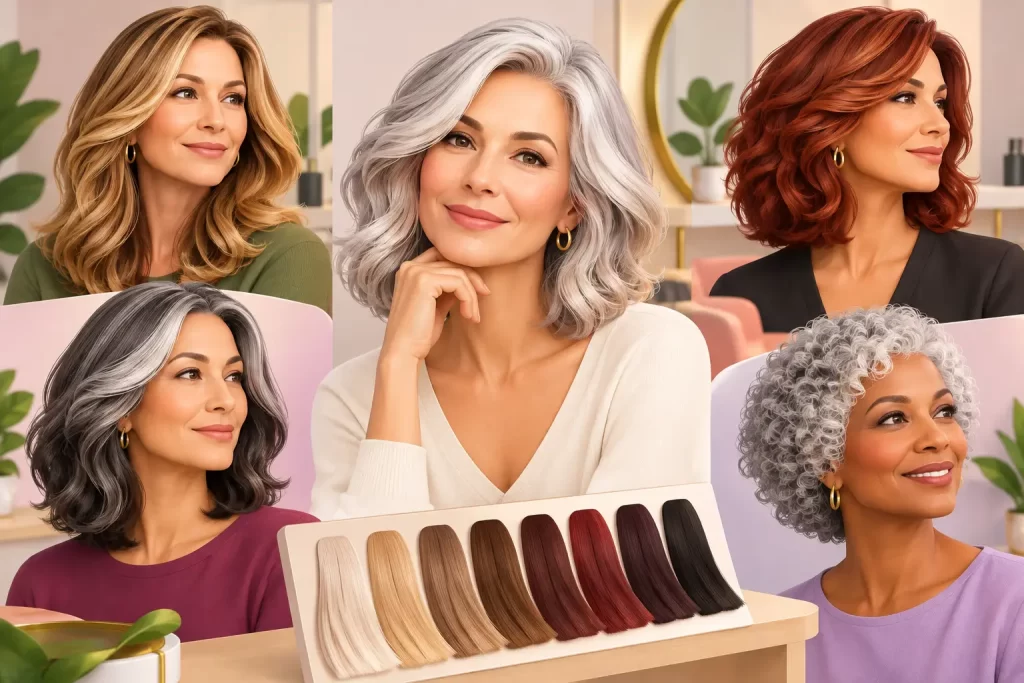
Gray blending remains one of the most requested approaches because it offers a graceful middle ground. Rather than trying to erase gray hair with an opaque all-over color, a stylist weaves highlights and lowlights through the natural silver. The result can look softer at the root and more dimensional through the lengths.
This option works especially well for women whose gray is concentrated around the hairline or part. Fine ribbons of pearl, beige, ash, or soft neutral tones can blur the line of regrowth without making the finished color look flat. It also lets clients extend the time between major color appointments compared with solid root coverage.
There is a trade-off. Gray blending is not always a one-appointment change, particularly if hair has been colored very dark for years. Achieving a refined blend may take a gradual plan to protect the condition of the hair. It is worth the patience when the goal is a softer, lower-maintenance transition.
Warm, dimensional blondes
Blonde does not have to mean bright platinum or heavily highlighted. The most wearable blondes for mature hair often include a balance of warmth and depth: honey, champagne, beige, golden sand, or creamy butter tones. These shades can reflect light around the face and make the overall look feel fresh without washing out the complexion.
Dimension matters. A soft root shadow or a few deeper lowlights keep blonde from looking one-dimensional, while face-framing brightness adds a polished effect near the eyes and cheekbones. The right amount of warmth depends on the skin. Someone with rosy or cool undertones may prefer champagne and soft beige, while golden or olive undertones can often carry honey and caramel beautifully.
Very light blonde can be high maintenance and may require more frequent toning to keep unwanted yellow or dull tones away. Hair that is delicate, porous, or heavily processed needs an especially careful approach. A skilled stylist will assess whether a creamy, lived-in blonde will deliver a more beautiful and sustainable result than pushing too light.
Rich brunette with fine contrast
Brunette shades are moving away from flat, inky color and toward softness. Think espresso with subtle cocoa ribbons, medium brown with caramel accents, or a deep neutral brown with a delicate halo of lighter pieces around the face. This color direction is ideal for clients who enjoy depth but want their hair to appear fuller and more active in the light.
For mature women, the placement of contrast is often more important than how much contrast is used. A few strategically placed highlights can soften a dark brunette and keep it from creating a harsh frame against the skin. Fine dimension also helps camouflage incoming gray more naturally than a single solid shade.
If you have a high percentage of gray, a very dark permanent color may create a strong regrowth line within a few weeks. Choosing a shade slightly lighter than your natural dark base, or adding blended highlights, can make maintenance more forgiving while preserving the richness you love.
Copper, strawberry, and soft auburn
Warm reds are having a well-earned moment, but the most flattering versions are nuanced rather than overly vivid. Soft copper, cinnamon, strawberry blonde, rose gold, and muted auburn can add warmth and energy to the complexion. They are particularly striking when the eyes have green, hazel, or warm brown tones, though a customized shade can work across many color palettes.
Red pigment fades faster than most other color families, so this trend suits clients who are comfortable with regular gloss appointments and home care designed for color-treated hair. A salon gloss can refresh tone, boost shine, and soften the look of regrowth without committing to a full color service every time.
For someone trying red for the first time, a few warm ribbons or a strawberry-toned gloss can be a smart introduction. It allows you to see how warmth complements your skin before choosing a more saturated auburn or copper.
Choosing a Color That Works With Your Hair, Not Against It
Trends are useful inspiration, but they should never replace an honest assessment of your hair. Mature hair can become drier, finer, more textured, or more resistant to color as time goes on. Hormonal changes, medication, water quality, and past chemical services can also affect how color develops and lasts.
That is why a consultation should include more than a photo of a favorite shade. Your stylist should ask about your color history, how often you are willing to visit the salon, your daily styling routine, and what you hope color will change. Do you want gray to disappear, blend in, or become a beautiful part of the finished look? Do you want more brightness around your face, or do you prefer depth with subtle movement?
Bring a few inspiration photos, but notice what you like about each one. It may be the warmth, the placement of highlights, the shine, or the softness at the root rather than the exact shade. Photos also vary dramatically based on lighting and filters, so they are best used as a conversation starter.
A strand test may be recommended when hair has previous color, at-home color history, or significant lightening goals. It is a small but valuable step that helps protect the integrity of the hair and gives a clearer picture of what can be achieved safely.
Maintenance Is Part of the Color Decision
Beautiful color should work with your schedule. Gray blending and lived-in dimensional color often allow longer intervals between full appointments, with a gloss or toner in between as needed. Traditional root coverage generally requires more frequent visits, especially when gray is bright against a darker base. High-lift blondes and vivid reds can also need regular refinement to stay polished.
At home, use a professional shampoo and conditioner selected for your hair’s needs. If blonde or gray hair picks up yellow tones, a purple or violet-toning product may help, but it should be used as directed rather than every wash. Overuse can leave hair looking dull or lavender. Heat protectant matters, too, since frequent hot tools can fade color and increase dryness.
Shine is often the finishing detail that makes a color look expensive. Regular conditioning treatments, gentle styling habits, and timely trims support a smoother surface, which reflects more light. For curly or textured hair, moisture and definition are just as important as tone because they affect how color placement is seen.
A Personalized Plan Makes Color Feel Easier
The right trend should make you feel more like yourself, not like you are maintaining someone else’s look. At Visions Hair Studio, a color appointment begins with listening: your history, your comfort level, your lifestyle, and the result you want to see in the mirror. Pricing and timing can vary with thickness, length, existing color, and the complexity of the service, so clarity before the appointment helps create a more relaxed experience.
If your current color feels too dark, too flat, too brassy, or simply out of step with how you want to look now, start with a conversation. A subtle shift in tone, a brighter frame around the face, or a more natural gray blend can be enough to make your hair feel current, cared for, and entirely your own.