You can show your stylist ten saved photos and still leave with the same question: should you get layers or blunt cut? It sounds simple, but the right answer depends on more than what looks best in a photo. Your hair texture, density, styling routine, and even how often you come in for trims all affect which shape will work for you in real life.
A great haircut should make your hair easier to wear, not harder to manage. That is why this choice deserves more than a quick guess. When the cut matches your natural texture and your daily habits, your hair looks better between appointments and feels more like you.
Layers or blunt cut: what is the difference?
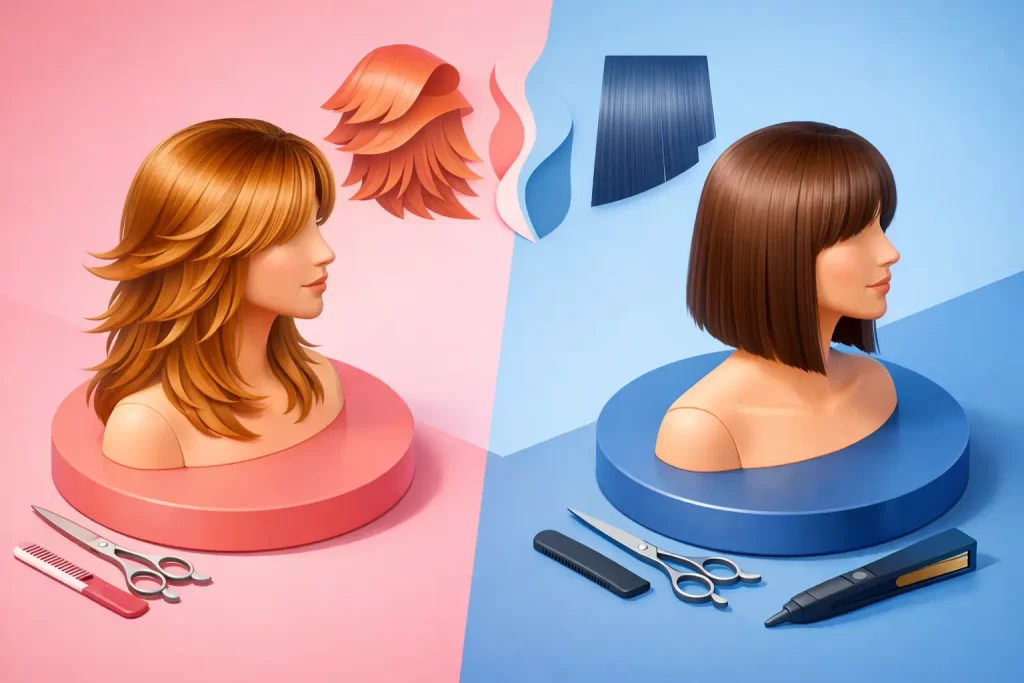
A blunt cut creates a clean, solid perimeter. The ends are cut to fall at one length, or close to it, which gives the hair a fuller and more defined shape. Think polished bobs, strong lobs, and long cuts that look thick and healthy at the bottom.
Layers remove weight and create movement. They can be soft and subtle or much more visible, depending on the look you want. A layered cut changes the internal shape of the hair, not just the outline, which can help the hair fall differently and style more easily.
Neither option is automatically better. They simply do different jobs. A blunt cut emphasizes density and structure, while layers emphasize softness, lift, and motion.
When a blunt cut makes more sense
If your goal is fuller-looking ends, a blunt cut is often the stronger choice. Fine or medium hair can benefit from that solid perimeter because it gives the appearance of more density. If your ends tend to look thin, wispy, or uneven, cutting the hair into a sharper shape can make it look healthier right away.
Blunt cuts also work beautifully for clients who like a sleek finish. If you often wear your hair straight, tucked behind the ears, or styled into a smooth bob or lob, that crisp line creates a very intentional result. It can look modern, clean, and expensive without needing a lot of extra detail.
That said, blunt does not always mean one-length in the strictest sense. Many well-designed blunt cuts still include light internal work so the hair moves properly. The goal is to keep the edge strong while making sure the shape sits well.
A blunt cut can be less forgiving if your hair is very thick or bulky. Without some weight removal, the shape may feel heavy, especially around the bottom. It can also require more regular maintenance if you want the line to stay precise.
When layers are the better fit
Layers are often the answer when hair needs shape, lightness, or movement. If your hair feels heavy, expands in the wrong places, or falls flat at the crown, well-placed layers can change how it behaves.
For thick hair, layers can reduce bulk and help the shape feel more balanced. For wavy or curly hair, they can encourage pattern and prevent the hair from forming one dense triangle. For long hair, they can keep the style from looking flat or dragging the face down.
Layers also help when you want versatility. Hair with layering may hold a blowout differently, show off waves more clearly, and frame the face in a softer way. If you like body and bounce, layers often support that better than a blunt perimeter alone.
The trade-off is that layers need to be done with intention. Too many layers, or layers placed too short, can make fine hair look thinner. On some textures, over-layering can create frizz, uneven volume, or a shape that requires more styling than you want to do every day.
Hair type matters more than trend photos
One of the biggest reasons haircut decisions go wrong is that people choose the photo before they consider the hair they actually have. The same cut will not behave the same way on fine straight hair, dense coarse hair, and natural curls.
Fine hair often benefits from a more solid baseline. That does not mean layers are off-limits, but they usually need to stay longer and softer. Too much separation can take away the fullness you are trying to create.
Medium-density hair is often the most flexible. Depending on your goals, you can wear a clean blunt shape, soft long layers, or a combination of both. This is where consultation matters most, because the right choice comes down to lifestyle and the specific result you want.
Thick hair usually needs some level of layering or internal weight removal, especially if you want movement. A fully blunt cut on very dense hair can look beautiful, but only if the shape is controlled properly. Otherwise, it can become boxy or too heavy at the ends.
Curly and wavy hair deserve special attention here. A blunt edge can create a strong shape, but curls often need layers to form well and avoid unwanted bulk. The key is balance. Too much bluntness can make curls stack outward, while too many layers can create an uneven silhouette.
Face shape and personal style play a role too
Haircuts should support your features, but they should also support how you want to feel. Some clients want a sharper, more fashion-forward finish. Others want softness around the face or a style that feels effortless.
Blunt cuts tend to create visual strength. They can make the jawline look more defined and give shorter styles a bold, polished edge. If you love a neat, structured look, this may feel right immediately.
Layers create softness and movement around the face. Face-framing pieces can open up the cheekbones, lighten the area around the jaw, and make long hair feel more intentional. If you want your cut to feel airy or romantic, layers may be the better direction.
Still, face shape is not a strict rulebook. A talented stylist looks at proportions, texture, and maintenance habits together. The best haircut is rarely based on one factor alone.
Consider your styling routine before you decide
This is where honesty helps. If you like to wash, air dry, and go, tell your stylist. If you use a round brush every morning, that matters too. The haircut needs to fit the version of you that shows up most days, not just special occasions.
Blunt cuts often work well for people who want a lower-fuss shape, especially on straighter textures. The line does a lot of the work. If the hair is healthy and the cut is precise, it can look put together with minimal effort.
Layers can be easy or high-maintenance depending on the texture and placement. On the right person, they make styling simpler because they remove weight and help the hair fall into place. On the wrong person, they can require more smoothing, more curling, or more reshaping than expected.
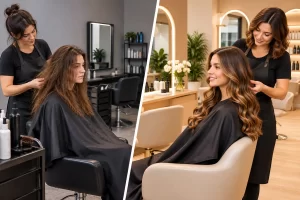
This is why consultation-led cutting matters. At Visions Hair Studio, the best haircut conversations usually start with practical questions: How do you wear your hair most often? How much time do you want to spend styling it? How do you feel about maintenance appointments? Those answers shape the cut just as much as the inspiration photo.
Can you have both layers and a blunt effect?
Yes, and many of the best cuts do exactly that. This is often the sweet spot for clients who want fullness at the ends but still need movement through the interior.
A stylist can preserve a blunt-looking perimeter while adding hidden or long layers to reduce weight and improve shape. This approach is especially useful for medium to thick hair, or for clients who want the polished look of a blunt cut without the heaviness.
It is also a smart option if you are nervous about going too far in either direction. You do not have to choose between hair that feels overly solid and hair that feels overly feathered. A customized cut can give you both structure and softness.
What to ask for at your appointment
If you are torn between layers or blunt cut, avoid asking for one term in isolation and hoping for the best. Instead, describe the result you want. Say if you want your hair to look thicker, lighter, smoother, fuller at the crown, or easier to air dry. Mention whether you wear it straight, curled, or natural most of the time.
Photos still help, but use them as references, not instructions. The goal is not to copy someone else’s hair. It is to create the version of that shape that works on your hair.
A strong stylist will also tell you when a trend needs adjusting. That is a good thing. Personalized advice is how you end up with a haircut that still feels good three weeks later, not just when you leave the salon.
The best choice is the one that works with your hair, your routine, and your comfort level. If you are unsure, start with a shape that leaves room to adjust. You can always add more layering later, but the smartest haircut is the one that feels right long after the mirror check.