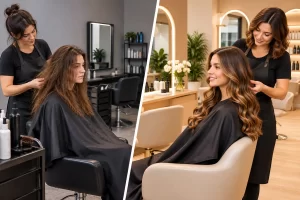
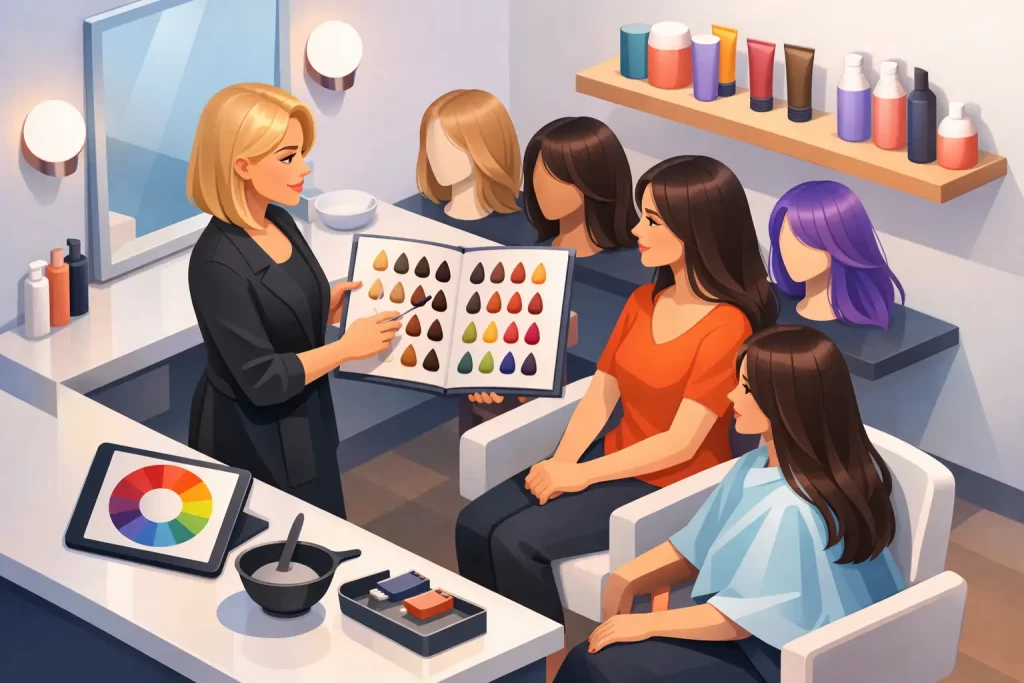
You can show a stylist three photos, say you want “lighter but natural,” and still leave with questions. That is exactly why a professional hair color consultation matters. Great color is not just about picking a shade. It is about understanding your hair history, your daily routine, your maintenance comfort level, and what your hair can realistically do while staying healthy.
For many clients, the consultation is the moment when hair color stops feeling confusing and starts feeling personalized. It creates a plan instead of a guess. That plan can be simple, like soft gray blending, or more detailed, like correcting uneven tone, shifting from dark to lighter shades, or maintaining dimensional blonde without overprocessing the hair.
What happens during a professional hair color consultation
A strong consultation is part conversation, part analysis, and part strategy. Your stylist is not only listening to what you want. They are also evaluating what your hair needs.
That usually starts with questions about your color history. Box dye, previous highlights, toner, balayage, keratin treatments, and even sun exposure can all affect the final result. Hair that has been colored several times may react very differently than virgin hair, even if the inspiration photo looks straightforward.
Your stylist will also look at your current color, natural level, tone, texture, density, and overall condition. Thick hair may need a different timing and application approach than fine hair. Curly hair may reflect light differently than straight hair. Porosity matters too, because it can change how evenly color absorbs and how long it lasts.
This is also when lifestyle comes into the conversation. Some shades are beautiful in the salon chair but require frequent upkeep at home and in the salon. Others grow out more softly and are easier to maintain between appointments. Neither option is better on its own. It depends on how often you want to come in, how much daily styling you do, and how committed you are to color-safe products.
Why consultation-led color gives better results
Hair color is full of variables, and that is where professional judgment makes a difference. A consultation helps prevent mismatched expectations before the service begins.
For example, a client may want a bright beige blonde from a photo, but their hair may have underlying warmth, previous dark color, or dryness that changes the path to that result. In a quick, rushed appointment, that gap between inspiration and reality can lead to disappointment. In a proper consultation, your stylist can explain whether the goal is possible in one session, whether it should be approached gradually, and what would keep the hair looking and feeling its best.
That honesty is not a sales tactic. It is a sign of professionalism. The best stylists do not promise a result that compromises the hair just to win the appointment. They build a color plan that balances beauty, timing, and hair integrity.
Consultation-led color also improves consistency over time. If you are trying to cover gray, maintain highlights, deepen your base, or refresh faded ends, small details matter. The more your stylist understands your preferences and your hair behavior, the easier it becomes to create reliable results from one visit to the next.
A professional hair color consultation is about more than shade
Most people walk into a salon thinking the biggest decision is whether they want warm or cool color. That is part of it, but it is far from the whole picture.
A professional hair color consultation should cover tone, depth, placement, upkeep, and long-term goals. Maybe you want brightness around the face but not a full highlight. Maybe you want gray coverage without a flat, single-process look. Maybe you want richness and shine, but you do not want to come in every four weeks.
These are different services with different maintenance cycles, pricing, and visual effects. The consultation helps match the service to the result you actually want.
This is especially important when clients use broad terms like caramel, honey, ash, natural, or lived-in. Those words can mean different things to different people. A stylist’s job is to translate those preferences into a technical plan. That may include discussing whether a gloss, root touch-up, partial highlight, full highlight, balayage, or corrective service makes the most sense.
What to bring to your color consultation
A little preparation can make your appointment much more productive. Inspiration photos are helpful, but they work best when you bring more than one. That gives your stylist a better sense of the pattern in what you like. Maybe all your photos have a bright face frame, a soft root shadow, or a warm neutral finish. Those details matter.
It also helps to be honest about your hair history. If you colored your hair at home six months ago and think it has grown out, mention it anyway. If you had highlights at another salon, say so. Stylists are not judging. They are gathering information that affects timing, product choice, and what is realistic.
Come ready to talk about maintenance too. If you want a look that stays polished with fewer visits, say that. If you are happy to return regularly for bright blonde or gray coverage, that matters as well. The right color choice is not only the one that looks good on day one. It is the one that fits your real life.
Questions your stylist may ask, and why they matter
Some consultation questions can feel surprisingly specific, but there is a reason for that. If your stylist asks how often you heat style, swim, or spend time outdoors, they are trying to predict how your color will wear. If they ask what shampoos you use, they are checking whether your home care supports color longevity.
They may also ask what you do and do not like about your current hair. That can be more useful than asking what you want in abstract terms. A client might say, “I do not like how brassy my highlights get,” or “I want my gray to blend better around the part line.” Those answers point directly to the problem that needs solving.
Another key question is whether you want subtle change or visible change. Sometimes a client asks for something fresh but actually wants a very low-risk adjustment. Other times, they are ready for a clear shift in tone or dimension. A good consultation helps define that line before the service starts.
The role of hair health in color planning
Healthy-looking color and healthy hair are closely connected. Even the most beautiful tone will not read the same on hair that feels compromised, dry, or overly porous.
That is why experienced stylists pay attention to the condition of the hair before recommending a service. In some cases, the best path may be adjusting the original plan. Instead of pushing for maximum lift in one visit, it may make more sense to lighten gradually, tone strategically, trim damaged ends, or support the hair with the right treatments and home care.
This is one of the biggest trade-offs in salon color. Faster transformation can sometimes mean more stress on the hair. A more measured approach can preserve softness, shine, and long-term wearability. It depends on your starting point and your priorities.
At a consultation-driven salon, that conversation happens upfront. Clients deserve to know not only what is possible, but what will help their hair stay beautiful after the appointment is over.
Why pricing can vary after a consultation
Hair color pricing often reflects more than the name of the service. Length, density, previous color, complexity, and time all play a role. That is not inconsistency. It is customization.
A client with very thick hair may need more product and more time than someone with fine, shoulder-length hair. A gray coverage appointment with a quick refresh is different from a color correction or a major tone shift. During a consultation, your stylist can explain what your hair requires so pricing feels clear, not vague.
That kind of transparency builds trust. It also helps clients make informed choices about what they want now and what can be scheduled later.
Choosing a salon that takes consultation seriously
Not every salon treats consultation as a true part of the service. Some treat it as a quick formality before mixing color. The difference shows.
A salon that values professional standards will take time to listen, assess, explain, and set realistic expectations. You should feel heard, not rushed. You should also feel confident that cleanliness, safety, and continued education are part of the experience, because modern color work depends on both technical skill and sound professional practice.
For clients in Wellington who want a color service that feels personalized from the start, that level of care matters. It is how appointments become long-term relationships instead of one-time fixes.
The right color appointment should leave you feeling more certain, not more confused. A thoughtful consultation gives you that clarity and turns your next salon visit into a plan you can feel good about.