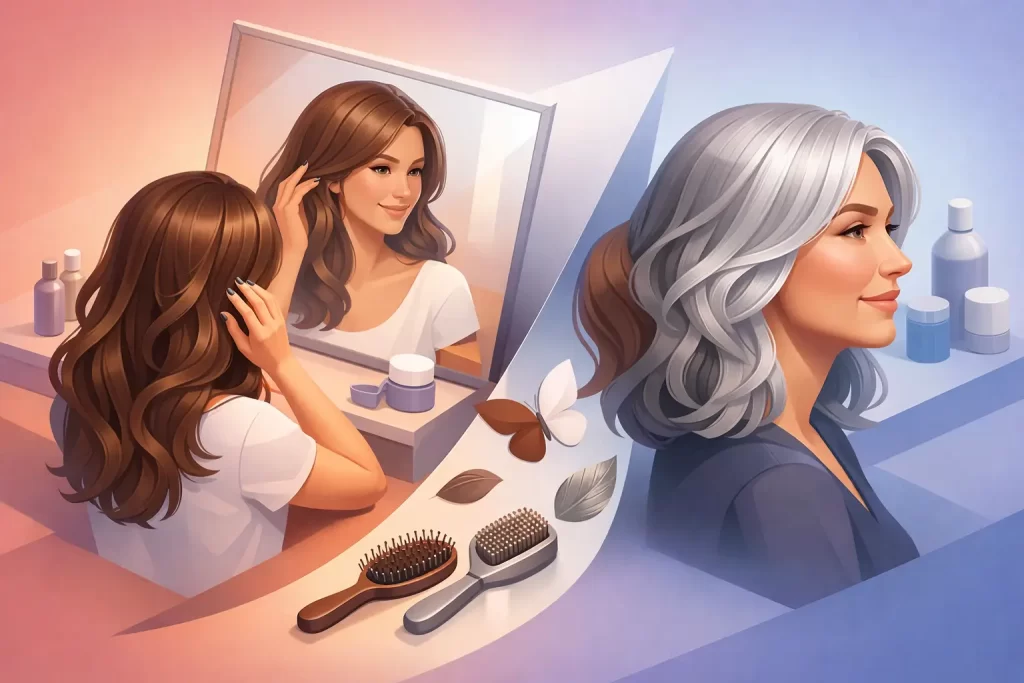
The first silver strands can feel surprising, even when you have been thinking about growing out your color for years. Learning how to transition to gray gracefully is less about waiting for your roots to take over and more about creating a color plan that protects your hair, fits your lifestyle, and lets you feel like yourself throughout the process.
For some clients, the goal is a soft, low-maintenance blend. For others, it is a faster move toward a bright, fully natural gray. Both can be beautiful. The right approach depends on your existing color, natural gray pattern, hair condition, and how much contrast you are comfortable seeing during the transition.
Start With a Gray Transition Consultation
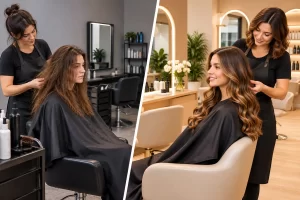
A professional consultation gives your stylist the chance to look beyond the color on the surface. Previously colored hair may lift warm, unevenly, or more slowly than expected. Fine hair, dense hair, curly hair, and hair with years of dark color history each require a different plan.
Your stylist will assess where your gray is appearing, whether it is concentrated at the hairline or scattered throughout, and how your current color is fading. Photos of shades you like can help, but your plan should be based on what is realistic and flattering for your own hair.
This is also the time to be honest about your maintenance preferences. If you do not want appointments every four to six weeks, a high-contrast root touch-up may no longer serve you. A softer blend with highlights, lowlights, or a root shadow can make grow-out far less noticeable while giving you more time between visits.
Choose the Right Path for Your Hair
There is no single answer to how to transition to gray gracefully. The most effective method is the one that respects your hair’s condition and helps you feel confident in the mirror.
Blend Gray With Highlights and Lowlights
For many people, blending is the most natural-looking path. Fine highlights can mimic the brightness of gray strands, while lowlights add depth so the hair does not look flat or washed out. Over several appointments, the colored portions of the hair are adjusted to better match your natural gray pattern.
This option works especially well if you have salt-and-pepper hair or gray concentrated around the face. A few carefully placed brighter pieces around the hairline can soften the line between new growth and previously colored hair. The result is gradual, polished, and easier to maintain than covering every root.
Soften the Root With a Shadow or Gloss
A root shadow is a subtle color applied near the scalp to diffuse the line between your natural gray and lighter lengths. It is not designed to erase gray completely. Instead, it creates a softer transition so the regrowth looks intentional.
A demi-permanent gloss may also be used to refine tone, reduce brassiness, and add shine. This is particularly helpful when gray hair appears dull or when previously lightened hair becomes yellow. Glosses fade gradually, which makes them a useful tool for clients moving away from permanent root color.
Grow It Out With Strategic Haircuts
Sometimes the simplest plan is to stop coloring and let the gray grow in, supported by thoughtful cuts and conditioning treatments. This route can be freeing, but it requires patience. The visible line of demarcation can be stronger if your existing color is much darker than your natural gray.
Regular trims remove old color over time and keep the ends from looking thin or dry. A layered cut, face-framing shape, or shorter style can make the transition feel more deliberate. If you are open to a significant cut, you may reach your natural color more quickly. If you love your length, expect the process to take longer and focus on blending along the way.
Consider a Larger Color Correction Carefully
If you are ready for a quicker change, your stylist may recommend lightening or correcting sections of previously colored hair. This can reduce contrast and move you closer to a silver or gray-inspired finish sooner. It is not always a one-appointment service, especially on dark color, box dye, or hair that has been colored repeatedly.
The trade-off is that lightening can place stress on the hair. A careful professional plan may include multiple sessions, conditioning support, and time between appointments. Healthy hair should always take priority over rushing to a particular shade.
Protect Hair Health During the Transition
Gray hair often has a different texture than the hair you had before. It can feel coarser, drier, more wiry, or less reflective. At the same time, the colored lengths may be more porous than the new growth. That combination calls for a thoughtful home-care routine.
Use a moisturizing shampoo and conditioner suited to your texture, then add a weekly mask if your hair feels dry. Heat styling can make gray and lightened hair look dull, so apply heat protectant before blow-drying, curling, or flat-ironing. Keep hot tools at a moderate temperature whenever possible.
Purple shampoo can be helpful when gray or lightened pieces develop yellow tones from minerals, styling products, or sun exposure. It is best used as directed by your stylist rather than every wash. Overuse can leave some hair looking overly violet or feeling dry, particularly on porous ends.
If you swim regularly in Palm Beach County pools or spend significant time outdoors, mention it during your appointment. Chlorine, hard water, and Florida sun can shift the tone of gray and blonde hair. A stylist can recommend the right clarifying, toning, and protective routine for your habits.
Update Your Look as Your Color Changes
Transitioning to gray can change how your usual makeup, wardrobe colors, and haircut read against your complexion. This is not a reason to avoid gray. It is an opportunity to refine the details that make you feel most polished.
A fresh haircut can give silver hair movement and shape. Soft layers help prevent a dense gray pattern from looking heavy, while a clean perimeter can make finer hair appear fuller. Your stylist can also suggest where brightness or depth will best complement your skin tone.
Some clients find that a little more definition in the brows, a brighter lip color, or warmer clothing shades helps them adjust to the new contrast around their face. Others discover that their gray makes their eyes and natural skin tone stand out more than before. Give yourself room to experiment instead of expecting every familiar choice to look exactly the same.
Plan for the In-Between Stages
The middle of a gray transition is often the hardest part, not the final result. Your roots may be several shades lighter than your ends, or your gray pattern may look uneven before it has enough length to become a feature. This is normal, and it is where a professional color strategy makes the greatest difference.
Schedule appointments based on what your hair needs, not on a rigid calendar. You may need a gloss between highlight appointments, a face-framing refresh before an event, or simply a trim and conditioning treatment while your natural color grows. Taking progress photos can be encouraging because the change is easier to see month by month than day by day.
Avoid trying to correct uneven tones at home with permanent box color. A quick fix can create new bands of pigment and make the professional transition more complex. If you are unhappy with an in-between stage, ask your stylist what can be softened safely.
Let the Process Reflect You
Gray hair is not a surrender of style or a one-way decision. You can choose a soft gray blend, a dimensional salt-and-pepper look, a bright silver finish, or a plan that still includes occasional color for depth. The best result is not the trendiest version of gray. It is the one that feels intentional, healthy, and easy to live with.
At Visions Hair Studio, a personalized consultation can help turn an uncertain grow-out into a plan that respects your hair, time, and comfort. Start with the next manageable step, whether that is a subtle highlight, a gloss, or a haircut that makes your new color feel right at home.