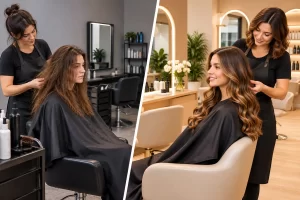

A haircut quote can look simple until you sit in the chair and realize your service is not the same as someone else’s. Two guests may both book color, but one wants a quick root touch-up and the other needs corrective work, extra product, and more time. That is usually the clearest answer to how does salon pricing work – pricing reflects the service, the time, the skill required, and the unique needs of your hair.
At a professional salon, pricing is rarely random. It is built around what it takes to deliver a result safely, beautifully, and consistently. When clients understand the reasoning behind pricing, they can book with more confidence and avoid surprises at checkout.
How does salon pricing work in real life?
Most salons set a starting price for each category of service, then adjust based on the scope of the appointment. A haircut may have one base rate, while color services often begin at a listed price and increase if the hair is longer, thicker, darker, previously colored, or requires a more detailed technique.
This is because salon services are not identical products sitting on a shelf. They are customized professional services. The appointment depends on consultation time, formulation, application, processing, finishing, and the stylist’s trained judgment at every stage.
A simple trim on fine, shoulder-length hair may require far less time than reshaping dense, textured, waist-length hair. Both clients deserve thoughtful care, but the amount of labor is different. Good salon pricing accounts for that difference instead of forcing every client into a one-size-fits-all number.
The biggest factors that affect salon prices
Hair length is one of the first things people think about, and for good reason. Longer hair often needs more shampoo, more color, more styling time, and more detailed sectioning. But length is only part of the picture.
Hair thickness can change a service just as much, sometimes more. Thick hair may require significantly more product and application time than fine hair of the same length. If a stylist needs to mix additional bowls of color, spend extra time blow-drying, or refine more sections for an even result, that affects pricing in a very practical way.
Service complexity matters too. A single-process color is not the same as balayage, full highlights, gray blending, vivid color, or color correction. The more customized and technique-driven the service, the more training, time, and precision it requires.
Previous color history also plays a role. Hair that has been box dyed, unevenly lightened, overprocessed, or treated with incompatible products often needs a more careful plan. Corrective services are usually priced differently because they involve problem-solving, added protection for the hair, and less predictability than a routine maintenance visit.
Then there is finishing. A haircut with a basic dry may differ from a haircut paired with a full blowout, styling, curling, or flat ironing. Some salons bundle finishing into the price, while others separate it. Neither approach is wrong, but it helps to ask what is included.
Why stylist experience changes the price
One reason salon pricing varies from one provider to another is experience. A stylist who has spent years refining cutting, coloring, consultation, and corrective techniques often commands a higher rate than a newer professional still building speed and specialization.
That difference is not just about years in the industry. It also reflects ongoing education. Salons that invest in trend training, advanced color classes, and skill development are investing in better outcomes for clients. Precision work, reliable formulation, and a strong consultation process are part of the value you receive.
For many clients, paying more for a seasoned stylist means fewer disappointments and more consistency over time. For others, seeing a newer stylist at a lower rate may be a good fit for simpler services. It depends on your goals, your hair history, and how much change you are trying to make in one visit.
Why color services often have the widest price range
If haircut pricing feels straightforward, color pricing can feel more layered. That is because color is one of the most customized services in the salon.
A color appointment may involve multiple formulas, toners, developers, glosses, bond-building treatments, and carefully timed steps. One guest may need a quick root retouch. Another may want to shift warmer, add dimension, brighten around the face, and refresh faded ends. Both booked “color,” but the work involved is very different.
How does salon pricing work for highlights, balayage, and color correction?
Highlighting and balayage are often priced according to how much hair is being lightened, where the brightness is placed, and how much detail is needed. A few face-framing pieces take less time than a full transformation with dimension throughout the entire head.
Balayage can be especially variable because it is hand-painted and highly customized. The final price may reflect placement, saturation, toning, and the amount of blending required. Clients often love the softer grow-out, but the service itself can be more labor-intensive than it first appears.
Color correction is usually in its own category because there is no standard formula for fixing uneven bands, unwanted tones, or previous chemical issues. It may take one visit or several. A trustworthy salon will usually discuss expectations clearly before starting because correction work requires honesty, patience, and a realistic plan.
Consultations are part of fair pricing
A thorough consultation protects both the client and the stylist. It helps confirm the goal, assess the starting point, estimate timing, and explain likely costs before the service begins.
This is especially helpful for first-time guests, major color changes, extension inquiries, or anyone unsure what to book. In many cases, a consultation reveals whether the inspiration photo is realistic for the current condition of the hair. That kind of transparency matters. It prevents rushed decisions and creates a better salon experience.
Customized pricing often feels most reasonable when it is paired with clear communication. Clients are not usually frustrated by price alone. They are frustrated by uncertainty. When a salon explains what drives the cost, the service feels more transparent and professional.
What you are really paying for at a quality salon
When you look at a salon menu, you are not only paying for time in the chair. You are paying for professional judgment, sanitation standards, product quality, education, tools, licensing, and the consistency that comes from an experienced team.
A well-run salon also builds pricing around the overall client experience. That includes maintaining a clean environment, using quality color lines and care products, scheduling enough time so appointments do not feel rushed, and making sure guests feel heard from consultation to finish. Those details may not always show up as a line item, but they are part of the service value.
There is also a relationship component. Many clients are not looking for the cheapest possible appointment. They want a stylist who remembers their preferences, understands their hair history, and helps them maintain results over time. That kind of trust is built through consistency, and consistency has real value.
How to read salon pricing without getting confused
The easiest approach is to treat posted prices as a guide, not a guaranteed final total for every head of hair. Look for phrases like “starting at” and understand that they signal customization.
If you are booking online or by phone, describe your hair honestly. Mention length, thickness, past color, and what you want to achieve. If you are not sure what service name fits, say that too. A good front desk team or stylist would rather clarify upfront than guess.
It also helps to ask a few direct questions. Is toner included? Is blow-dry styling separate? Will extra product affect the price? If your hair is especially thick or long, that is worth mentioning early. These are normal questions, and clear answers create a smoother visit.
For clients in Wellington who value a salon relationship, consultation-led pricing often leads to better results than bargain pricing with vague expectations. The number on the menu matters, but the plan behind it matters more.
The best salon pricing is not about charging the most or the least. It is about matching the service to the real work involved, communicating clearly, and respecting the fact that every head of hair is different. When a salon takes that approach, pricing feels less like a mystery and more like what it should be – a reflection of personalized professional care.