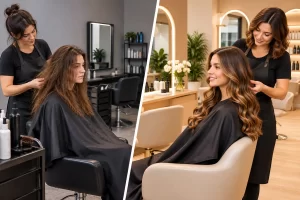
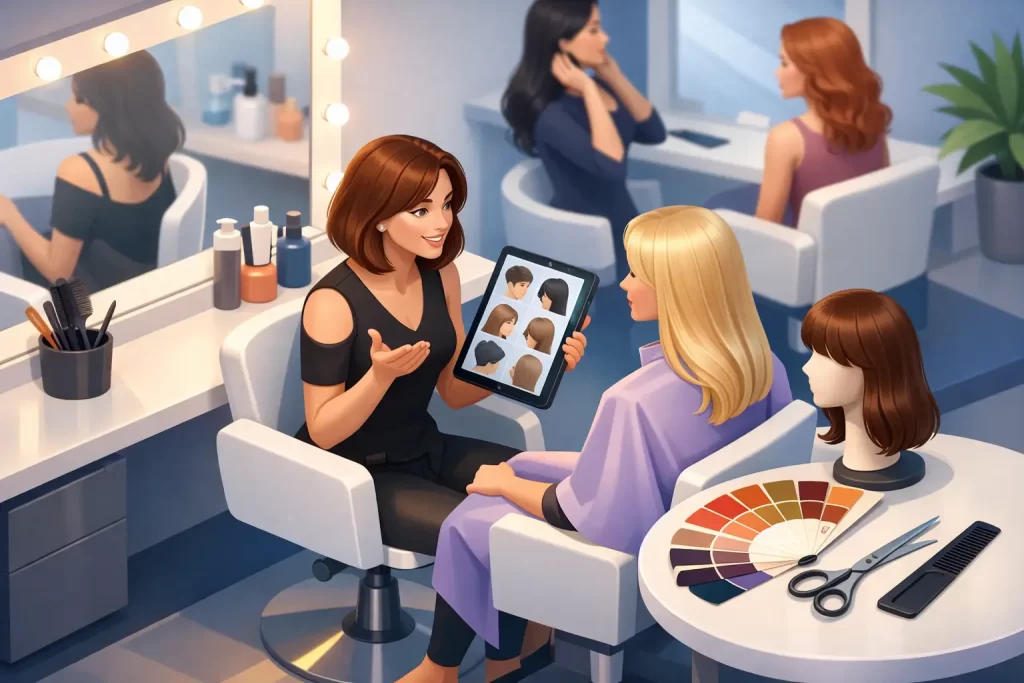
The difference between a haircut you like in the salon and one you love weeks later often comes down to the conversation before the first section is cut. A hair consultation before a haircut gives your stylist the details a photo cannot: how your hair behaves in Florida humidity, what your morning routine looks like, and what you truly want to change.
A great cut is not simply about following a trend or recreating a picture. It is about creating a shape that works with your hair, your features, and your life. At Visions Hair Studio, the consultation is where that personalized work begins.
What Happens During a Hair Consultation Before a Haircut?
A consultation should feel like a relaxed, two-way conversation, not a quick question asked while the cape goes on. Your stylist will look at your current cut, assess your hair’s condition and density, and ask what is working and what is frustrating you.
You may discuss the length you want to keep, how often you are comfortable coming in for maintenance, whether you heat-style your hair, and how your hair changes between wash days. These details influence the cut just as much as the inspirational image on your phone.
Your stylist may also ask about color history, chemical services, recent shedding, scalp sensitivity, or any changes in your hair since your last appointment. This is not unnecessary small talk. Color processing, breakage, new growth patterns, and texture changes can all affect which techniques will give you the healthiest, most balanced result.
Your Hair Has Its Own Rules
The same shoulder-length bob can look dramatically different on fine, straight hair than it does on thick, wavy, or tightly textured hair. Density determines how much weight needs to be removed or preserved. Texture affects where the hair will sit once it dries. Cowlicks, growth patterns, and face-framing layers all need to be considered before the haircut begins.
A professional stylist works with those realities instead of trying to force your hair into a shape that only looks right after a full blowout. If you wear your natural waves most days, for example, a cut should support that routine. If you prefer a polished, smooth style, the stylist can recommend a shape that makes styling more efficient without sacrificing movement.
Bring Inspiration, Then Talk About the Details
Photos are helpful, especially when it is hard to describe the look you have in mind. They show whether you are drawn to soft layers, blunt ends, a shorter fringe, lived-in texture, or a more structured silhouette. Still, a photo should start the conversation, not end it.
Try to bring a few examples rather than one perfect-looking image. Point out exactly what you like in each photo. Is it the length around the face? The volume at the crown? The way the ends look full? You can also share examples of cuts you do not want. This gives your stylist a clearer picture of your preferences.
Be honest about how much styling you are willing to do. A haircut that needs a round brush, hot tools, and products every morning may be beautiful, but it may not be the best match if you prefer to wash, air-dry, and go. There is no wrong answer. The goal is a cut that fits your actual habits, not an idealized version of your routine.
Be Clear About Length and Change
“Just a trim” can mean very different things to different people. Before the appointment begins, show your stylist where you feel comfortable having your hair land. If you are growing out your hair, say so early. If you are ready for a noticeable change but nervous about going too short, tell your stylist that too.
A thoughtful stylist can help you decide whether to make the full change now or take a more gradual approach. For someone with very long hair, removing several inches can feel dramatic even when the new length is objectively still long. For a client transitioning from a heavily layered cut to a fuller shape, it may take more than one appointment to achieve the desired result while retaining length.
This is also the right time to talk about bangs. Fringe can be flattering and fun, but it usually requires more regular maintenance and may need daily styling depending on your texture. A consultation gives you space to weigh that commitment before making the cut.
Discuss Maintenance Before You Commit
The best haircut is one you can maintain comfortably. During your consultation, ask how often you should return to keep the shape looking intentional. A short pixie, crisp bob, or structured fringe may need more frequent appointments than long layers or a soft, blended cut.
Maintenance is not only about salon visits. It includes what happens at home. Your stylist can explain whether your chosen look benefits from heat protection, a lightweight mousse, smoothing cream, curl support, or a particular drying method. Recommendations should be practical and specific to your hair, not a long list of products you will never use.
It is also helpful to mention upcoming events, vacations, or seasonal changes. Wellington’s heat and humidity can influence frizz, volume, and curl pattern, particularly during the wetter months. If you want a style that will hold up for travel, professional photos, or a busy social season, your stylist can plan the cut and styling approach accordingly.
Ask Questions About What Is Realistic
A consultation should build confidence, but it should also set honest expectations. If a style requires more length, a different color placement, or time to grow out previous layers, your stylist should explain that clearly. A skilled professional will not promise an exact result that your current hair cannot reasonably support.
This honesty protects your hair and your experience. For example, fine hair may not hold heavily textured layers the same way thick hair does. Hair that is dry or compromised may need a more conservative approach before taking on extensive thinning or major reshaping. And a dramatic cut may need a short adjustment period while you learn new styling habits.
Ask what the cut will look like when it air-dries, how it will grow out, and what you can do if you want to change it later. These questions are especially useful if you are trying a new stylist, changing your overall look, or returning to the salon after a long break.
The Consultation Continues During the Appointment
The initial conversation is essential, but communication should not stop once the cutting begins. A stylist may check in before removing more length, show you how layers are taking shape, or adjust the plan after seeing how your hair dries. That is a sign of care and technical attention.
You should feel comfortable speaking up as well. If something feels shorter than expected, if you are unsure about adding more layers, or if you want to pause before making another change, say so. Clear communication is part of a successful salon experience, not a disruption to it.
At the end of the service, your stylist should help you understand how to recreate the finished look. Even a beautiful cut needs the right at-home technique to show its best shape. A quick demonstration of where to place a product, how to direct the blow-dryer, or how to refresh your style on day two can make a meaningful difference.
A Better Cut Starts With Being Heard
A haircut should feel personal because it is. Your hair is part of how you present yourself every day, and the right cut can make getting ready feel easier, lighter, and more confident. Taking a few extra minutes to talk through your goals allows your stylist to make decisions with intention rather than assumption.
Come to your next appointment ready to share what you love, what you would like to change, and how you want your hair to work for you. The more open the consultation, the more likely you are to leave with a cut that still feels like the right choice when you style it at home.