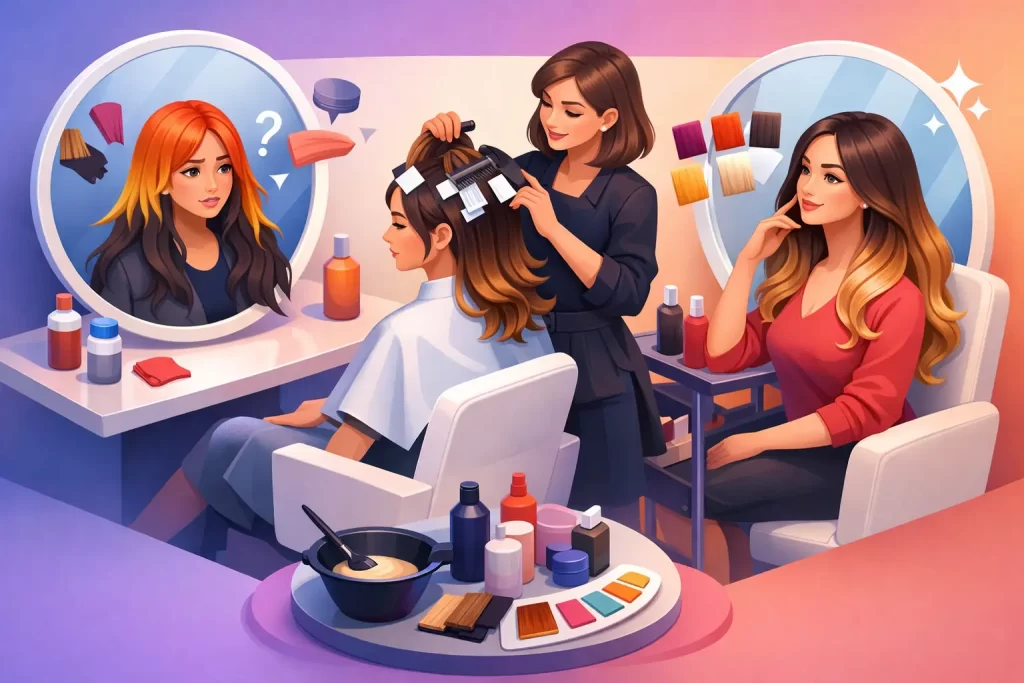
Bad color rarely shows up all at once. It usually appears in stages – roots that grab too warm, mids that look muddy, ends that turn porous and dull, or a blonde that shifts from bright to brassy after one wrong move at home. Professional salon color correction is the process of identifying exactly what went wrong, what your hair can safely handle now, and how to get you to a healthier, more flattering result without making the problem worse.
Color correction is not the same as a standard color appointment. A routine gloss, root retouch, or highlight service follows a familiar formula. Correction work starts with problem-solving. Your stylist has to assess your natural level, existing color history, porosity, previous lightening, tone buildup, condition, and long-term goal before any formula is mixed. That is why a consultation matters so much. Good correction is less about quick fixes and more about making smart choices for your hair.
When professional salon color correction is the right choice
Some color issues are simple and some are not. If your toner faded a little warmer than expected, a targeted gloss may be enough. But if your hair has visible banding, dark spots, overlapping bleach, green or orange tones, or uneven lift from root to end, that usually calls for professional correction.
This is especially true if your hair has a history. Box dye, back-to-back lightening, mineral buildup, old highlights, or multiple salon visits with different formulas can leave several layers of color in the hair at once. The challenge is not just changing the shade. The challenge is changing it evenly while preserving the integrity of the hair.
A trained stylist will also tell you when the best answer is not a dramatic same-day transformation. Sometimes the healthiest correction plan involves two or more appointments. That can feel slower than you want, but it often leads to better color, better shine, and less breakage.
What happens during a professional salon color correction consultation
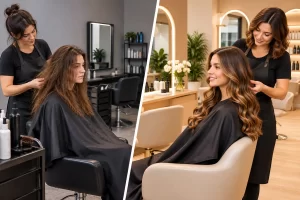
The consultation sets the tone for the entire service. This is where your stylist learns what has been done to your hair, what you use at home, and what result you are hoping to see. Photos can help, but the most useful information often comes from a very honest color history.
Your stylist will look at more than just the visible shade. They will check elasticity, porosity, density, previous lines of demarcation, and whether certain sections are more compromised than others. Hair that looks similar on the surface can behave very differently once color is applied.
This is also the moment when expectations get clearer. If you want to go lighter, your stylist may explain that the goal for the first appointment is balance, not maximum brightness. If your hair is overtoned or too dark, the first step may be carefully removing artificial pigment before any new color is added. If your hair is fragile, strengthening treatments and a lower-stress color plan may come first.
That level of honesty is a sign of professionalism, not hesitation. The safest stylists are often the ones who know when to slow down.
Common problems color correction can address
Uneven color is one of the most common reasons clients seek help. This can look like darker mids, lighter ends, patchy highlights, or bands that separate one application from another. These issues usually come from overlapping color, inconsistent saturation, or past services reacting differently across the hair.
Brassiness is another common concern, but it is not always solved by simply adding ash. Orange, yellow, and gold tones appear for different reasons. Sometimes the hair did not lift enough. Sometimes a toner faded. Sometimes hard water, sun exposure, or product buildup is affecting the result. The fix depends on the cause.
Going too dark can be just as frustrating as going too light. Color that looks flat, inky, or harsh against the skin often needs a more careful approach than clients expect. Removing artificial dark pigment can be unpredictable, especially when multiple layers have built up over time.
Then there is compromised hair. In some correction cases, the color issue and the condition issue are linked. Overprocessed ends, rough texture, snapping, and loss of shine can all affect what is possible in the appointment. Protecting the hair has to stay part of the plan.
Why at-home fixes often create bigger problems
It is understandable to want to fix color quickly at home. The problem is that most store-bought solutions are designed for general use, while correction work is highly specific. A product that says it removes brass can leave one section smoky, another section warm, and a third section unchanged.
Layering more dye over an uneven result usually increases the unevenness. Using bleach without understanding underlying pigment can expose strong orange or yellow tones. Repeated toning can overdeposit color and leave the hair muddy or flat. Even if the immediate result looks better in bathroom lighting, the long-term correction often becomes more complex.
Professional stylists are trained to work with what is actually in the hair, not what the box suggests should happen. That matters when the goal is not just covering a problem, but correcting it in a way that still feels beautiful and wearable.
The real goal of professional salon color correction
The goal is not perfection at any cost. The real goal of professional salon color correction is balanced, healthy-looking hair with a plan that respects both your target shade and your hair’s current condition.
That may mean shifting your goal slightly. For example, a bright icy blonde may not be realistic in one session if the hair is carrying heavy dark dye or showing signs of damage. A soft, dimensional blonde or a blended brunette may be the smarter move for now. In many cases, that adjusted plan ends up looking more polished and more natural anyway.
Dimensional color also plays a big role in successful correction. Instead of forcing every strand to the same tone, your stylist may use strategic depth, brightness, and glossing to create a more even overall look. This can soften harsh lines, reduce the appearance of patchiness, and make regrowth easier to maintain.
What affects timing and pricing
Color correction pricing is usually more customized than standard services, and for good reason. Hair length is only one factor. Thickness, density, previous color history, the amount of product needed, the time required, and the complexity of the correction all matter.
Timing can vary just as much. One guest may need a focused gloss and targeted balancing service. Another may need several hours of corrective work, strand testing, conditioning support, and a long-term maintenance plan. That is why reputable salons avoid one-size-fits-all promises.
If a salon asks detailed questions and explains why your hair requires a custom approach, that is a good thing. It shows they are planning around your actual hair rather than rushing you into a generic service.
How to prepare for a color correction appointment
Come in with clean information, even if your hair is not in perfect shape. Tell your stylist about box dye, bleach, toners, glosses, keratin treatments, pool exposure, and any medications or changes that may affect your hair. If you are not sure what was used, say that too. Guessing helps no one.
Bring a few reference photos, but stay open to professional feedback. The best inspiration images are those with similar starting depth, texture, and density to your own hair. A good stylist will use those photos to understand your direction, then translate that into a realistic service plan.
It also helps to give yourself enough time. Correction appointments are not rushed services. If your schedule is tight or your expectations are fixed on a dramatic same-day result, the process can feel more stressful than it needs to be.
Aftercare matters more than most people think
Once the correction is done, maintenance helps protect the result. Color-safe shampoo, the right conditioner, heat protection, and sensible washing habits all support tone and shine. If your stylist recommends a gloss refresh, bond support, or a specific timeline for your next visit, follow it closely.
Sun, chlorine, hot tools, and hard water can all shift corrected color faster than expected. That does not mean you need a high-maintenance routine. It just means your home care should match the investment you made in the salon.
At a consultation-driven salon like Visions Hair Studio, the best correction work starts with listening. Your stylist should understand not only what happened to your hair, but how you want to feel when you leave the chair – more confident, more comfortable, and back to seeing yourself in the mirror again.
If your color feels off, the smartest next step is not another guess. It is a professional assessment, a thoughtful plan, and a result built around what your hair truly needs right now.