A color change can feel exciting until you see the first inch of grow-out, a brassy section in sunlight, or ends that no longer feel like your own hair. Knowing how to transition hair color is less about making one dramatic appointment and more about creating a thoughtful plan that respects your hair’s condition, your maintenance preferences, and the result you want to see months from now.
Whether you are growing out highlights, returning to your natural shade, shifting from dark to lighter, or embracing gray, the best transition is one that looks intentional at every stage. A professional consultation helps turn an uncertain in-between period into a color plan you can feel good wearing.
Start With the Result You Want, Not the Color You Are Leaving
Before choosing a technique, be clear about where you want to land. “I want to go lighter” can mean a soft sun-kissed brunette, a bright blonde, or simply a more blended version of your current color. “I want to go darker” may mean returning to a rich natural-looking base or adding depth without creating a harsh line as it grows out.
Your starting point matters just as much. Previously lightened hair, dark box color, red tones, gray coverage, and older color on porous ends all respond differently. The same inspiration photo can require completely different steps depending on what is already in your hair.
A good color transition considers three practical questions: How much change do you want at each appointment? How often are you comfortable coming in for maintenance? And how much processing can your hair comfortably handle? Honest answers lead to a more flattering and realistic plan.
How to Transition Hair Color Based on Your Goal
Growing Out Highlights or Balayage
If you are tired of frequent brightening but do not want to suddenly look darker, adding depth is often the answer. Lowlights, a root shadow, or a root melt can soften the contrast between your natural color and lightened ends. This gives the hair dimension while making new growth less noticeable.
A gloss can also refine the tone without a major commitment. If your blonde has become too warm, a toner may cool it down. If it looks overly pale or flat, a warmer gloss can create a softer, more natural finish. These services gradually shift the overall look while preserving movement and brightness.
For many clients, this is the most comfortable route because it allows the lightness to grow out gracefully rather than forcing an immediate return to one solid shade.
Going From Dark Hair to Lighter Hair
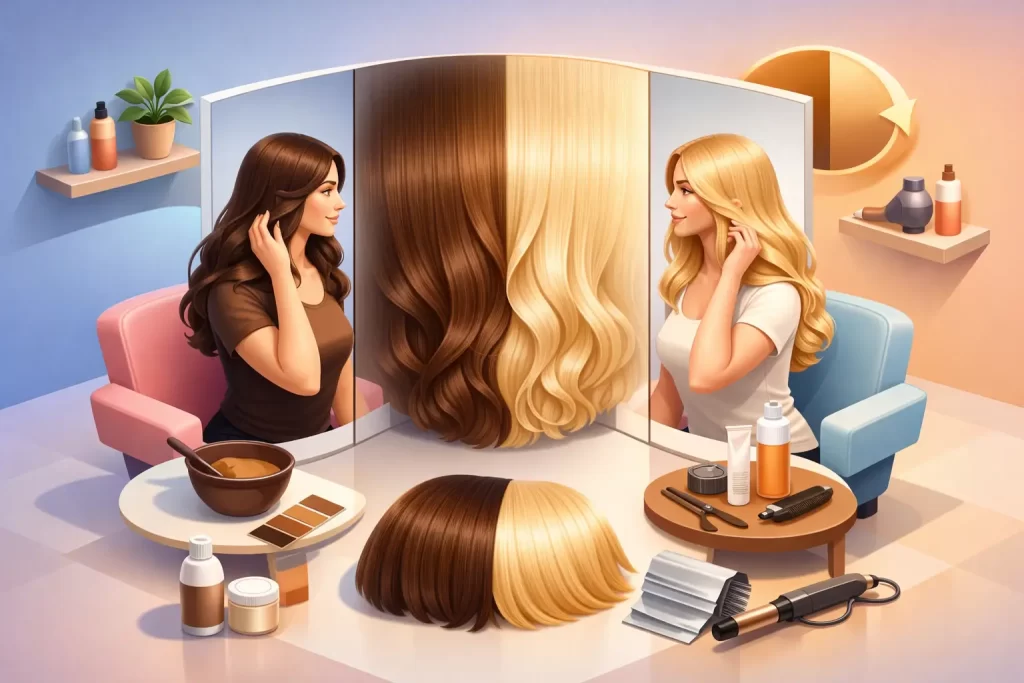
Moving lighter requires patience, especially if your hair has been colored dark. Hair color does not simply lift out evenly. Underlying warm pigments often appear as color is lightened, which is why an overly aggressive appointment can leave hair looking orange, uneven, or stressed.
A gradual approach usually produces the most beautiful result. Your stylist may start by lifting selected areas, such as the face frame and ends, then build brightness over future appointments. This creates dimension early in the process and gives your hair time to recover between services.
There is a trade-off: slower lightening requires more patience, but it typically protects the condition of your hair and allows your stylist to adjust the formula as your color develops. For hair that has been repeatedly darkened, several sessions may be necessary to reach a balanced blonde or light brunette result.
Returning to a Darker, More Natural Shade
Going darker can sound simple, but lightened hair often needs more than a single dark formula. Very porous blonde hair can grab color unevenly or fade quickly if it is not properly filled before the final shade is applied.
Your stylist may use a warmer base layer, often called a filler, before applying the target color. This replaces tones that were removed during lightening and helps the final shade look richer and last longer. The result should have depth and softness, not the flat, inky appearance that can happen when dark color is placed directly over pale hair.
If you are uncertain about going all the way dark, consider a demi-permanent gloss or lowlights first. These options let you see more depth around your face and through the lengths without creating the same level of long-term commitment.
Blending Gray Rather Than Covering It Completely
Gray transitions are personal. Some clients prefer complete coverage, while others want to reduce the visible line of regrowth and allow silver strands to become part of the overall look. Neither choice is more correct. It depends on what makes you feel most confident and how much maintenance fits your routine.
For a softer grow-out, strategically placed highlights and lowlights can blend gray into the rest of the hair. A root smudge or gloss can reduce contrast without erasing every silver strand. As the transition progresses, your stylist can adjust the balance of brightness, depth, and tone so the color looks polished rather than unfinished.
Why a Consultation Makes Such a Difference
Hair color is highly personal, and photos only show the destination, not the process behind it. During a consultation, a stylist can assess your hair density, texture, porosity, previous color history, and overall condition. This is especially important if you have used at-home color, henna, metallic dyes, or multiple formulas over time.
A consultation is also where expectations become clear. If a goal requires more than one appointment, knowing that upfront makes the process far less frustrating. Your stylist can explain what is realistic for the first visit, when you may need a gloss or trim, and how often you should return to maintain the look.
At Visions Hair Studio, the focus is on a personalized approach rather than a one-size-fits-all formula. Hair thickness, existing color, and the complexity of your desired result all affect the service plan. A careful conversation before color begins protects both your hair and your investment.
Give Your Hair a Timeline It Can Handle
Fast transformations are sometimes possible, but they are not always the healthiest choice. If your hair is compromised, your stylist may recommend spacing lightening appointments, trimming damaged ends, or focusing on tone and blending before pursuing more lift.
This is not a setback. It is how skilled colorists preserve the quality that makes a new color look beautiful in the first place. Shiny, touchable hair reflects color better than hair that is dry, fragile, or overprocessed.
Your timeline may also change with the seasons and your schedule. Someone preparing for a wedding or milestone event may want a more focused plan. Someone looking for lower maintenance may prefer a gradual shift that grows out softly through the year. The right pace is the one that supports your hair health and your lifestyle.
Protect Your Color Between Appointments
What you do at home has a direct effect on how your transition looks. Use products chosen for your hair type and color goal, and avoid washing with very hot water when possible. Heat styling should be paired with heat protection, especially after lightening, since fragile ends are often the first place where color can fade or become dull.
If you are blonde or moving lighter, purple or blue-toned shampoo may help manage unwanted warmth, but it should not be used automatically at every wash. Overuse can leave some hair looking dull, dry, or slightly violet. Your stylist can recommend how often it makes sense for your specific tone.
Deep conditioning and bond-supporting treatments can be helpful for processed hair, but they are not a substitute for a careful color plan. If your ends are breaking or becoming overly porous, a trim and a pause in chemical services may be the best next step.
Know When You Need Color Correction
Not every uneven color change is a full correction, but some situations need added care. Banding from old box dye, strong orange tones after attempted lightening, greenish ends, and uneven patches from previous highlights are all signs that a customized corrective service may be needed.
Avoid trying to fix these concerns with another at-home formula. Layering color without understanding what is underneath can make the correction more complex and may limit what can safely be achieved in the next salon appointment. Bring an honest color history and photos of products used when possible. Clear information helps your stylist make the safest choices.
A successful color transition should never make you feel like you are waiting to look finished. With the right blend, tone, and maintenance plan, every appointment can move you closer to your goal while giving you a color you are happy to wear right now.