A great color appointment starts before the first foil is placed. Whether you want softer gray coverage, dimensional brunette color, a brighter blonde, or a complete change, finding a hair color specialist Wellington clients can trust means choosing someone who listens closely, assesses your hair honestly, and creates a plan that suits both your look and your routine.
Hair color is personal. The right shade can make your complexion look more vibrant, refresh your style, and help you feel put together without changing everything about your hair. But beautiful results are not just about choosing a photo from your phone. They come from professional consultation, precise application, ongoing education, and realistic guidance about what your hair can achieve in one appointment.
What a Hair Color Specialist in Wellington Should Offer
Color work is equal parts technical skill and careful communication. Your stylist should ask about your color history, including at-home color, past lightening services, chemical treatments, and the products you use. Those details affect how hair responds and help prevent surprises during the service.
A color specialist should also look at the condition, density, texture, and natural level of your hair. Fine hair may process differently than thick, resistant strands. Previously lightened hair may need a gentler approach than virgin hair. These factors are why professional color pricing and timing can vary from one guest to another. A customized service is not a one-size-fits-all formula.
Just as important, a specialist should explain the process in language you can understand. If the inspiration photo requires several appointments to reach safely, you deserve to know that upfront. If a warmer tone will hold better than a cool ash shade on your hair, your stylist should explain why and offer an option that still feels like you.
Start With a Consultation, Not a Guess
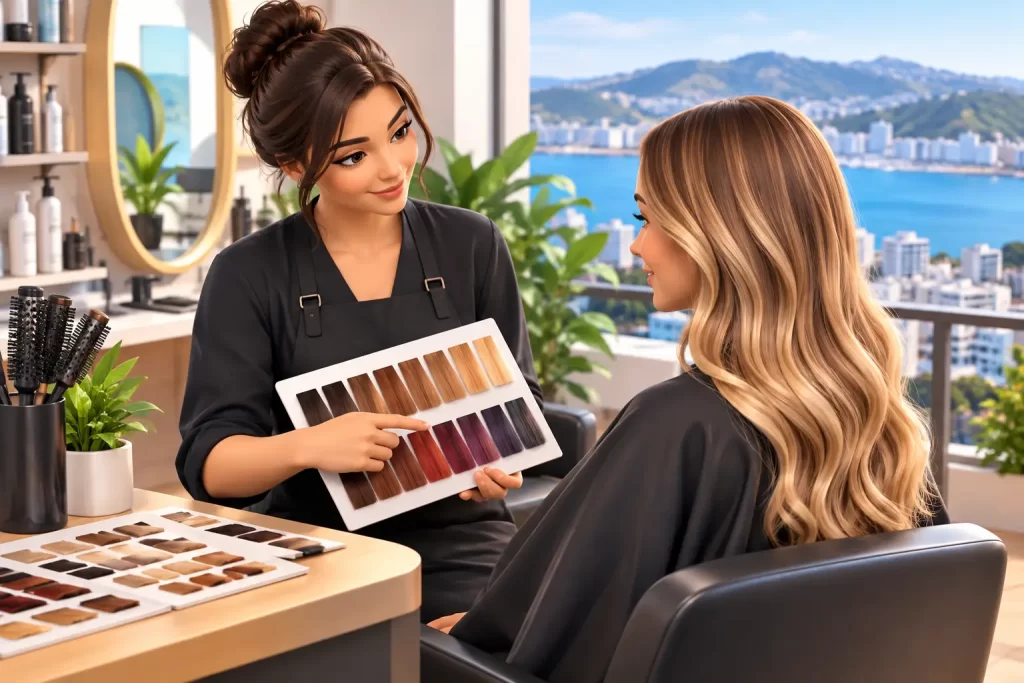
The best color consultations are collaborative. Bring photos if they help communicate your goal, but be ready to discuss what you like about each image. Is it the brightness around the face? The lived-in root? The depth at the ends? Two photos may look similar at first glance while requiring completely different techniques.
Your stylist should consider your lifestyle as well. Someone who prefers salon visits every six to eight weeks may be well suited to traditional gray coverage or a polished all-over color. Someone who wants more time between visits may prefer dimensional highlights, balayage-inspired placement, or a root melt that grows in softly. Neither approach is better. The right choice depends on the maintenance level you want and the budget you plan to dedicate to your color.
A clear consultation also includes a conversation about at-home care. Color-treated hair benefits from products selected for its specific needs, whether that means moisture, color preservation, toning, or support for lightened ends. Professional recommendations should be practical, not pressured. The goal is to help your color remain fresh and your hair feel healthy between appointments.
Questions Worth Asking Before Your Appointment
You do not need to know salon terminology to have a productive conversation. Ask how often your chosen look will need maintenance, what steps the appointment may include, and whether your hair history could affect the result. It is also helpful to ask what you can reasonably expect after the first visit.
If you are covering gray, ask whether a permanent color, demi-permanent color, or blending technique fits your goal. If you are going lighter, ask how the stylist will protect the integrity of your hair and how many sessions may be needed. These are thoughtful questions, and a professional should welcome them.
The Difference Between Color Services
Many guests use the word “highlights” to describe any lighter result, but color techniques create distinctly different effects. Understanding the general purpose of each service can make your consultation easier.
Traditional highlights use controlled sections of hair to create brightness from the root area through the lengths. They can be delicate and natural or bold and high-contrast, depending on placement and tone. Balayage-style color is painted for a softer, more blended effect, often with less visible regrowth. Foilyage combines painting with foils to create additional lift while keeping a diffused finish.
A single-process color typically applies one formula to refresh roots, deepen natural color, cover gray, or shift the overall tone. Glosses and toners refine unwanted warmth, add shine, or refresh faded color. Lowlights add depth, which can be especially useful when hair feels overly bright or lacks dimension.
The service names matter less than the final plan. A skilled stylist may combine techniques to create a result that looks natural in real life, not just under salon lighting. That can mean a few face-framing highlights, a soft root blend, strategically placed lowlights, and a gloss to bring everything together.
Why Hair Health Has to Be Part of the Plan
The lightest blonde or biggest color correction is not always the right immediate goal. Hair that has been heavily processed, exposed to frequent heat styling, or colored repeatedly at home may need a more gradual path. This is not a limitation of your style. It is professional care.
A knowledgeable color specialist will assess elasticity, porosity, and existing damage before recommending aggressive lightening. In some cases, the healthiest choice is to improve the tone and condition first, then continue lifting at later appointments. A carefully planned transition often produces a better, more lasting result than trying to force a dramatic change in a single day.
At Visions Hair Studio, the focus is on personalized appointments that respect both the look you want and the condition of your hair. Ongoing stylist education matters because color trends, formulations, and techniques evolve, but healthy-looking, wearable results remain the priority.
Maintenance Makes the Color Feel Like Yours
Fresh color is exciting, but the most satisfying results are the ones you can maintain comfortably. Before committing to a look, think about how it will fit your schedule. Bright blonde may require regular toning and strategic touch-ups. Rich reds can fade faster than other shades and often benefit from consistent refreshing. Gray coverage commonly needs root maintenance based on how quickly your hair grows and how much gray you want to conceal.
Dimensional brunettes, rooted blondes, and soft blended color can offer more flexibility between appointments, but they still need care. Sun exposure, chlorine, hard water, and heat tools can shift tone or reduce shine. Using the right cleanser, conditioner, and heat protection at home helps preserve the work done in the salon.
Your next appointment should not be a mystery. A good stylist will help you understand when to return and what service you are likely to need. Some guests alternate full highlight appointments with smaller maintenance visits. Others schedule a gloss between major color services. A plan tailored to your hair keeps color from becoming an ongoing correction project.
Choose Trust Over a Quick Fix
When comparing salons, look beyond a dramatic before-and-after photo. Pay attention to whether the team is known for consultations, cleanliness, attentive service, and continued professional training. Color is a chemical service, and the environment, products, process, and expertise behind it all matter.
It also helps to choose a stylist relationship rather than treating every color appointment as a separate experiment. Over time, a colorist learns how your hair lifts, which tones flatter you, how quickly your gray grows in, and what level of maintenance feels realistic. That familiarity leads to greater consistency and more confident decisions.
The right hair color should feel like it belongs to you. Start with an honest conversation, allow room for a thoughtful plan, and choose a specialist who values the health of your hair as much as the beauty of the finished color.