A few brighter pieces around your face can change the way you feel every time you catch your reflection. But deciding between balayage or full highlights is not just a matter of choosing a photo you like. Each technique creates a different kind of brightness, grows out differently, and asks different things of your hair and your appointment schedule.
The best choice starts with an honest conversation about your current color, texture, gray coverage needs, lifestyle, and the amount of maintenance you actually want. A skilled color consultation turns inspiration into a plan that makes sense for your hair.
What Is the Difference Between Balayage and Full Highlights?
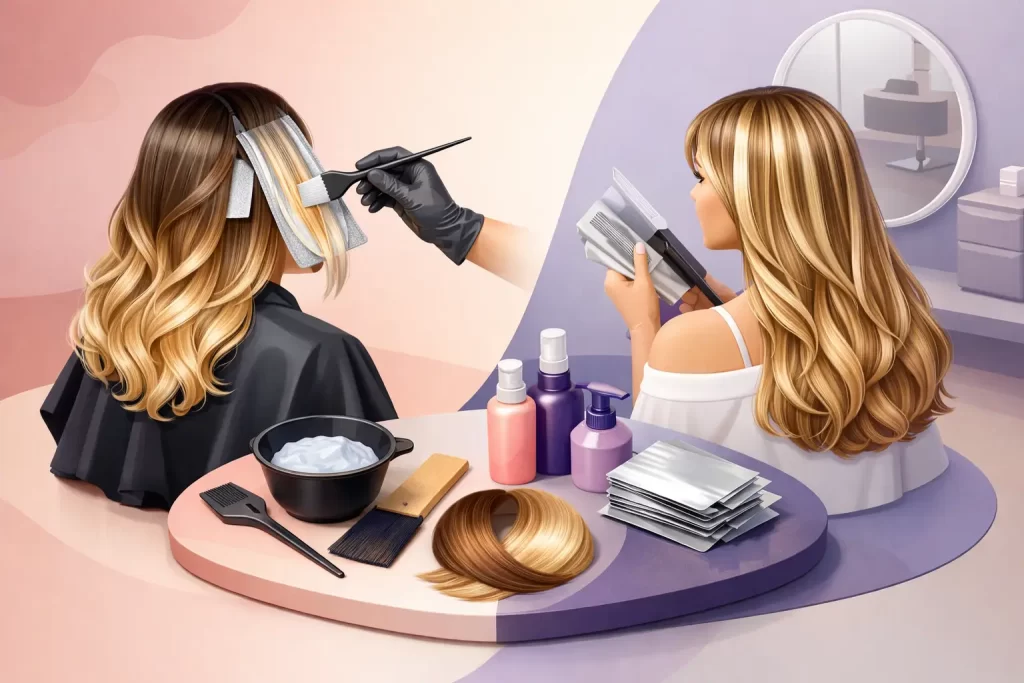
Balayage is a hand-painted highlighting technique. Rather than placing every lightened section in foils from root to end, a stylist paints selected areas to create soft, blended dimension. The placement is often tailored around the face, through the mid-lengths, and toward the ends, giving the hair a natural, sun-kissed effect.
Full highlights use foils throughout the head to lift many sections of hair, often beginning close to the root. A full highlight can be delicate and blended or noticeably bright, depending on the size of the sections, the color formula, and how much contrast you want. The key difference is coverage: full highlights generally create more consistent lightness from the top layers through the interior of the hair.
Neither option is automatically better. Balayage tends to look softer and more lived-in. Full highlights tend to deliver a more even, all-over blonde or brighter color result. The right technique depends on the result you want to see in the mirror, not simply what is popular on social media.
Choose Balayage for Soft, Lived-In Dimension
Balayage is often a strong choice for someone who wants movement and brightness without a sharp line of regrowth. Because the lightener is usually placed away from the scalp in many areas, new growth can blend more naturally as time passes.
This technique works especially well when you want a dimensional brunette, warm caramel ribbons, beachy blonde ends, or a subtle shift that still feels close to your natural base color. It can also be customized for clients who want brighter pieces around the face while keeping depth at the crown and underneath.
Maintenance is one of balayage’s biggest advantages, but “low maintenance” does not mean no maintenance. You may be able to go longer between major lightening appointments, often returning for a toner, gloss, trim, or face-framing refresh in between. At home, color-safe shampoo, heat protection, and occasional moisture treatments help keep lightened hair looking polished instead of dry or brassy.
Balayage may not be the fastest route to a very light, highly blonde result, particularly if your starting color is dark or previously colored. Achieving significant lift while protecting the condition of the hair can take more than one appointment. That is not a limitation of good color work. It is a careful approach that respects the health and integrity of your hair.
Balayage may suit you if you want:
A softer grow-out, visible dimension, fewer full lightening appointments, or a color result that looks naturally bright rather than uniformly blonde. It is also a beautiful option when you like wearing your hair wavy or textured, since the painted placement can emphasize movement.
Choose Full Highlights for Brighter, More Even Color
Full highlights are ideal when you want more lightness throughout your hair, including near the root. Foils allow the stylist to work with controlled, closely placed sections, which can create a cleaner, brighter result than balayage alone.
If your goal is to feel significantly blonder, blend gray hair, brighten a solid-looking color, or reduce the contrast between darker regrowth and lighter lengths, full highlights may be the better direction. They can be fine and natural-looking, not just bold or striped. Modern foil work can create softness and dimension while still delivering the coverage that many clients want.
A full highlight appointment is also useful when your hair needs an overall reset. Perhaps an older balayage has become too warm at the ends, or your color has grown out enough that brightness is sitting too low. Foils can bring lightness back toward the scalp and distribute it more evenly through the hair.
The trade-off is maintenance. Since highlights commonly begin closer to the scalp, new growth is more visible than it is with a softer balayage placement. Many clients schedule a refresh around every six to 10 weeks, though the right timing varies with your natural color, gray percentage, and personal preference.
Full highlights may suit you if you want:
More overall brightness, a lighter blonde effect, stronger gray blending, or a noticeable change from a darker base. They are often the practical choice for clients who prefer a polished, consistently bright color and are comfortable maintaining it regularly.
Balayage or Full Highlights: Consider Your Starting Point
Your current hair matters as much as your desired result. Virgin hair, previously highlighted hair, permanent color, box color, and older color correction work all respond differently to lightening. A photo of soft beige blonde may be achievable in one visit for one person and require a gradual plan for another.
Hair density and texture also influence placement. Fine hair can look fuller with carefully positioned contrast, while thick hair may need more sections to create brightness that is visible throughout. Curly and textured hair benefit from placement that considers how the hair expands, bends, and catches light in its natural pattern.
For clients in Wellington and throughout Palm Beach County, sun exposure, pool time, and humidity can also affect how color wears. Blonde and lightened hair may become warmer between visits, while frequent washing and time in chlorinated water can leave it feeling dry. A toner or gloss can refine the tone, but healthy-looking color also depends on a home routine matched to your hair.
Gray Coverage Is a Separate Conversation
Highlights can blend gray beautifully, but they do not always provide full root coverage. Balayage can soften the appearance of gray around the hairline and part, particularly when it is paired with strategically placed lighter pieces. Full highlights can disperse gray by blending it into a brighter overall color.
If you want to fully cover resistant gray at the root, your stylist may recommend combining a root color service with balayage or highlights. This is common and highly customizable. Root color handles coverage, while highlights create dimension so the final result does not look flat or overly solid.
The right plan may evolve as your gray pattern changes. A consultation-based approach lets you adjust placement, root formula, and timing instead of committing to a routine that no longer serves your goals.
Ask About the Maintenance Plan Before You Commit
Color looks best when the service and maintenance schedule work together. Before choosing a technique, talk through what your next few months could look like. Ask whether you will need a toner between lightening appointments, how often the root area may need attention, and which products will support your color at home.
It is also helpful to be clear about your budget and time. Pricing for color services can vary based on hair length, thickness, existing color, the amount of product needed, and the complexity of the work. A detailed consultation should set realistic expectations before the appointment begins.
At Visions Hair Studio, the goal is not to fit every client into one color category. It is to create a result that fits your features, your hair’s condition, and the way you want to maintain it after you leave the salon.
The Best Color Choice Should Still Feel Like You
Bring inspiration photos, but pay attention to what you are drawn to in them. Is it the bright blonde around the face? The dark root for contrast? The soft ribbons through the ends? Those details help your stylist determine whether balayage, full highlights, or a blend of both will give you the effect you want.
A great color appointment should leave you with more than a beautiful first-day result. Choose the service that you will feel good wearing at week two, week eight, and at your next visit. When the technique matches your routine and your hair goals, maintaining your color feels less like a chore and more like a little time set aside for yourself.