A curly haircut can look dramatically different from one client to the next, even when the requested shape sounds the same. The best curly haircut results come from understanding how your individual curl pattern, density, texture, routine, and styling preferences work together. A photo can start a conversation, but a thoughtful consultation is what turns inspiration into a cut that feels like you.
Curly haircut results begin with the consultation
Curly hair is not one category. Loose waves, springy ringlets, tight coils, and mixed curl patterns all respond differently to length, layers, weight removal, and product. Even two people with similar curl types can need very different cuts because one may have fine, high-density hair while the other has thick strands with less overall density.
Before cutting begins, a stylist should look at how your hair falls naturally, where it expands, how much it shrinks as it dries, and whether certain areas need more support or less bulk. Your daily routine matters, too. Someone who diffuses and uses curl-defining products can maintain a more layered shape than someone who air-dries and prefers a low-maintenance routine.
This conversation is also the time to be clear about your priorities. Do you want more volume at the crown? A softer face frame? Less triangle-shaped fullness at the ends? More length retention? There is no wrong preference, but each goal can affect the technique and maintenance that will make sense for your hair.
The cut should create a shape, not just remove length
A successful curly cut is about balance. Cutting a few inches from the ends may make hair healthier, but it does not automatically create a more flattering or manageable shape. The placement of layers, the weight left around the perimeter, and the relationship between the crown and the lower sections all influence the finished result.
Layers can add movement, with a trade-off
Strategic layers can help curls lift, separate, and move rather than sit in one heavy mass. They are often useful when hair feels weighed down or when the bottom becomes overly wide. However, more layers are not always better. Over-layering can leave the ends looking thin, create uneven shrinkage, or make a curl pattern appear less cohesive.
For clients who love a fuller, rounded silhouette, carefully placed layers may be the answer. For clients growing out their curls or trying to maintain a stronger perimeter, a more restrained approach may provide better results. The goal is to choose the right amount of internal movement without sacrificing the shape you enjoy.
The perimeter affects fullness and length
The outline of the haircut has a major effect on how curly hair looks from every angle. A blunt or gently rounded perimeter can make ends appear denser and can help preserve visual length. A more graduated perimeter may create a lighter, softer finish but can also make the hair look shorter once it dries.
Shrinkage is a real part of curly hair planning. Depending on the curl pattern, hair may appear several inches shorter dry than it did when stretched or wet. An experienced stylist accounts for that change before deciding where to make the first major cut.
Dry cutting versus wet cutting: why technique matters
Many curly cuts are performed at least partly on dry hair because it allows the stylist to see the curl’s natural behavior in real time. They can observe where each section springs up, where density collects, and how the haircut will look in everyday wear. This can be especially helpful for clients with multiple curl patterns or hair that changes significantly from wet to dry.
Wet cutting can also have a place, particularly when creating a clean foundational line, refining length, or working with certain textures and desired shapes. The best method is not a one-rule decision. It depends on your hair, your goals, and the stylist’s plan for achieving them.
What matters most is that the hair is evaluated in its natural state and checked again once styled. A curl-focused appointment should not end with a cut alone. The finished look needs to be assessed after the hair has dried or been diffused so details can be refined where necessary.
Styling reveals the true haircut results
A haircut gives curls a framework, but styling reveals the final shape. Product choice, application method, drying technique, and even how much you touch the hair while it dries can change the outcome.
For example, a client may leave with defined, bouncy curls after a professional styling service and find that the same look does not appear at home. That does not necessarily mean the haircut was unsuccessful. It may mean the at-home routine needs adjustment. A stylist can help identify whether you need more moisture, stronger hold, lighter products, better sectioning, or a different drying method.
The most useful styling guidance is realistic. If your mornings allow only ten minutes, your routine should be built for ten minutes, not for a complicated process you will abandon after one week. A beautiful curly cut should work with your real life, not ask you to reorganize it.
What to expect immediately after a curly haircut
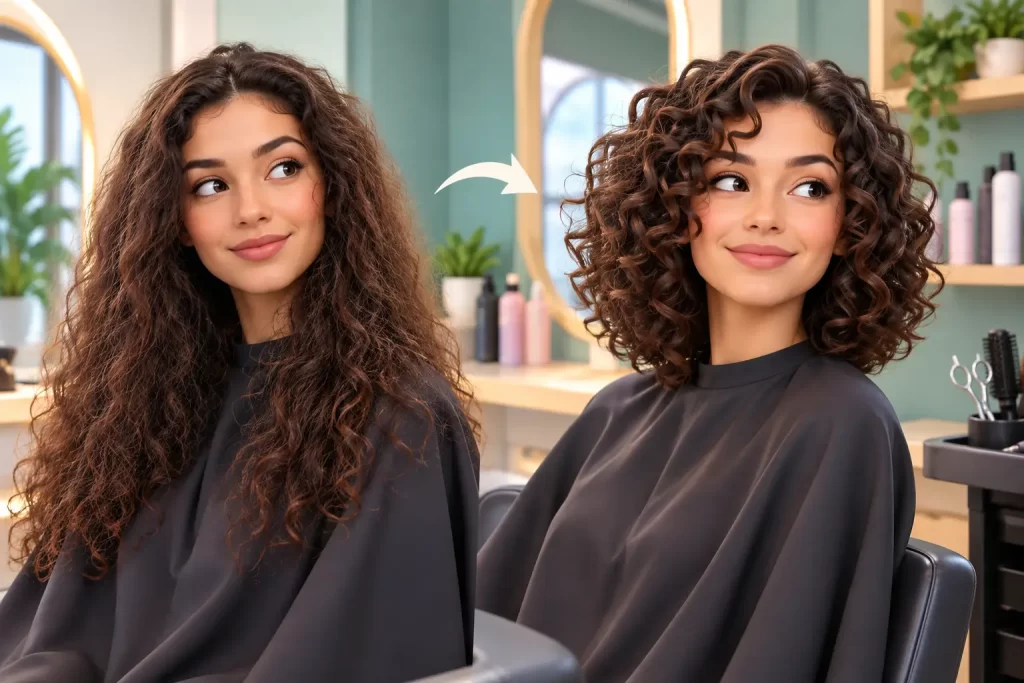
Fresh curly haircut results can feel surprising, especially if you have been wearing the same shape for a long time. More layers may create additional volume at first. Removing damaged or stretched ends may make the hair spring up. A more intentional face frame can make your features feel more visible, even if only a modest amount of length was removed.
Give yourself a few wash days to get to know the new shape. Curls can settle differently after the first shampoo, and you may need to adjust the amount of product you use. If you previously relied on heavy creams to control bulk, a lighter hand may work better after a well-balanced cut. If your hair now has more lift, stronger hold may help preserve definition without flattening it.
That said, you should not have to wait weeks for a haircut to become presentable. A well-executed cut should feel intentional when you leave the salon, while still allowing for the normal adjustment period of learning a new style.
How to protect your results between appointments
Curly hair maintenance is less about chasing perfection and more about preserving the shape and health of the hair. Regular trims can prevent split ends from traveling upward and help keep layers from losing their purpose. The right timing varies by haircut, hair health, color service, and how quickly your hair grows, but many clients benefit from reassessing their shape every few months.
At home, gentle detangling, moisture appropriate for your texture, and minimizing excessive heat can all support a healthier-looking curl pattern. If you wear your hair up often, vary the placement of ponytails and buns to avoid repeated tension in the same areas. For color-treated curls, professional guidance matters even more because lightening and chemical services can change porosity and elasticity.
A good appointment also includes honest feedback. If one area always falls flat, if your bangs shrink more than expected, or if you cannot recreate a certain styling step, mention it at your next visit. These details help your stylist refine the haircut over time rather than starting from scratch at every appointment.
Choose expertise over a one-size-fits-all curl cut
The right curly haircut is not defined by a trendy technique or a single before-and-after photo. It is defined by how your hair behaves after you wash it, style it, sleep on it, and live in it. At Visions Hair Studio, a personalized consultation helps ensure the cut reflects your texture, preferences, and comfort with at-home styling.
When a stylist listens closely, evaluates the hair thoughtfully, and explains the plan clearly, the result is more than a flattering salon-day finish. It is a shape that supports your curls and gives you more confidence each time you wear them naturally.