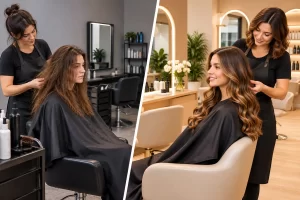
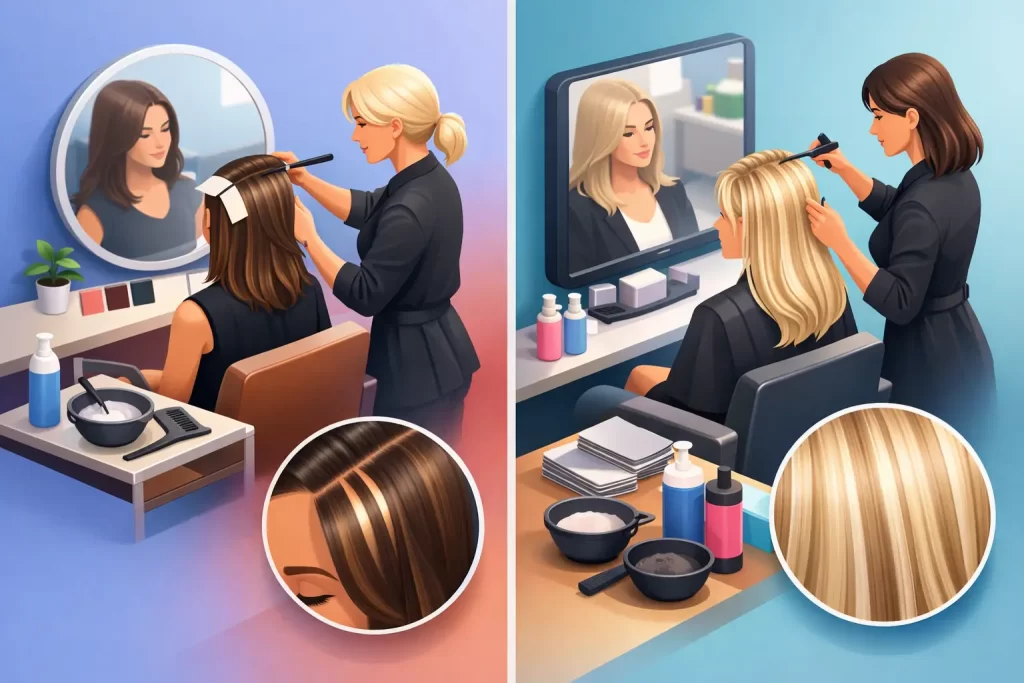
The difference between a color appointment you love and one that feels like too much often comes down to placement. When considering partial highlights vs full highlights, the best choice is not simply about how blonde you want to be. It is about where you want brightness, how often you want to maintain it, your hair history, and how natural or noticeable you want the final result to feel.
A thoughtful color consultation turns those preferences into a plan that works with your hair, not against it. Here is what to know before booking your next highlighting service.
What Is the Difference Between Partial and Full Highlights?
Highlights lighten selected pieces of hair to create dimension, movement, and contrast. Both partial and full services can be customized with fine babylights, bolder ribbons, face-framing pieces, or blended lived-in color. The main distinction is the amount of hair your stylist highlights.
Partial highlights focus on visible areas, usually around the face, crown, and top layers of the head. When your hair is worn down, the color brightens the areas people see first while preserving more of your natural base underneath.
Full highlights extend through the top, sides, back, and underneath layers. This creates a brighter overall result because lightened pieces are distributed throughout the entire head of hair. The service may involve more foils, more application time, and more consideration for your hair’s condition.
Neither option is automatically better. The right approach depends on the look you want now and the maintenance routine you can realistically keep.
Partial Highlights Create Soft, Targeted Brightness
Partial highlights are an excellent choice for someone who wants a natural-looking refresh without changing the overall depth of her hair. A few carefully placed highlights around the face can make the complexion appear brighter, while color through the crown adds softness and dimension when hair moves.
This option is often a comfortable starting point for first-time highlight clients or for someone returning to color after a break. Because fewer sections are lightened, a partial service can be a more conservative way to see how your hair responds to lifting and toning. It also leaves more natural hair untouched, which can be helpful when preserving depth is part of the goal.
Partial highlights work particularly well for clients who usually wear their hair down or who want a subtle, sun-kissed effect. They can also be a smart maintenance appointment between fuller color services. Your stylist may brighten the hairline and top layers while blending new growth into the existing color.
The trade-off is visibility. If you frequently wear your hair in a ponytail, bun, or half-up style, the darker hair underneath may be more noticeable. A partial highlight service can still look beautiful, but it will not provide the all-over brightness that a full service can deliver.
Full Highlights Offer More Overall Lightness
Full highlights are designed for clients who want brightness from every angle. By working through the back and underneath sections as well as the top layers, your stylist can create a more complete blonde, a higher-contrast dimensional brunette, or a more dramatic color transformation.
This service is often the better fit when your current color has grown out unevenly, your previous highlights have become too sparse, or you want your hair to look consistently bright whether it is down, curled, braided, or pulled back. It can also give your stylist more opportunity to blend bands of old color and create a more balanced result from root to ends.
A full highlight appointment generally requires more time than a partial service, especially on thick, long, or color-treated hair. The investment can vary based on the amount of hair, the desired level of lift, and any additional work needed to protect and refine the tone.
More lightening does not have to mean overly blonde hair. Full highlights can be soft and natural when the placement, spacing, and toner are chosen carefully. The goal is controlled brightness that complements your skin tone, haircut, and lifestyle.
Partial Highlights vs Full Highlights: How to Choose
Start with the result you want to see in the mirror. If you like your natural color and only want added dimension around your face and through the top, partial highlights may give you exactly enough change. If you want to feel blonde or noticeably lighter throughout, full highlights will usually provide a more satisfying result.
Your usual hairstyle matters, too. Clients who wear their hair up often tend to appreciate the coverage of full highlights because the underside is included. Clients who primarily wear their hair down may find that partial highlights give them the brightness they want with less overall processing.
Hair history is another key part of the decision. Previously colored hair, dark color buildup, at-home color, and fragile ends can all affect what is realistic in one appointment. A professional stylist will assess your hair’s condition and create a color plan that prioritizes both the result and the integrity of your hair. Sometimes a partial highlight is the right first step toward a larger color goal. Other times, a full highlight is appropriate but should be completed gradually over more than one visit.
Maintenance preferences should also guide the choice. Highlights grow out more softly than a solid all-over color, but they still need periodic refreshing. Partial highlights can often be maintained with a less extensive appointment when the overall brightness still feels balanced. Full highlights may allow more time between appointments if the blend is soft, yet they may require a fuller refresh when you are ready to restore brightness throughout.
Toner and Placement Matter as Much as Coverage
The terms partial and full describe where highlights are placed, but they do not tell the whole story. Fine, closely woven highlights create a delicate blend. Larger sections create more contrast. A bright face frame can make a partial service feel more noticeable, while low-contrast highlights can make a full service look understated.
Toner also shapes the final result. It refines the tone after lightening, helping create shades that are creamy, beige, golden, cool, or neutral depending on your preference and what your hair can achieve safely. Your stylist can recommend tones that complement your complexion while setting realistic expectations about how your hair may lift.
This is why photos are useful during a consultation, but they should be treated as inspiration rather than a guarantee. The same reference photo can look different depending on a person’s natural level, previous color, texture, density, and haircut.
Caring for Highlighted Hair Between Appointments
Both services benefit from a consistent home-care routine. Use salon-recommended products suited to color-treated hair, limit high heat when possible, and apply heat protection before blow-drying or using hot tools. A moisturizing mask can help maintain softness, while a toning product may be recommended when unwanted warmth begins to show.
Avoid using a purple or blue shampoo more often than advised. These products can be helpful, but overuse may leave certain hair types looking dull or overly cool. Your stylist can help you choose a routine that supports your color without drying out your hair.
Regular trims also matter. Lightened ends can appear less polished when they are dry or split, even when the color itself is beautiful. Keeping the haircut maintained helps highlights look fresh and intentional.
Make the Decision With a Personalized Consultation
At Visions Hair Studio, a color consultation is the time to discuss your current hair, your inspiration, your budget, and how much upkeep feels right for your schedule. Your stylist can assess density, length, previous color, and the amount of brightness needed to create your preferred look. Pricing and timing are best determined after those hair-specific details are understood.
Bring a few inspiration photos, but also share what you do not want. Maybe you want brightness without visible streaks, a blended grow-out, or enough coverage to feel confident wearing your hair up. Those details help your stylist recommend partial or full highlights with clarity.
The most flattering highlights are not defined by the number of foils. They are the ones that suit your hair, fit your routine, and still make you feel like yourself when you leave the salon.