A few short hairs around your hairline are not always new growth. If they feel rough, uneven, or seem to multiply after brushing, styling, or a color appointment, hair breakage may be the reason. The good news is that breakage is often manageable once you identify what your hair is reacting to and adjust your routine with care.
Hair can be beautifully styled, colored, and worn in the looks you love while still being protected. The key is understanding your hair’s current condition, respecting its limits, and getting professional guidance before small signs of damage become a bigger setback.
What Hair Breakage Looks Like
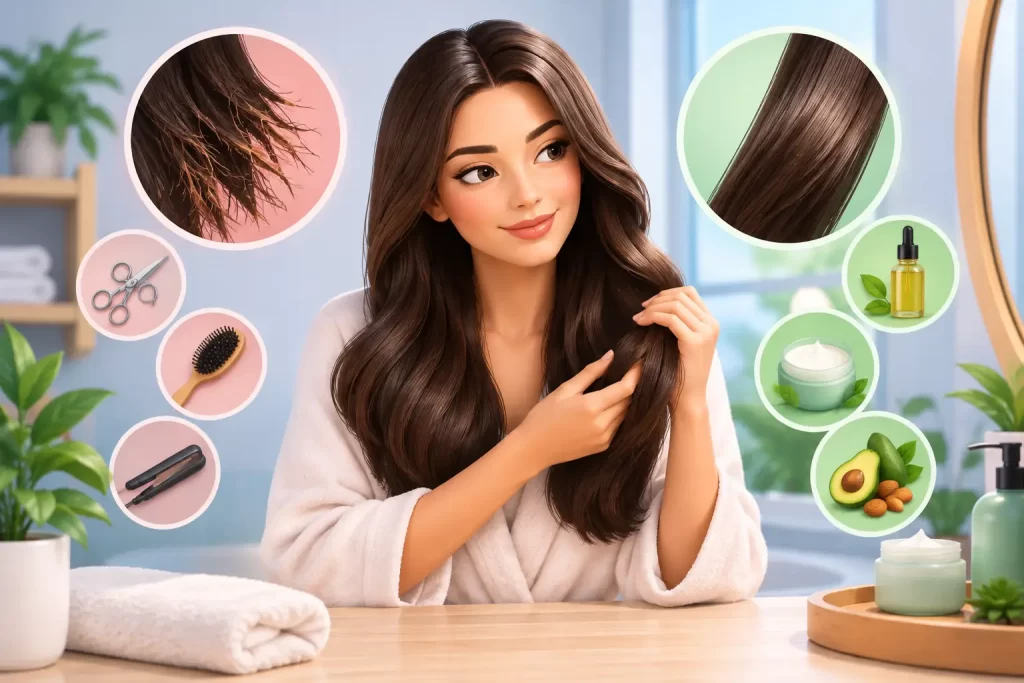
Hair breakage happens when the strand snaps somewhere along its length. Unlike shedding, which releases a complete strand from the root and often has a small white bulb at one end, broken hair is usually shorter, uneven, and lacks that bulb.
You may notice more small pieces in the sink, on your clothing, or in your brush. Your ends can look thin or frayed even after a trim, and the overall shape of your haircut may lose its clean line. Some people also see a halo of shorter hairs at the crown, nape, or around the face where hair experiences the most friction and handling.
Breakage can make hair feel as though it will not grow, even though it is growing from the scalp. When the ends repeatedly snap off, length retention becomes difficult. That distinction matters because the best response is not always a growth product. Often, the priority is reducing damage to the hair already on your head.
Common Causes of Hair Breakage
Most breakage is not caused by one single mistake. It tends to build over time through a combination of chemical services, heat, tension, friction, and daily habits. Your hair texture, density, curl pattern, prior color history, and at-home routine all affect how much stress it can tolerate.
Heat that is too hot or too frequent
Blow-drying, flat ironing, curling, and hot tools can create polished results, but high heat removes moisture and weakens the strand over time. Using a flat iron on damp hair is especially damaging because the water inside the hair shaft heats rapidly. Repeated passes over the same section add up as well.
You do not necessarily need to stop heat styling altogether. Use a heat protectant, work with fully dry hair when using irons, and choose the lowest temperature that achieves the result you want. Fine, lightened, or previously damaged hair typically needs less heat than coarse, untreated hair.
Color and chemical processing
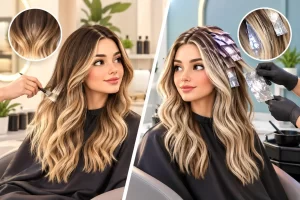
Lightening, permanent color, relaxers, smoothing services, and perms change the hair’s structure. When performed thoughtfully and paired with the right home care, many clients can enjoy these services successfully. But overlapping lightener, pushing hair beyond its realistic lifting limit, or combining several intensive services too close together can leave strands fragile.
This is where a detailed consultation has real value. A stylist should consider your color history, the condition of your ends, your desired maintenance schedule, and what your hair can safely handle in one appointment. Sometimes the healthiest choice is a gradual color plan rather than an aggressive transformation in a single visit.
Tension, brushing, and friction
Tight ponytails, extensions, braids, buns, and clips can stress the hairline and cause breakage where hair is pulled repeatedly. That does not mean you must give up your favorite updo, but changing the placement and keeping styles comfortably secure rather than tight can make a difference.
Brushing also matters. Hair is more elastic and vulnerable when wet, so forceful detangling after the shower can lead to snapping. Start near the ends, work upward in small sections, and use a detangling product when needed. At night, friction from bedding can roughen the outer layer of the hair, particularly for textured, curly, or dry hair. A smoother pillowcase or protective wrap may help reduce that daily wear.
Dryness and product buildup
Dry hair is not always damaged hair, but it is more likely to feel rough and snag during styling. Shampooing too aggressively, skipping conditioner, swimming often without protecting the hair, or spending time in the Florida sun and humidity can all affect how hair feels and behaves.
At the same time, adding more and more products is not always the answer. Heavy buildup can make hair stiff, dull, and harder to detangle. Your routine should balance cleansing, conditioning, moisture, and occasional clarifying based on your scalp, lifestyle, and styling habits.
A Practical Plan to Reduce Breakage
Start by simplifying your routine for a few weeks. Use a shampoo suited to your scalp and a conditioner that provides enough slip for gentle detangling. Apply a leave-in conditioner or detangling product to damp mid-lengths and ends, then use a heat protectant before blow-drying or thermal styling.
Be deliberate about how you dry your hair. Instead of rubbing it with a towel, gently press out excess water with a soft towel or T-shirt. If you blow-dry, keep the airflow moving and avoid concentrating high heat on one small section for too long. Give your hair occasional lower-manipulation days when possible.
Regular trims are also practical, not punitive. A trim will not make hair grow faster from the scalp, but it can remove split ends before they travel farther up the strand. How often you need one depends on your haircut, color services, texture, and styling routine. Someone with a blunt bob may want more frequent shaping, while a client growing out long, low-heat hair may be able to wait longer.
Protein treatments can be helpful for some weakened hair, especially after chemical processing, but they are not a universal fix. Too much protein can leave certain hair types feeling rigid or brittle. If your hair feels stiff after a strengthening product, shift your focus back toward moisture and ask your stylist to recommend a better balance.
When a Professional Assessment Helps
It is time for a professional assessment when breakage seems sudden, severe, or concentrated in one area, or when your hair feels dramatically different after a chemical service. A stylist can examine the pattern of damage, review your service history, and create a realistic plan for color, trims, treatments, and at-home care.
Bring the products you use most often, or take photos of their labels. Details such as how often you wash, how you wear your hair overnight, whether you swim, and how you use hot tools can reveal the source of ongoing stress. Honest information helps your stylist make recommendations that fit your real life, not an ideal routine that is hard to maintain.
If you are also experiencing noticeable scalp irritation, patchy hair loss, pain, or unusually heavy shedding, speak with a healthcare professional. A salon consultation can address the condition of the hair strand, while medical concerns involving the scalp or overall health deserve appropriate evaluation.
Protect Your Progress Between Appointments
Healthy-looking hair is usually the result of consistent choices, not one miracle mask. Protect it before heat, handle it gently when wet, keep tension reasonable, and schedule color services around what your hair can safely support. Those habits will do more for length retention than constantly changing products.
At Visions Hair Studio, a consultation-led appointment can help you make decisions based on your own texture, color history, and goals. A thoughtful plan gives your hair the best chance to feel stronger, look polished, and keep the length you are working to grow.