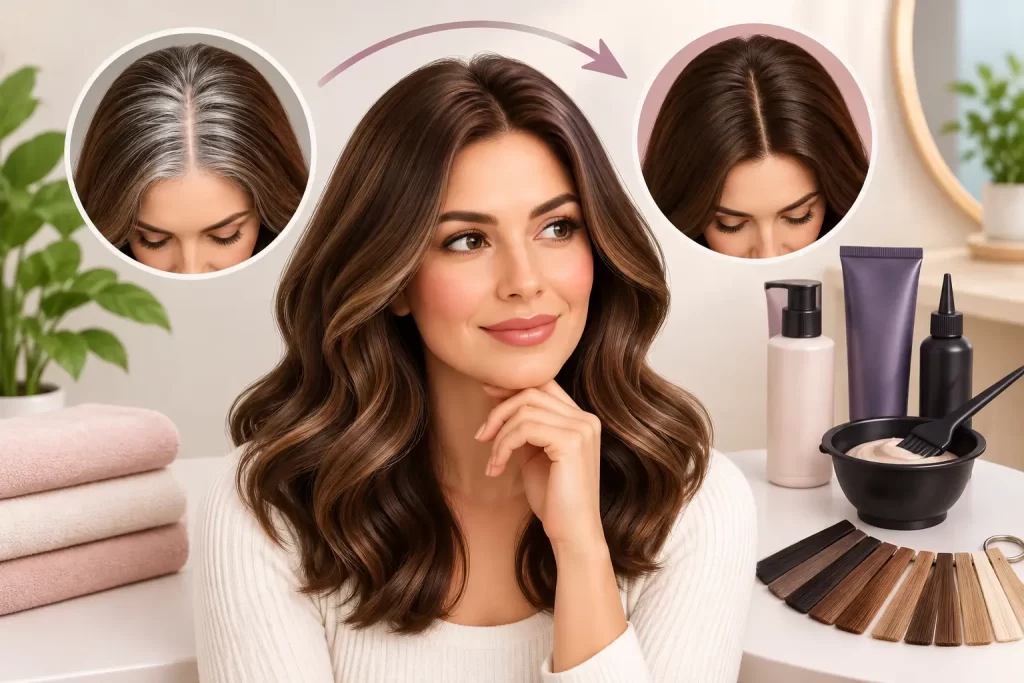
Fresh gray roots can feel surprisingly noticeable, even when they are only a few weeks old. The best gray root coverage options depend on more than the color in the box or can. Your percentage of gray, regrowth pattern, hair texture, desired maintenance schedule, and sensitivity to color all affect which choice will look most natural and feel easiest to maintain.
For some guests, a quick temporary touch-up is exactly what they need before an event. For others, consistent salon color or a softer gray-blending approach creates better long-term results. The right answer is personal, which is why a thoughtful consultation matters before committing to a new color routine.
Best Gray Root Coverage Options for Different Needs
Root touch-up sprays for immediate coverage
Root touch-up sprays are a practical short-term fix. These tinted, wash-out formulas sit on the hair and help camouflage visible gray at the part line, temples, or hairline. They are especially useful between color appointments, before photos, or when you need to look polished with little preparation.
The advantage is speed. A light application can make roots less visible in seconds, and the product washes out with shampoo. The trade-off is that sprays can transfer if applied too heavily, and the finish may look dull or powdery when the shade is not well matched. They also do not provide the same depth or shine as professional color.
For best results, spray from a short distance onto dry, styled hair. Build coverage gradually rather than applying one heavy coat. A stylist can help identify the most flattering shade, particularly if your color includes highlights, lowlights, or dimensional tones instead of one solid color.
Root powders and touch-up sticks for precision
Powders, compacts, and touch-up sticks offer targeted coverage with more control than a spray. They can be a good fit for scattered grays around the face, a narrow part, or a thinning area where a little extra coverage also creates the appearance of fuller hair.
Because these products are applied directly where needed, they tend to work well for people who want to avoid coating a larger section of hair. Root powders usually provide a softer, matte finish, while sticks may create stronger coverage on individual strands. Both are temporary and should be washed out before a color service so the hair can be properly assessed and prepared.
These products are helpful maintenance tools, but they are not a replacement for color when the regrowth is more extensive. If you find yourself applying them daily, it may be time to adjust your salon schedule or discuss a lower-maintenance color plan.
Permanent root color for the strongest gray coverage
Permanent color is often the preferred choice for clients who want dependable coverage of stubborn or concentrated gray. During a professional root retouch appointment, color is formulated for your natural level, previous color history, gray percentage, hair density, and condition. This precision matters because gray hair can be more resistant to color, especially around the hairline and temples.
A salon formula can provide rich, even coverage and a polished result that grows out more gracefully than an at-home attempt with a generic shade. It also gives your stylist the opportunity to protect the integrity of previously colored lengths rather than repeatedly applying permanent color through the entire head of hair.
Permanent color does require regular maintenance. Most root touch-up schedules fall around every four to six weeks, although the right timing depends on how quickly your hair grows and how much contrast exists between your gray and colored hair. Darker shades generally make regrowth more noticeable sooner than lighter or more blended looks.
Demi-permanent color for softer blending
Demi-permanent color is a valuable option when complete, opaque gray coverage is not the goal. It can soften the contrast between gray strands and colored hair, add shine, and create a more natural-looking transition as roots grow in. This makes it an appealing choice for clients who are beginning to see gray or who want to move away from a strict root touch-up routine.
Demi-permanent color generally fades over time instead of leaving a firm line of regrowth. On resistant gray, however, it may provide a translucent blend rather than full coverage. That is not necessarily a drawback. Many people prefer the dimension and softer maintenance that come with a blended result.
This option can be especially flattering when paired with highlights or lowlights. The mix of tones breaks up a solid color line and allows gray to become part of the overall dimension rather than something that must be completely hidden.
Highlights and gray blending for lower-maintenance color
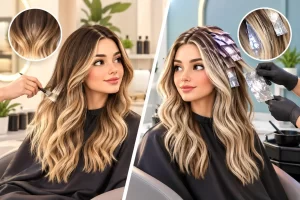
Highlights, balayage-inspired placement, lowlights, and strategic glossing can make gray regrowth far less obvious. Rather than trying to match every strand of gray with a single all-over shade, this approach uses dimension to reduce contrast and create movement.
Gray blending is not one specific service. It is a customized color strategy. A stylist may add fine highlights around the face, weave lowlights through overly light areas, tone brassiness, or adjust the base color to better complement the gray coming in. The result can look soft, modern, and intentional.
This approach is ideal for someone who wants to stretch appointments, transition away from frequent permanent color, or embrace a more natural-looking finish. It does not always offer complete root coverage, so clients who prefer a fully opaque result may be happier with permanent color at the roots and dimensional work through the lengths.
How to Choose the Right Root Coverage Method
Start by being honest about what you want to see in the mirror. Do you want every gray strand covered, or would you be comfortable with a softer blend? Do you need a fast fix for an occasional event, or are you looking for a color routine that fits your month-to-month schedule?
Your natural color and gray pattern matter, too. A few silver strands at the temples call for a different plan than a bright gray band along the part. Hair that has been lightened, chemically treated, or heat-styled often needs a more cautious color approach than healthy virgin hair. In these situations, preserving shine and condition may be just as important as achieving maximum coverage.
Skin sensitivity should also be part of the conversation. If you have experienced itching, burning, rash, or irritation from hair color in the past, tell your stylist before the appointment. A patch test and a careful review of your color history can help guide a safer service plan.
Why Professional Formulation Makes a Difference
At-home color can seem convenient, but gray coverage is one area where professional experience can prevent frustrating results. Box color cannot account for previous salon color, porosity differences from roots to ends, or the way resistant gray may respond differently at the hairline. A shade that appears close on the package can process too dark, too warm, or unevenly on your hair.
Professional color services are also adjusted over time. Your stylist can shift the formula as your gray percentage changes, your hair grows lighter with sun exposure, or your goals evolve. That ongoing attention helps keep the color believable rather than flat or overly harsh.
At Visions Hair Studio, a personalized consultation allows your stylist to look closely at your regrowth, existing color, hair condition, and maintenance preferences before recommending a service. The goal is not simply to cover gray for one appointment. It is to create a plan that continues to look good between visits.
Caring for Colored Roots Between Appointments
Color-safe shampoo, moderate water temperature, and heat protection can all help preserve the look of freshly colored roots and lengths. Washing less often, when appropriate for your hair and scalp, may also slow visible fading. If you use a temporary touch-up product, apply it sparingly and shampoo thoroughly before your next color appointment.
Avoid trying to correct uneven roots with multiple layers of home color. If the result looks too dark, too brassy, or patchy, a salon appointment is usually the safer next step. Color correction can be more involved than a standard root service, but a careful plan protects the hair while moving it toward a more balanced result.
The most flattering gray coverage is the one you can maintain comfortably and wear with confidence. Whether that means a quick touch-up powder, reliable permanent root color, or a softer gray-blending plan, a skilled stylist can help you choose a look that feels like you.