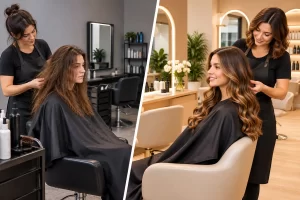

A color appointment can look similar on a salon menu, yet one guest may pay more than another for what appears to be the same service. Why do salons charge differently? Because hair is not one-size-fits-all, and a professional result depends on more than the name of the service. The time, technique, product, planning, and expertise needed for your individual hair all affect the final investment.
For clients, clear pricing should never feel like a surprise. A thoughtful salon consultation helps explain what your hair needs, what result is realistic in one visit, and why the recommended service is priced accordingly.
Why Do Salons Charge Differently?
Salon pricing reflects the work behind the finished look, not simply a haircut, highlight, or blowout listed on a menu. Two people may both request a partial highlight, for example, but their appointments can require very different amounts of time and color. One may have fine, shoulder-length hair with a consistent base color. Another may have thick hair, previous color bands, gray coverage needs, and a goal of a much brighter blonde.
Neither client is being overcomplicated. Their hair simply calls for different professional decisions. The number of foils, amount of color, toner selection, processing time, protective treatments, and finishing work can all change from one appointment to the next.
This is why many salons use starting prices rather than a single fixed price for every color service. Starting prices provide a useful reference, while allowing the stylist to tailor the appointment to the hair in their chair. A haircut can vary for similar reasons, particularly when a guest has very dense hair, wants a significant shape change, or needs extra styling guidance.
Hair Length Is Only Part of the Picture
Clients often expect longer hair to cost more, and length does matter because it may require more product and drying time. But length alone does not tell the full story. Hair density, texture, condition, and existing color history can have an even greater effect on a service.
Fine, waist-length hair may take less color than a dense, medium-length style. Curly hair may need a more detailed cutting approach to create balance and movement. Hair that has been colored repeatedly or lightened at home may require a careful correction plan before the desired shade is possible.
A professional stylist evaluates the full picture: how much hair there is, what has been done to it before, how it responds, and what it will take to maintain a beautiful result. That assessment protects both the hair’s health and the quality of the finished service.
Color history can change the appointment
Color is one of the clearest examples of customized pricing. A guest seeking a subtle gloss on healthy, evenly colored hair has a different appointment from someone transitioning from dark box dye to dimensional blonde. The second service may involve test strands, multiple formulas, bond-supporting treatments, additional toning, and a longer processing schedule.
The goal is not to add steps unnecessarily. It is to choose the safest path to a result that looks polished and lasts well. In some cases, the most responsible recommendation is a gradual plan over several appointments instead of attempting a dramatic change in one day. That approach may require patience, but it helps preserve the integrity of the hair.
Time, Technique, and Professional Training Matter
A salon appointment includes far more than the minutes spent applying color or making the final cut. Your stylist is assessing your hair, consulting with you about your goals, mixing formulas, monitoring processing, shampooing, conditioning, cutting or shaping, styling, and explaining at-home care.
Some techniques are especially time-intensive because precision is the point. Balayage, lived-in color, corrective color, detailed blonding, and layered cuts all require trained eyes and steady hands. A result that grows out softly or blends naturally is usually the product of careful placement, not luck.
Pricing also supports the ongoing education that keeps stylists current. Hair trends, color technology, product formulations, extension methods, and cutting techniques continue to evolve. Stylists who invest in advanced education can make better recommendations, use modern methods appropriately, and adjust a service when hair behaves differently than expected.
Experience is not only about speed. A seasoned stylist may work efficiently, but they also recognize underlying tones, uneven porosity, breakage risks, and shape concerns before they become a problem. That knowledge can save time, avoid unnecessary damage, and help clients leave feeling confident in their hair.
Products, Safety, and the Salon Experience
Professional-quality color, lightener, treatments, shampoos, and styling products are part of the service cost. The amount used varies greatly by hair type and appointment goals. A thick head of hair receiving a full blonding service will naturally require more product than a root touch-up.
Behind the scenes, salon pricing also supports clean tools, properly maintained equipment, sanitation practices, clean linens, scheduling systems, and a comfortable environment. These details may not be as visible as a fresh color or a beautiful blowout, but they shape a safe, reliable experience.
A well-run appointment should feel unhurried even when the work is complex. That means allowing enough time for a thorough consultation, careful application, proper processing, and a finished style that lets you see the result. Lower pricing can sometimes be appealing, but it may come with shorter appointment times, limited product options, or less room for the detailed work your hair needs. The right choice depends on your priorities, your hair goals, and the level of service you expect.
What Fair, Personalized Salon Pricing Looks Like
Fair pricing is not always the lowest number. It is pricing that is explained clearly and connected to the service you are receiving. You should understand whether a listed price is a starting point, what factors may affect the total, and whether your desired result requires additional time or services.
A consultation is the best place to ask direct questions. Share photos of your goal, but also be open about previous color, chemical services, at-home treatments, and your normal styling routine. These details help your stylist give a more accurate estimate and build a plan that suits your lifestyle.
It also helps to ask about maintenance before committing to a major change. A high-impact blonde, rich red, or precision cut may be beautiful, but it can require regular toning, root maintenance, trims, and home care. A lower-maintenance option may better fit your schedule and budget while still giving you a refreshed, flattering look.
At Visions Hair Studio, complimentary consultations give clients space to discuss their hair history, goals, and concerns before moving forward. That conversation makes pricing more transparent and allows the stylist to recommend services based on your hair, rather than making assumptions from a menu description alone.
How to Feel Prepared Before Your Appointment
Bring inspiration photos, but think of them as a starting point rather than a guarantee. Lighting, natural hair color, density, texture, and previous color all influence how a look will translate. Tell your stylist what you like about the photo: the brightness around the face, the softness of the blend, the length, or the overall tone.
If you are booking color, be honest about anything that has touched your hair in the past several years, including box color, henna, relaxers, keratin treatments, and chlorine exposure. This is not a judgment call. Accurate information helps your stylist select the safest formula and avoid unwanted results.
Finally, communicate your comfort level around time and budget. A good stylist can often offer options, whether that means focusing brightness around the face, scheduling a phased color correction, choosing a gloss between highlights, or selecting a cut that grows out gracefully. Personalized service should include a plan you can realistically maintain.
The best salon relationship is built on that kind of honest conversation. When you know what your hair needs and why, pricing becomes less of a mystery and more of a clear investment in results you can enjoy long after you leave the chair.