
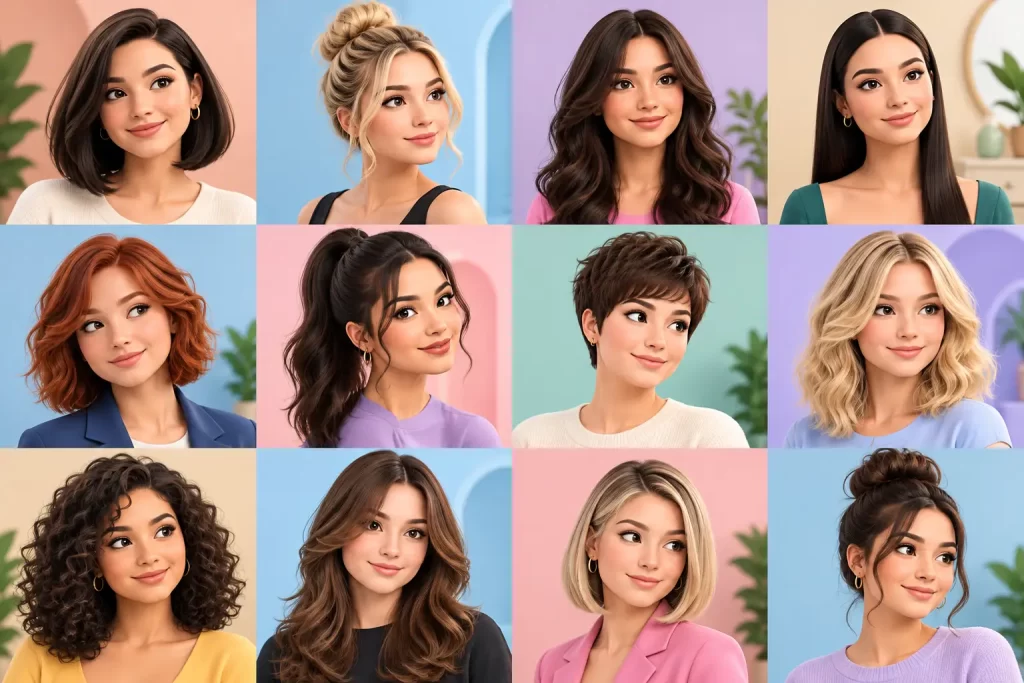
A flattering haircut should make you feel more like yourself, not like you are trying to hide your features. The best hairstyles for round faces create balance through thoughtful length, movement, and shape while still working with your natural texture, lifestyle, and styling routine.
A round face is typically similar in width and length, with soft cheeks and a gently curved jawline. That does not mean there are rules you must follow. It simply gives your stylist useful information when choosing where to place volume, layers, fringe, and face-framing pieces. The goal is never to make every face look the same. It is to create a style that feels intentional, modern, and easy for you to wear.
What Makes a Hairstyle Flattering for a Round Face?
The most successful cuts often add a little height at the crown, length around the face, or texture below the cheekbones. These details can create a more elongated visual line while keeping the overall style soft and natural.
Placement matters more than any single haircut. For example, a chin-length bob can look beautiful on a round face when it has a slightly longer front, soft texture, and a side part. The same length can feel wider when it is cut very blunt with volume concentrated at the cheeks. This is why a professional consultation is worth the time: your stylist can adjust the shape to your hair density, growth patterns, and preferred level of maintenance.
Best Hairstyles for Round Faces and Real Life
The right option depends on more than face shape. Consider how often you heat style, whether you wear your hair up for work or exercise, how quickly your hair loses volume in Florida humidity, and how frequently you want salon maintenance. These are the styles that offer dependable versatility.
Long layers with face-framing pieces
Long layers are a reliable choice for clients who enjoy their length but want more shape. Starting the shortest face-framing pieces below the cheekbones helps guide the eye downward, while longer layers keep the ends from looking heavy or flat.
This style works especially well for medium to thick hair and can be adapted for straight, wavy, or curly textures. Ask for layers that support your natural movement rather than layers that require a daily blowout to look right. A good cut should still have shape on the days you air-dry.
A textured lob
A lob, or long bob, usually falls between the collarbone and shoulders. It offers the freshness of shorter hair without the commitment of a traditional bob. For a round face, a lob that sits below the chin with subtle texture can feel polished and balancing.
A slightly angled shape, with the front left a touch longer than the back, is particularly flattering. Avoid overly bulky sides if your hair is very thick. Internal weight removal and light texturizing can make the cut move beautifully without making it look thin.
A side-parted bob
A deep or soft side part creates asymmetry, which can complement the soft symmetry of a round face. Pair it with a bob that lands just below the jaw or closer to the collarbone for an elegant, wearable result.
This is a great option for someone who wants a refined style with a manageable daily routine. Keep in mind that shorter bobs need more regular trims, often every six to eight weeks, to maintain their shape. If you prefer longer gaps between appointments, a lob may be the better choice.
Curtain bangs with long hair
Curtain bangs can be very flattering when they are customized correctly. Rather than cutting them short and wide, a stylist can shape them to open softly at the center and blend into longer face-framing layers. This keeps the focus vertical and prevents the fringe from creating a horizontal line across the widest part of the face.
Curtain bangs do require some styling, especially if you have a strong cowlick or naturally straight hair that tends to separate. A round brush, a blow dryer, and a little flexibility in your morning routine go a long way. They are beautiful, but they are not a zero-maintenance choice.
Wispy, side-swept bangs
For those who prefer a fringe but want an easier grow-out process, side-swept bangs are a classic option. They bring softness around the forehead and can blend into layers as they grow. Keeping them textured and slightly longer helps avoid a heavy, boxed-in effect.
This look is especially useful if you want a change without losing length. It also gives you options: wear the bangs down, sweep them to one side, or pin them back when you want your hair off your face.
A shag or soft wolf cut
Modern shags and softer wolf cuts are all about customized layers, lift at the crown, and lived-in texture. They can be an excellent fit for round faces because they build height at the top while allowing the length around the face to stay light and piecey.
The trade-off is that this cut needs the right texture and styling expectations. Naturally wavy hair often responds beautifully with a diffuser and curl-enhancing product. Very straight, fine hair may need more product and heat styling to create the intended shape. Your stylist can make the silhouette softer or more dramatic based on what you are willing to do at home.
Long, loose waves
Long waves are timeless for a reason. Gentle movement that begins below the cheekbones can lengthen the appearance of the face without looking overly styled. A center part can work well when the layers are long enough to avoid adding fullness directly at the sides of the cheeks.
For a more relaxed finish, alternate the direction of the curl and leave the final inch or two of each section out of the iron. Brush through the waves once they cool. The result is movement that feels current rather than overly formal.
Curly layers with crown volume
Clients with curls do not need to straighten their texture to find a flattering cut. Curly layers can be shaped to encourage height at the crown and movement through the ends, creating a beautiful, balanced outline.
The key is avoiding a rounded, uniform shape that expands widest at the cheeks. A curl specialist can place layers based on your individual curl pattern and account for spring factor, since curls appear shorter once dry. Regular hydration and a curl-specific styling routine will help the cut show its best shape between appointments.
A high ponytail or lifted updo
Styling matters just as much as cutting. A high ponytail, half-up style, or updo with volume at the crown creates vertical lift and highlights the eyes and cheekbones. Leave a few soft pieces around the face if you like a more relaxed finish, but avoid placing too much width at cheek level.
This is a simple way to change your look for an event, a busy workday, or a warm Wellington afternoon. It also proves that a flattering shape does not have to come from a dramatic haircut.
Color Can Enhance the Cut
Strategic color placement can support the shape of your hairstyle. Dimensional highlights, a soft balayage, or brighter pieces placed below the cheekbones can emphasize length and movement. A subtle root shadow can add depth at the crown, which may make fine hair look fuller where it matters most.
Color should complement the haircut rather than compete with it. High-contrast face-framing highlights can be striking, but they may draw attention to areas you would rather soften. During a consultation, bring a few inspiration photos and share what you like about each one. Your stylist can identify whether it is the cut, color, styling, or overall mood that appeals to you.
What to Ask for During Your Consultation
Instead of requesting a cut solely by name, describe the result you want. Let your stylist know if you want your face to appear more open, your hair to feel fuller, or your morning routine to take less time. Be honest about how often you use hot tools and how frequently you are comfortable returning for trims.
Photos are helpful, but your hair may behave differently than the person in the image. Density, texture, curl pattern, and previous color all affect the final result. At Visions Hair Studio, a personalized consultation allows your stylist to translate your inspiration into a shape that works for your individual hair.
The best haircut is one you can enjoy after you leave the salon. Choose a shape that fits your routine, ask questions about at-home styling, and give your hair a little time to settle into its new movement. When the cut is tailored well, it should support your confidence on both your styled days and your simplest ones.