Humidity can turn a smooth morning blowout into a full afternoon of flyaways, swelling, and uneven texture. The best salon services for frizz do more than make hair look polished for one day. They address the reason your hair is reacting to moisture, heat, damage, or its natural texture – then match the solution to the result you actually want.
Frizz is not a single hair type or a sign that you are doing something wrong at home. Curly, wavy, straight, color-treated, and naturally coarse hair can all become frizzy for different reasons. A thoughtful salon consultation helps separate temporary dryness from cuticle damage, chemical overprocessing, buildup, or a haircut that is not supporting your texture.
What causes frizz in the first place?
Hair becomes frizzy when its outer layer, called the cuticle, is lifted or uneven. Humid air can enter the strand more easily, causing it to expand and lose its smooth alignment. That is why frizz often feels especially persistent in South Florida, where heat and moisture are part of everyday life.
Heat styling, repeated lightening, harsh cleansing, and friction from towels or pillowcases can all contribute. Sometimes the issue is simply that naturally textured hair needs more moisture and a styling routine designed for its pattern. The right service depends on whether your priority is healthier-looking hair, less daily styling time, a straighter finish, or better definition in curls and waves.
Best salon services for frizz: choosing the right fit
There is no one treatment that suits every head of hair. The most reliable results come from choosing a service based on your hair history, maintenance preferences, and comfort with chemical processing. A professional stylist should ask about prior color, relaxers, smoothing treatments, heat use, and your goals before recommending a plan.
Keratin smoothing treatments
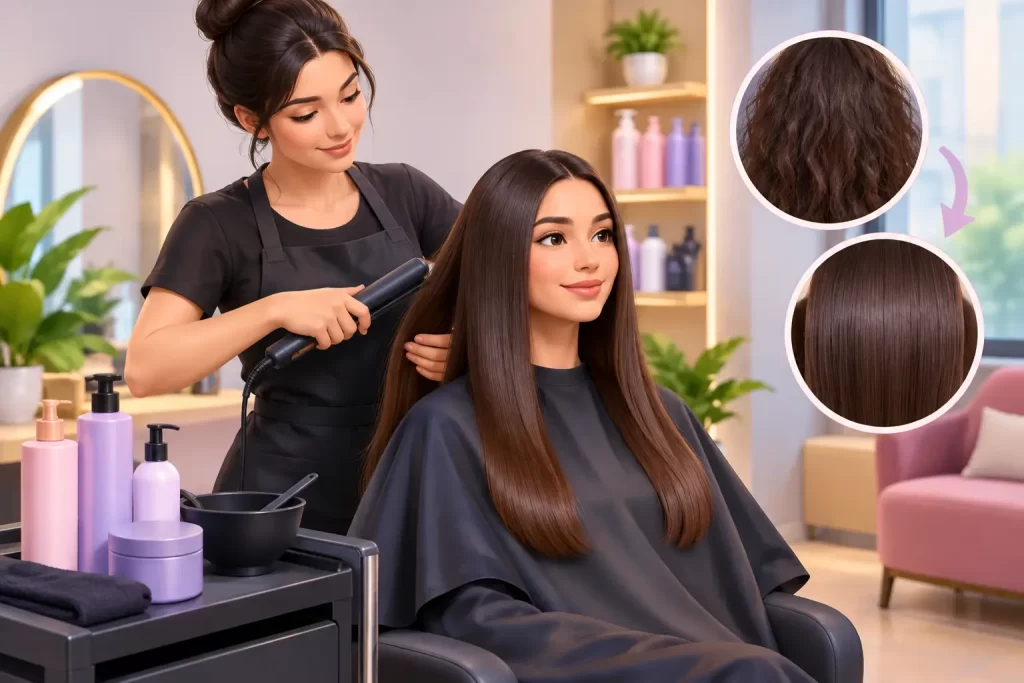
Keratin smoothing treatments are a popular choice for clients who want to reduce frizz, shorten blow-dry time, and create a sleeker finish. The service generally uses a smoothing formula and controlled heat to help seal the hair’s surface. Results can last for weeks or months, depending on the formula, hair type, washing frequency, and home care.
This is often a good option for thick, wavy, or coarse hair that expands in humidity and requires significant daily styling. It can leave hair easier to brush, dry, and finish without making every client’s hair completely straight.
The trade-off is that smoothing services are chemical services, not simply a conditioning treatment. Formulas vary, and some may release strong odors or require specific ventilation and handling practices. They are also not the automatic answer for highly compromised, heavily lightened, or fragile hair. A consultation and strand assessment matter, especially if you color your hair regularly.
Professional deep-conditioning and repair treatments
For hair that feels rough, dull, tangled, or suddenly more difficult to style, a professional conditioning or bond-supporting treatment may be the better first step. These services focus on hydration, softness, elasticity, and the appearance of damage. They can be especially valuable after color appointments, frequent heat styling, sun exposure, or time in chlorinated water.
A conditioning treatment will not permanently alter the hair’s texture or stop humidity from affecting it. What it can do is improve how the hair behaves by helping it feel more moisturized and manageable. For clients who love their curls or waves and want less fuzz without losing movement, this approach is often more appropriate than a smoothing service.
Results are usually temporary, but regular professional treatments paired with suitable home care can make a meaningful difference over time. Your stylist may recommend scheduling them alongside color maintenance or seasonal appointments, when hair tends to need extra support.
A precision haircut designed for your texture
A haircut is easy to overlook when discussing frizz, yet it can have a major effect on how hair settles. Split, thinned-out, or uneven ends create a fuzzy outline, while excessive layering can cause certain hair types to puff or separate. On the other hand, hair that is too heavy may lose its shape and make waves look bulky rather than defined.
A well-planned cut removes damaged ends and gives the hair a shape that works with its natural movement. For curly and wavy clients, the technique, length, and placement of layers should be tailored carefully. For straighter hair, a cleaner perimeter and healthy ends can make blowouts look noticeably smoother.
If frizz is concentrated at the bottom few inches or your style no longer falls the way it used to, a haircut may deliver more improvement than adding another product. It also creates a healthier foundation before a conditioning or smoothing service.
Blowouts and professional styling
A professional blowout provides immediate polish for an event, vacation, workweek, or special occasion. With the right brushwork, heat control, and finishing products, it can smooth the cuticle and create a glossy result that is difficult to duplicate at home.
This is a temporary service, but it is not a lesser option. A blowout is ideal when you want smooth hair without making a long-term commitment to a chemical treatment. It also gives your stylist a close look at how your hair responds to heat, tension, and humidity – useful information for future service recommendations.
For the best longevity, avoid moisture and heavy perspiration immediately after styling, sleep with hair protected from friction, and ask your stylist which lightweight product will help preserve the finish without causing buildup.
Color services with hair health in mind
Color does not automatically cause frizz, but overprocessing can weaken the hair and leave it more porous. If you are lightening frequently, correcting previous color, or refreshing highlights on already dry ends, the color plan should account for your hair’s condition.
A skilled colorist may adjust timing, placement, formula strength, or the number of sessions needed to protect the integrity of the hair. Glossing services can also enhance shine and refine tone, which may make hair look smoother, although a gloss is not a frizz treatment by itself. Pairing color with a conditioning service and realistic maintenance schedule helps protect both your color and your finish.
Questions to ask during your consultation
A good frizz plan starts with clear expectations. Tell your stylist whether you want to wear your hair smooth, curly, wavy, or a mix of styles. Mention how much time you are willing to spend at home, whether you swim often, and any previous chemical services.
Ask how long the recommended result should last, what maintenance it requires, and whether it will affect future color appointments. If a smoothing treatment is suggested, ask about the specific formula, the processing approach, and whether your current hair condition makes you a strong candidate. You deserve direct answers, not a one-size-fits-all recommendation.
At Visions Hair Studio, a consultation-led appointment allows the stylist to evaluate density, texture, porosity, and service history before creating a recommendation. Pricing and timing can vary with hair thickness and complexity because the best approach is personal, not preset.
Protect your salon result at home
Salon work can improve the look and feel of frizzy hair, but daily habits determine how long that result lasts. Use products selected for your texture and service history, particularly after a smoothing treatment or color appointment. Gentle cleansing, conditioner applied thoroughly through the lengths, and a heat protectant before hot tools are practical essentials.
Dry hair with a soft towel or cotton T-shirt rather than rough rubbing. If you wear your natural texture, apply styling products while hair is still damp and avoid touching it repeatedly as it dries. If you blow-dry, direct airflow down the hair shaft and use only as much heat as needed for a smooth finish.
The goal is not to make every strand perfectly still. It is to have hair that feels healthy, looks intentional, and holds up better when Wellington humidity arrives. The right salon service should make your routine feel more manageable while respecting the texture that makes your hair your own.