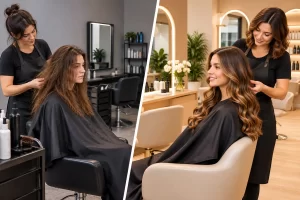
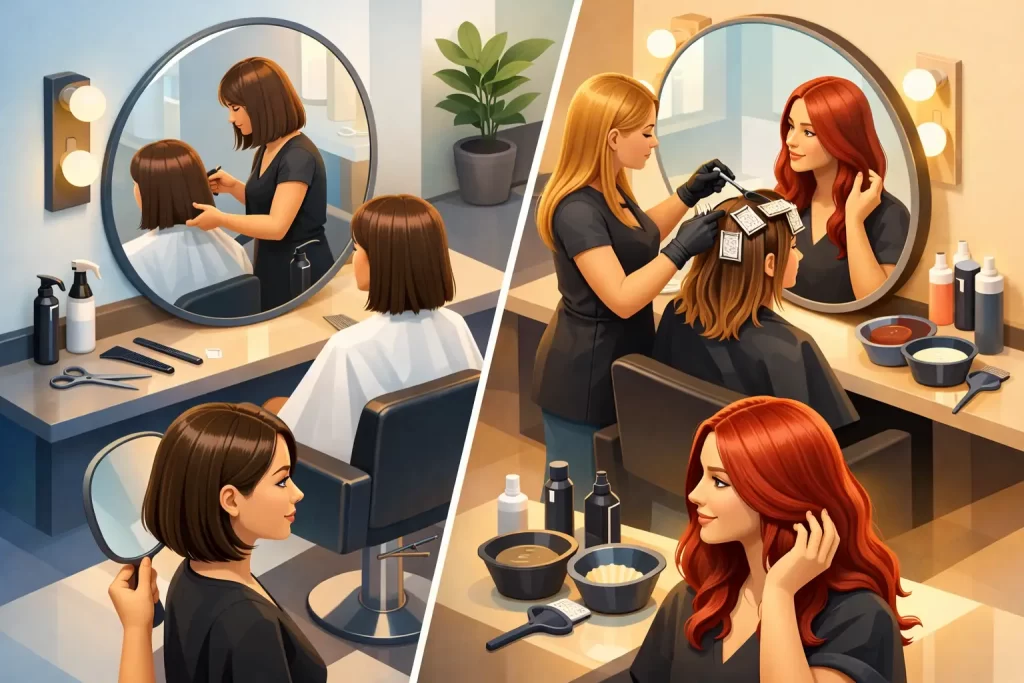
A few inches can change more than your length. They can change where a highlight falls, how much color formula your hair needs, and whether the finished look feels intentional. That is why the answer to haircut or color first is not always the same. The right order depends on the service you want, your hair’s current condition, and the result you want to see when you leave the salon.
For many appointments, color comes before the final haircut. But there are meaningful exceptions, especially when you are making a major shape change, correcting old color, or working with hair that needs a careful plan. A professional consultation is where those details become a clear, comfortable service plan.
Should You Get a Haircut or Color First?
Most of the time, a stylist will apply color first and complete the haircut after the color has processed and been rinsed. This approach allows the stylist to see the true tone, dimension, and movement of your hair before refining the finished shape.
A final cut after color is particularly helpful with dimensional services such as balayage, highlights, lowlights, and lived-in blonding. The haircut can be customized around the way the color falls, so face-framing pieces, layers, and ends work together rather than competing for attention. It also lets your stylist remove any ends that may look dry after a lightening service, leaving the hair with a more polished finish.
Still, “color first” does not mean a haircut is never part of the beginning of the appointment. Your stylist may trim or reshape the hair before color when it will improve the accuracy of the service. Think of the process less as a fixed rule and more as a plan built around your hair.
When Color First Is Usually the Best Choice
If you are maintaining gray coverage, refreshing an all-over color, adding highlights, or shifting your tone warmer or cooler, color first is often the most practical order. Your stylist can apply the formula to your existing length, rinse and assess the result, then make any final cutting decisions with the completed color in view.
This is especially valuable when your hair has multiple tones. A cut can reveal layers of old color, faded ends, or previous highlights that are not obvious at the start of the appointment. Seeing the finished color helps your stylist tailor the cut so the depth and brightness look balanced from every angle.
For clients who love a soft, natural grow-out, color first also supports a more customized finish. Face-framing brightness can be adjusted before the cut is detailed, helping the shape and placement feel connected. A stylist may add subtle movement around the face, then refine the length after shampooing to create the right overall proportion.
Coloring before the final cut can also help preserve length. Rather than removing more hair than necessary before a service, your stylist can evaluate the condition afterward and trim exactly what the hair needs. That matters if you are growing your hair out while still maintaining healthy-looking ends.
When a Haircut Should Come Before Color
A significant haircut is the clearest reason to cut first. If you are going from long hair to a bob, removing several inches of damaged ends, adding a dramatic fringe, or changing from one-length hair to a heavily layered shape, a preliminary cut may be essential. There is little reason to color hair that will not remain part of the final style.
Cutting first can reduce product use and give your stylist a more accurate canvas for color placement. It is particularly useful when a major change will alter where your ends sit, how your hair frames your face, or how thick the perimeter appears. A new bob with highlights, for example, needs a different color strategy than long hair with the same highlights.
Hair condition can also affect the order. If your ends are severely dry, uneven, or compromised from previous chemical services, removing the most fragile length before a color appointment may be the safest choice. Your stylist may recommend a cut first, a conditioning treatment, or a more conservative color service to protect the integrity of your hair.
In some cases, the appointment includes both a preliminary cut and a final detail cut. The first cut creates the new shape before color. The final refinement happens after the hair is washed, dried, and styled, when the stylist can adjust the perimeter, layers, and framing pieces with precision.
Highlights, Balayage, and Dimensional Color
Dimensional color is where the sequence becomes most customized. Highlights and balayage are not simply about making hair lighter. Placement affects how the hair moves, where the eye is drawn, and how the color grows out between appointments.
For a subtle refresh, your stylist may color first and cut afterward so the finished haircut enhances the new dimension. This works beautifully for long layers, soft face-framing, and clients who want brightness without a strong stripe effect.
For a complete transformation, your stylist may reshape the hair first, then place highlights according to the new design. Removing heavy length or adding pronounced layers changes the surface area of the hair and the way light reflects through it. The color plan should follow that new structure.
The same is true for curly or highly textured hair. Curl pattern, shrinkage, density, and the way hair is worn day to day all matter. A stylist may need to assess the cut in its natural state before deciding how to place brightness, especially around the face and crown.
What About Gray Coverage and Single-Process Color?
For regular gray coverage or a single-process root touch-up, the order is often straightforward: apply color, shampoo, then cut and style. The haircut at the end gives your stylist the chance to clean up the shape after the color is complete.
If you are transitioning from permanent color to softer gray blending, the plan may require more discussion. You may be growing out a previous color, adding highlights to soften a demarcation line, or choosing a shorter style that removes more of the old color over time. In these situations, the service order is part of a longer-term strategy, not just one appointment.
Your stylist should also consider how frequently you color your hair. Clients who maintain gray coverage every few weeks may need a simple trim at selected visits, while someone moving toward a new color direction may benefit from more frequent shaping as the old color grows out.
How to Prepare for Your Appointment
You do not need to arrive knowing the technical answer. Come with a realistic sense of what you would like to change, how much length you are comfortable removing, and how often you are willing to maintain your color. Photos can be helpful, but share what you like about them: the brightness, the depth, the fringe, the overall length, or the way the style grows out.
Be open about your color history, including at-home color, glosses, henna, lightening, and chemical treatments. This information helps your stylist choose formulas and timing that respect your hair’s condition. It can also prevent surprises during a color correction or major lightening appointment.
If you are booking a substantial cut and a new color, allow enough time for a consultation-led service. Hair thickness, previous color, desired brightness, and the complexity of the cut all affect timing and pricing. A thoughtful appointment should not feel rushed.
Trust the Plan, Not a One-Size-Fits-All Rule
The best haircut and color appointments are designed around you. Your current hair, desired maintenance, lifestyle, and comfort level all deserve a place in the conversation. An experienced stylist will explain whether a color-first approach, a cut-first approach, or a combination of both will best protect your hair and support the result you want.
At Visions Hair Studio, consultations are a chance to ask those questions before the service begins. Whether you are refreshing your usual look or considering a noticeable change, the goal is the same: healthy-looking hair, thoughtful color placement, and a cut that still feels right after you leave the chair.
If you are unsure which service should happen first, bring your ideas to your consultation. The right order is the one that gives your hair the strongest, most beautiful path forward.