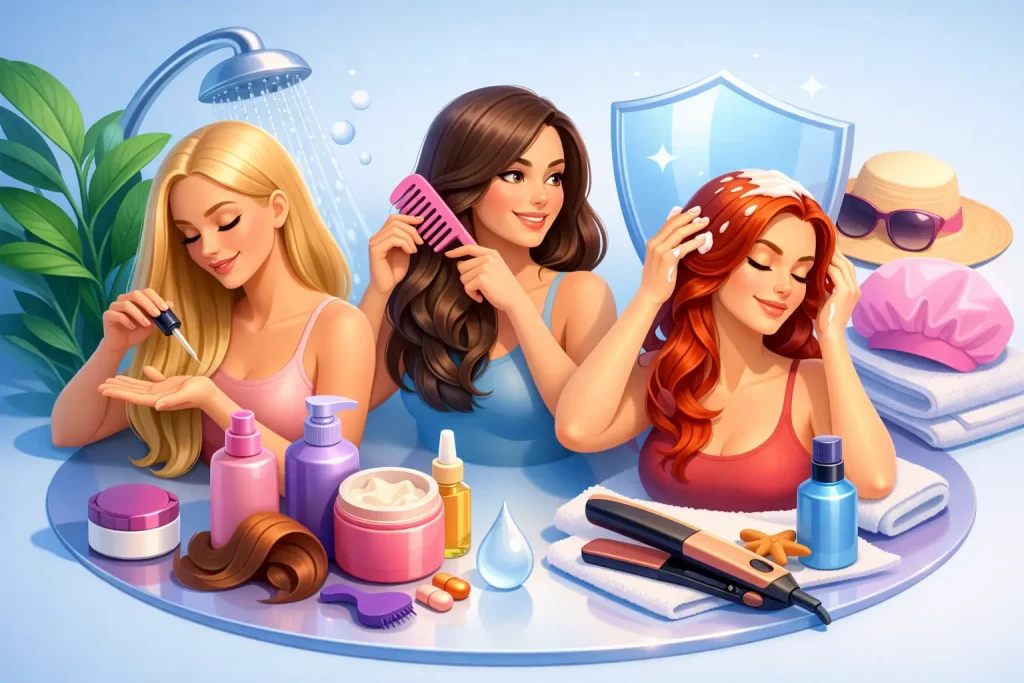
Fresh color can look glossy, dimensional, and full of movement when you leave the salon. A few weeks later, it may start to feel warmer, duller, or less even around the ends. Learning how to protect color treated hair is less about buying every product on the shelf and more about making a few consistent choices that keep your hair healthy between appointments.
Color longevity depends on your starting hair condition, the color service you receive, your water, your styling habits, and how often you shampoo. A personalized routine matters because fine highlighted hair, rich brunette color, and bright blonding services do not all need the same care.
Start With a Washing Routine That Preserves Color
The fastest way to fade color is usually overwashing with water that is too hot. Shampoo removes oil, buildup, and styling residue, but it can also lift the hair cuticle slightly. When that happens repeatedly, color molecules have more opportunity to escape and hair can begin to look less reflective.
Most people with color-treated hair do well washing two to three times per week, though the right schedule depends on your scalp and lifestyle. If you exercise often, have a naturally oily scalp, or use heavier styling products, you may need to wash more frequently. In that case, focus on gentler products and careful technique rather than trying to stretch wash days until your scalp feels uncomfortable.
Use lukewarm water for shampooing, then rinse with cooler water if it feels comfortable. Very hot showers can contribute to dryness and fading, especially on lightened hair. Concentrate shampoo on your scalp, where oil and product buildup collect. Let the suds cleanse the mid-lengths and ends as you rinse instead of aggressively scrubbing those more fragile areas.
Choose a professional color-safe shampoo and conditioner suited to your hair’s needs. “Color-safe” is a helpful starting point, but it is not the only consideration. If your hair is dry after highlighting, you may need more moisture. If it feels limp or overly soft, you may benefit from a lighter formula or occasional protein support. Your stylist can help you avoid the common cycle of using products that are either too heavy or not nourishing enough.
Keep Heat Styling From Dulling Your Color
Heat does not automatically ruin color-treated hair, but repeated high heat can dehydrate it, roughen the cuticle, and make color look less polished. Blow-drying, flat-ironing, curling, and hot tools all add up over time, particularly on previously lightened sections.
Apply a heat protectant every time you use a blow-dryer or hot tool. It should go on evenly through damp hair before blow-drying, and some formulas can also be used on dry hair before a curling iron or flat iron. Do not assume a leave-in conditioner provides enough heat protection unless its label specifically says it does.
Temperature matters as much as product choice. Fine, fragile, or lightened hair usually needs a lower setting than thick, resistant hair. Use the lowest temperature that gives you the result you want, and avoid passing a flat iron over the same section again and again. If you find yourself needing several passes, your tool may be too cool, your sections may be too large, or your hair may not be fully dry.
Giving your hair occasional lower-heat styling days is also worthwhile. A smooth blowout, soft air-dried texture, or a simple pinned-back style can reduce stress without asking you to give up feeling put together.
Protect Hair From Florida Sun, Pools, and Humidity
In Wellington and throughout Palm Beach County, sun exposure and pool time are part of everyday life for many clients. UV exposure can fade color and leave hair feeling dry, while chlorine and salt water can be especially challenging for highlighted, blonde, red, or fashion-colored hair.
Before swimming, wet your hair with clean water. Hair that is already saturated absorbs less pool or ocean water than dry hair. For extra protection, apply a lightweight leave-in conditioner and secure longer hair in a loose braid or bun. Rinse thoroughly as soon as you finish swimming, even if you do not plan to shampoo immediately.
A hat is one of the most effective ways to protect your color during prolonged sun exposure. If a hat is not practical, use a UV-protective hair product and keep expectations realistic: it helps, but it cannot fully replace a physical barrier. Red and copper shades tend to fade quickly in the sun, while blondes can become brassy and brunettes may lose some of their rich shine.
Humidity creates a different issue. When hair is dry or porous, it pulls moisture from the air and can swell into frizz, making color look less smooth and reflective. A lightweight smoothing cream or humidity-resistant styling product can help, but avoid applying too much near the scalp. A little product distributed through the mid-lengths and ends is often enough.
Use Treatments With a Purpose
Color-treated hair benefits from regular conditioning, but more treatment is not always better. Overusing rich masks can leave fine hair flat, while too much protein can make some hair feel stiff. The goal is balance: moisture for softness and flexibility, plus occasional strengthening support when hair has been lightened or feels weak.
Use a nourishing mask about once a week if your hair is dry, highly processed, or exposed to frequent heat and sun. Apply it from the mid-lengths to the ends after shampooing and follow the product timing. Leaving a mask on much longer than directed does not necessarily make it work better.
If your hair has been blonded, heavily highlighted, or chemically processed, ask your stylist whether a bond-supporting treatment makes sense for your routine. These products can be valuable, but they are not interchangeable with conditioner, a haircut, or careful styling. Hair that has split or broken cannot be permanently repaired by a treatment, which is why regular trims remain part of healthy color maintenance.
Be Careful With Purple, Blue, and Clarifying Shampoos
Toning shampoos can be useful for controlling unwanted warmth in blonde, silver, or highlighted hair. They can also leave hair dull, dry, or slightly lavender if used too often. Start with the schedule recommended by your stylist, usually once a week or as needed, rather than using one at every wash.
Clarifying shampoo is another product that requires restraint. It helps remove mineral buildup, hard-water residue, and heavy styling products, but it can pull moisture and tone from color-treated hair. Use it only when buildup is noticeable or before a professional color service if your stylist recommends it. If your shower water is high in minerals, a shower filter may also be worth discussing as part of your maintenance plan.
Make Your Salon Visits Work Harder
Protecting your color starts during the consultation, not after the appointment. Let your stylist know how often you wash, how much heat you use, whether you swim, and what you want your color to look like as it grows out. Those details help guide choices about placement, tone, depth, and the maintenance schedule that will feel realistic for you.
Do not wait until your color has fully faded or your roots feel overwhelming before checking in. Some looks need a gloss or toner between major color services, while others benefit from a face-framing refresh, root touch-up, or trim. The right timing depends on the service and your personal goal, not a one-size-fits-all calendar.
At Visions Hair Studio, a consultation-led approach helps clients build a color plan that fits their hair, lifestyle, and desired upkeep. Bringing photos is useful, but so is being honest about how much maintenance you want to do at home. A beautiful result should also be one you can enjoy and maintain comfortably.
Small Habits That Make a Visible Difference
Your daily handling habits affect color-treated hair more than many people realize. Detangle gently, beginning at the ends and working upward, especially when hair is wet. Use a wide-tooth comb or a flexible detangling brush, and do not pull through knots in a hurry.
Sleep can make a difference, too. A satin or silk-style pillowcase creates less friction than rougher fabrics, which can help reduce tangling and frizz. Avoid tight elastics and overly tight buns that create tension and breakage around the hairline. When you need to tie your hair back, choose a soft scrunchie or snag-free hair tie.
Finally, be cautious with at-home color experiments. Box dyes, bleach kits, and harsh color-removing products can create uneven results and make future salon correction more complicated. If your color has shifted, faded, or developed unwanted warmth, a professional assessment is usually the safer path.
The best color-care routine is one you will actually follow. A few thoughtful habits, paired with regular guidance from a stylist who knows your hair, can keep your color looking intentional, healthy, and confident long after appointment day.