
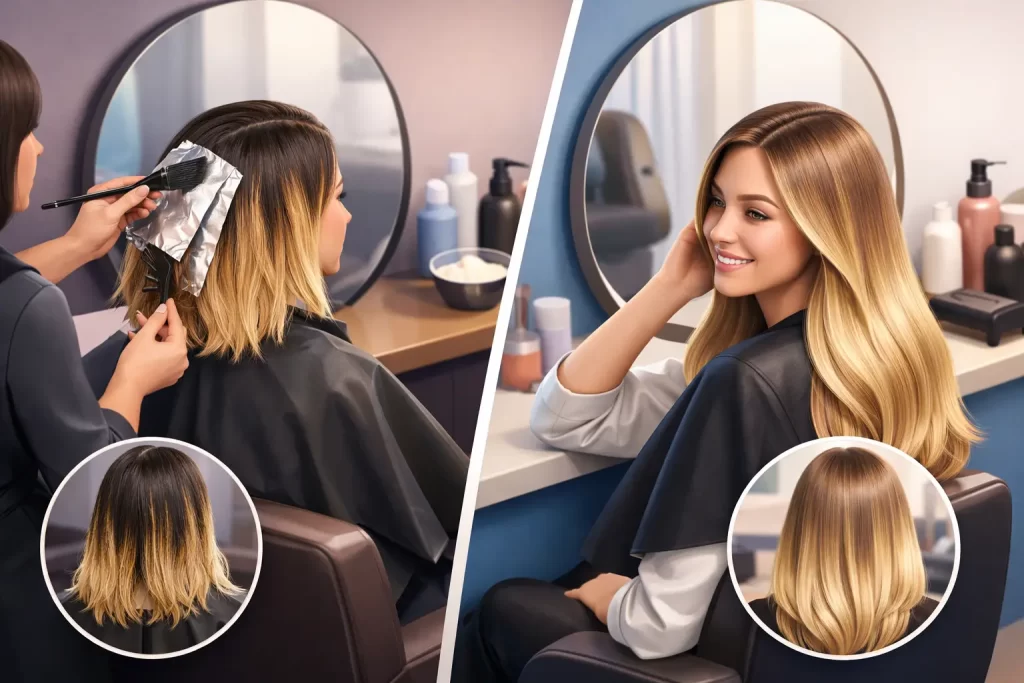
A hair color correction before and after can look dramatic, but the best results are not created by rushing from one shade to another. They come from a careful plan: identifying what is on the hair, protecting its condition, and choosing the safest route toward a color that feels more like you.
Whether your color turned too warm, too dark, uneven, brassy, or simply different from what you expected, a professional correction starts with listening. The goal is not to make every client leave with the same blonde, brunette, or red. It is to create a healthy-looking, wearable result that fits your hair history, lifestyle, and maintenance preferences.
What Hair Color Correction Really Means
Color correction is the process of adjusting an unwanted hair color result. Sometimes that means softening visible bands after a home dye application. Other times, it means balancing orange or yellow tones, lifting overly dark color, blending patchy highlights, or repairing an uneven transition after an appointment elsewhere.
The phrase can make the service sound intimidating, but not every correction is a major transformation. A toner, gloss, strategic highlights, lowlights, or a root melt may be enough to bring a color back into balance. More complex cases may require several appointments, particularly when the hair has been colored repeatedly with permanent dye, boxed color, henna, or dark pigments.
The difference between a quick adjustment and a multi-step project depends on the hair in front of your stylist. Thickness, porosity, prior chemical services, current condition, and the desired end result all matter. This is why a consultation is not an extra step. It is the foundation of a safe, honest color plan.
Hair Color Correction Before and After: What to Expect
The “before” stage is about more than taking a photo of the current color. Your stylist will look for uneven tones, overlapping color, dark bands, light ends, unwanted warmth, and areas that may react differently during processing. They will also ask what services and products have been used, including at-home color, color-depositing shampoos, smoothing treatments, and any metallic or plant-based dyes.
Be as open as possible during this conversation. There is no judgment around a box dye experiment or a color appointment that missed the mark. Accurate hair history helps your stylist select formulas, processing time, and techniques that minimize unnecessary stress on the hair.
The “after” result should reflect the plan you agreed on, not an unrealistic promise. In some cases, the immediate after is a more even, healthier-looking version of the current color, with a second appointment scheduled to continue lifting or refining it. That can be a successful correction. Protecting the integrity of your hair is always more valuable than forcing an overly aggressive change in one visit.
A strong after result usually has dimensional color, balanced tone, and a finish that looks intentional from roots to ends. It should also come with clear guidance for maintaining the color at home.
When one appointment may be enough
A single appointment may be appropriate when the color concern is mostly tonal. For example, hair that has gone too gold, orange, dull, or ashy can often be improved with professional toning, glossing, lowlights, or thoughtfully placed highlights. A slightly too-dark result may also be softened, depending on the formula used and the hair’s condition.
Even then, the service is personalized. Highly porous ends may grab toner faster than healthy roots, so the application and timing need to be adjusted. What looks simple from across the room can require precise technical work.
When a gradual plan is the right choice
Moving from very dark color to a significantly lighter shade is usually a process. Dark permanent color does not lift in a predictable, single step, especially if it has been applied over and over. The hair may reveal warm underlying pigments as it lightens, and pushing past those stages too quickly can compromise shine, softness, and strength.
A gradual plan may include removing artificial color, adding highlights in sessions, neutralizing warmth, trimming compromised ends, and allowing recovery time between services. It requires patience, but it gives your stylist more control and gives your hair a better chance to look and feel beautiful throughout the transition.
Why At-Home Fixes Can Make the Situation Harder
When color feels wrong, it is tempting to cover it immediately. A darker dye may seem like the fastest answer to overly light or brassy hair, while a bleach product may seem like the answer to a color that feels too dark. Unfortunately, both can create a more complicated correction.
Layering dark dye can make future lightening more difficult. Bleaching over uneven color can intensify bands, create unpredictable tones, and leave fragile areas vulnerable to breakage. Purple shampoo also has limits. It can help maintain certain blonde tones, but it cannot remove orange pigment, erase uneven color placement, or correct a formula that is fundamentally too dark.
If you are unhappy with a recent color service, pause before applying another product. Take a few photos in natural light, write down what was used if you know it, and schedule a consultation. That pause can save time, money, and unnecessary damage.
The Consultation Questions That Matter
A quality color correction appointment begins with shared expectations. Bring inspiration photos, but use them as a conversation starter rather than a guarantee. Hair color photographs vary because of lighting, filters, styling, and the starting level of the model’s hair.
Your stylist should help clarify what you like about each image. Is it the brightness around the face, the cool tone, the depth at the root, or the overall dimension? This makes it easier to build a result that works with your natural coloring and current hair condition.
You should also discuss how often you want to return for maintenance. A bright, high-lift blonde may require more frequent toning and retouching than a lived-in brunette or a softly blended balayage. The best color is not only beautiful when you leave the salon. It also fits your schedule and comfort level between appointments.
Pricing should be discussed with the same transparency. Correction services vary because the time, product, and technical complexity vary. A consultation allows the salon to provide a more realistic estimate based on your specific hair rather than offering a one-size-fits-all number.
Caring for Corrected Color at Home
After correction, your home routine helps protect the result. Use professional-quality products selected for your color and hair needs, and avoid washing more often than necessary. Lukewarm water is gentler than very hot water, which can contribute to fading and dryness.
Heat styling is another consideration. Always use a heat protectant before blow-drying, flat ironing, or curling, especially if your correction involved lightening. If your stylist recommends a color-safe shampoo, conditioning treatment, or toning product, follow the instructions closely. Using a pigmented shampoo too often can leave certain hair types looking dull or overly cool.
Regular trims, conditioning services, and timely gloss or toner appointments can make a major difference in how the color wears. You do not need a complete color service every time you visit. Sometimes a small maintenance appointment is exactly what keeps the overall look polished.
Choosing Professional Correction With Confidence
Color correction requires more than selecting a shade from a swatch. It calls for technical knowledge, current education, thoughtful product selection, and the ability to make careful decisions as the hair responds during the service. A stylist should be honest about what can be achieved that day and attentive to your comfort throughout the appointment.
At Visions Hair Studio, the focus is on consultation-led service and color plans tailored to the person in the chair. For clients in Wellington and nearby Palm Beach County communities, that means taking the time to understand the issue, explain the options, and prioritize hair health along with the finished color.
If your color does not feel like you, the next step does not have to be another guess. A professional consultation can turn a frustrating before moment into a thoughtful, realistic plan for an after result you can feel confident wearing.