
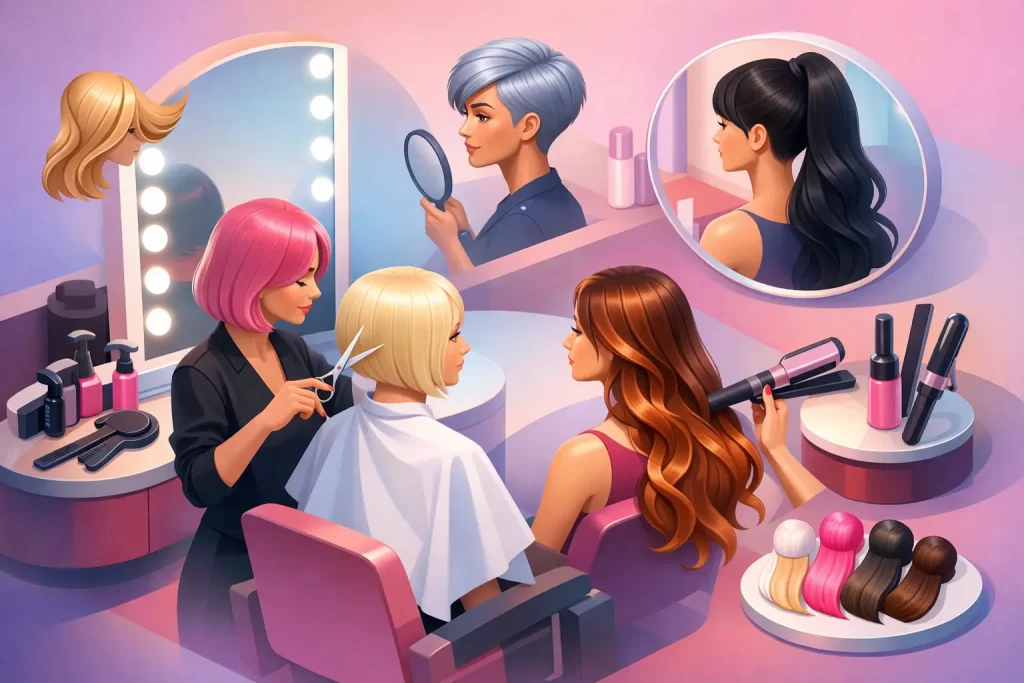
A great haircut should still look intentional after a busy week, a workout, or a humid South Florida afternoon. That is the practical appeal behind women’s haircut trends 2026: less focus on copying one viral look and more focus on a shape that suits your hair, your routine, and the way you want to feel when you leave the salon.
The strongest looks this year have movement, softness, and a clear point of view. They are not necessarily high-maintenance, but they are thoughtfully cut. The right version depends on your density, texture, face shape, styling habits, and how often you are comfortable returning for trims. A professional consultation is where a trend becomes a haircut you can actually live with.
Women’s Haircut Trends 2026 Put Shape First
Hair is moving away from overly rigid lines and heavily filtered perfection. The current direction is polished but touchable: fuller silhouettes, softer layers, and ends that look healthy rather than thinned out. Even the most tailored bobs have some natural movement built in.
This does not mean every cut needs layers. Fine hair may look fuller with a more solid perimeter and only light internal shaping. Thick or dense hair often benefits from strategic weight removal so it does not become too wide or heavy through the ends. Curly and coily hair need a shape that respects natural shrinkage and curl pattern. The trend is customization, not one formula for every head of hair.
For clients who enjoy styling, a well-cut shape can make a blowout look more expensive without adding more time. For clients who prefer air-drying, the same principle applies: the haircut should encourage the hair to fall in an attractive direction instead of fighting it.
The Cuts Clients Will Be Requesting
The soft, structured bob
Bobs remain a major choice for 2026, especially versions that feel refined without looking severe. Think jaw-length to collarbone-length cuts with a clean outline, subtle graduation, or light texture at the ends. A soft bob can be worn sleek, tucked behind the ears, waved, or styled with volume at the crown.
The trade-off is maintenance. Shorter bobs usually need more frequent shape-ups than long hair, particularly when the length sits at the jawline or neckline. If you want the visual impact of a bob with a little more flexibility between appointments, a longer bob that grazes the collarbone may be a better fit.
The long layered cut with presence
Long hair is not disappearing, but the flat, one-length look is giving way to more dimension. Long layers are being used to create lift around the face and movement through the mid-lengths while preserving a healthy, substantial perimeter. This is a smart choice for someone who loves length but feels her hair has become heavy or lifeless.
The key is restraint. Excessive layers can make fine hair appear thinner and can leave thick hair looking overly feathered. During your consultation, be specific about whether you usually wear your hair straight, curled, or natural. The placement of layers should support your most common styling routine, not just look good in the salon chair.
The modern shag and soft wolf-inspired cut
For clients who want more personality, shag-inspired shapes continue to evolve into softer, more wearable versions. These cuts feature airy layers, volume through the crown, and face-framing pieces that can be styled loose or more defined. The 2026 version is less choppy and extreme than earlier iterations. It is designed to move.
This style can be especially flattering on wavy hair because the texture helps reveal the layers. On very straight hair, it may require more styling to keep the shape from falling flat. On highly textured hair, the technique must be adjusted carefully so the haircut has balance without creating unwanted bulk.
Face-framing pieces and grown-out fringe
Bangs are becoming less all-or-nothing. Long curtain fringe, cheekbone-length pieces, and softly blended face framing give clients a way to change their look without committing to a blunt, short bang. They can bring attention to the eyes and cheekbones while connecting naturally to layers.
Fringe still requires an honest conversation about upkeep. If your hairline has strong cowlicks, if you wear glasses often, or if you do not like using a blow dryer, a longer and more forgiving shape is usually the wiser option. The most flattering bangs are not the shortest or trendiest ones. They are the ones that work with how your hair naturally grows.
Texture Is Part of the Design
A current haircut should not ask you to become someone else each morning. For naturally wavy, curly, and coily hair, that means planning the cut around your real texture, including shrinkage, density changes, and how your hair responds to humidity. For straight hair, it means creating enough internal support that the style does not collapse by midday.
Florida weather makes this especially relevant. A cut with soft movement can work beautifully in humidity, while heavily texturized ends or too many short layers may expand more than expected. Your stylist can recommend a shape that allows for natural volume while keeping the outline controlled.
Bring reference photos, but use them as a starting point. The same photo can produce very different results on fine straight hair, dense waves, relaxed hair, or curls. A skilled stylist will identify what makes the reference appealing – perhaps the length, the fullness, or the face framing – and adapt those elements to you.
Healthy-Looking Ends Are the New Finish
Across women’s haircut trends 2026, one detail shows up again and again: ends that look cared for. Whether the cut is blunt, layered, short, or long, the finish should feel intentional. Damaged, transparent ends can make even a beautiful color service look less polished.
Regular trims help preserve the shape and remove splitting before it travels farther up the hair shaft. The timing is personal. A precise bob may need attention every six to eight weeks, while long layers can often go longer if the hair is healthy and the overall shape still feels balanced. Heat styling, lightening services, and your home-care routine can all affect that schedule.
A haircut and color appointment should also work together. Face-framing layers can showcase dimensional color, while a clean one-length perimeter may make glossy, rich color look especially striking. If you are planning a major color change, mention it during your consultation so the cut can support the final result.
What to Discuss Before the First Snip
The most successful salon appointments begin with clear expectations. Share what you like about your current hair, what frustrates you, and how much time you realistically spend styling it. If you have a photo, explain what caught your eye. You may love the volume, not the exact length, or the softness around the face rather than the haircut as a whole.
It also helps to discuss your maintenance comfort level. A dramatic short cut can feel refreshing, but it may require more frequent visits to stay sharp. Long layers grow out more gently but may not create the same immediate transformation. Neither option is better. The right choice is the one that fits your lifestyle and gives you confidence between appointments.
At Visions Hair Studio, a consultation-led approach helps turn those details into a clear plan. Your stylist can assess thickness, growth patterns, texture, previous color, and daily styling habits before recommending a shape that is current and genuinely wearable.
The best trend to follow this year is not a specific length or celebrity photo. It is choosing a haircut that feels like you on an ordinary Tuesday, not just under salon lighting. When the shape is right, maintaining it becomes less of a chore and more of a simple way to keep your hair looking its best.