The mirror usually tells the story first – a bright line at the part, a few silver strands around the face, or roots that seem to show up earlier every month. If you are thinking about gray coverage hair color, the real goal is not simply hiding gray. It is choosing a color plan that looks natural, wears well, and fits your routine.
That is where professional guidance makes a difference. Gray hair behaves differently than pigmented hair, and coverage is rarely one-size-fits-all. Texture, percentage of gray, previous color, and how softly or fully you want coverage all affect the result.
What makes gray coverage hair color different
Gray hair is often coarser, drier, and more resistant than the rest of your hair. Even when the strand does not feel rough, it may process differently. That is why a formula that worked beautifully a few years ago may suddenly leave certain areas looking lighter, flatter, or less even.
The hairline and part are usually the most challenging zones. These areas are more visible, and the gray there can be especially stubborn. A good gray coverage service takes that into account instead of applying the exact same formula everywhere and hoping for the best.
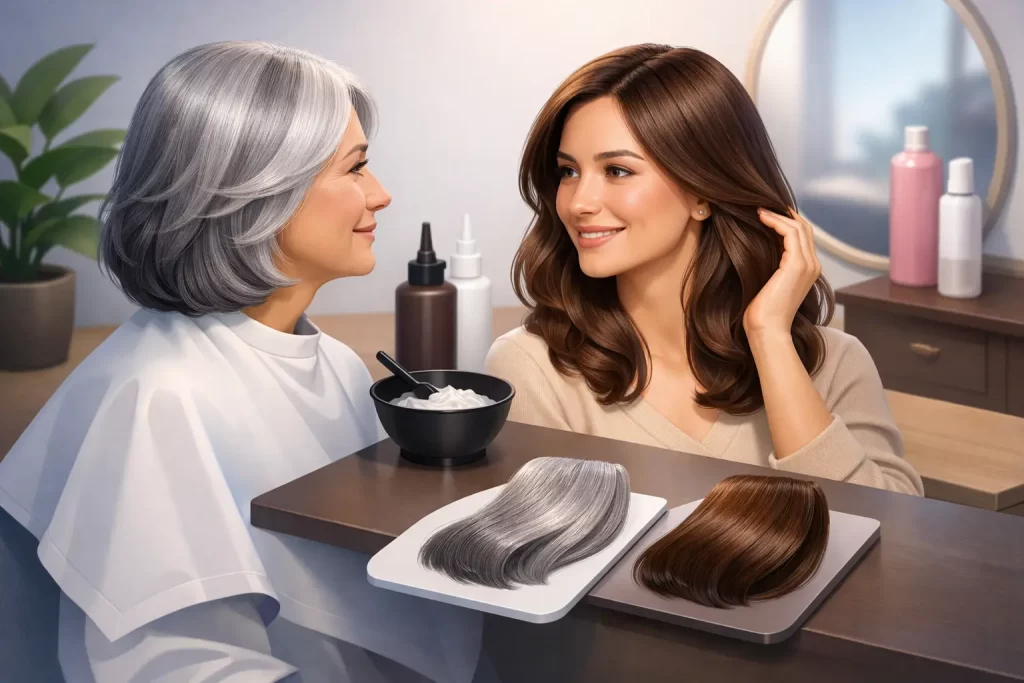
It also helps to understand that “coverage” can mean different things. Some guests want complete, opaque coverage so every gray strand blends into a rich brunette, blonde, red, or black shade. Others want softer blending that makes gray less obvious without creating a strong line of regrowth. Both approaches can be right. It depends on your hair, your upkeep preferences, and how natural you want the finished color to look.
The best gray coverage hair color starts with consultation
Before any color is mixed, a consultation should answer a few basic questions. How much gray do you have? Is it concentrated at the temples, crown, or all over? Have you used box color, highlights, glosses, or permanent color before? How often are you willing to come in for maintenance?
These details matter because the right formula is not just about choosing a shade on a swatch ring. It is about building a color strategy. Someone with 20 percent gray and a bright blonde may do well with a different plan than someone with 80 percent gray who wants a deep brunette. The same goes for someone who colors every four weeks versus someone hoping to stretch appointments to eight weeks.
At a professional salon, this is also where expectations are clarified. Sometimes the goal is perfect gray coverage. Sometimes the better goal is softer contrast at the root so regrowth is less obvious. A thoughtful stylist will talk through both options and explain the trade-offs clearly.
Permanent color, demi-permanent color, and gray blending
Permanent color is the classic choice for full gray coverage. It opens the cuticle and deposits color deeply enough to cover resistant grays more effectively. If you want strong, reliable coverage and a consistent result from root to end, permanent color is often the best fit.
Demi-permanent color is softer. It does not usually give the same level of complete gray coverage, but it can be excellent for blending, toning, and creating a more translucent finish. For clients who do not want a dense, solid look, demi-permanent color can make gray appear less noticeable while keeping the overall result softer and more dimensional.
There is no universal winner between the two. Permanent color tends to last longer on gray and offers more coverage, but it can create a more visible regrowth line. Demi-permanent color is lower commitment in appearance, yet it may fade faster and leave more gray visible. The right choice depends on your priorities.
Why natural-looking coverage is not always one solid shade
Many people assume better coverage means darker, flatter, or more saturated color. In reality, natural-looking hair usually has variation. If the entire head is colored one dense tone, especially over time, the result can look heavy or less flattering against the skin.
That is why many modern gray coverage services include some form of dimension. This might mean adjusting the root formula, refreshing the mids and ends differently, or pairing root coverage with highlights or lowlights. These techniques can soften the overall effect and keep the color from looking too uniform.
This matters even more if you have been coloring your hair for years. Repeated application of dark permanent color through the ends can create buildup and make the lengths look duller than the new growth area. A customized service addresses that imbalance instead of treating every section of the hair the same way.
Choosing the right shade for gray coverage
The best shade is not always your natural color exactly, and it is not always the shade you wore ten years ago. Skin tone, eyebrow depth, eye color, and the amount of gray you have now all influence what will look balanced.
For some guests, going slightly lighter than their original natural level creates a softer grow-out and a more youthful effect. For others, staying close to their natural brunette or deeper blonde gives the most believable coverage. Warmth also plays a role. Gray hair can sometimes grab cool tones in a way that looks flat, while a formula with the right amount of warmth can make the result look healthier and more reflective.
This is where salon-level formulation matters. Gray coverage is not simply choosing “ash brown” or “golden blonde.” A stylist may combine base shades, add natural tones for coverage, or adjust developer strength and processing time based on how resistant your gray is. Those small decisions are often what separate color that merely covers from color that truly looks polished.
Maintenance matters as much as the first appointment
Even the best color formula needs a maintenance plan. Gray roots usually become visible faster than other color changes because the contrast is clear, especially around the face and part line. If you prefer full coverage, you may need touch-ups every four to six weeks. If you prefer softer blending, you may be able to go longer.
What you do at home also affects longevity. Sulfate-free, color-safe products can help preserve tone and shine. Heat styling without protection can dry the hair and make color look less reflective. Hard water, sun exposure, and frequent washing may also cause fading, especially on the ends.
Condition matters too. Gray hair can be naturally wiry or dehydrated, so color services often look best when the hair is supported with regular conditioning and occasional professional treatments. Healthy hair reflects light better, and that alone can make color look richer and more natural.
When gray coverage gets tricky
There are a few situations where gray coverage becomes more complex. Previously colored hair is one of them. Box color, overlapping permanent color, and old dark buildup can all affect how fresh color takes. In these cases, the roots may cover well while the lengths stay dull, too dark, or uneven.
Another common challenge is resistant gray at the temples or hairline. Those areas may need a specific formula adjustment or application approach to get dependable coverage. This is also why timing matters. Rinsing too early or using a rushed formula can leave the most visible grays behind.
If your hair has become more fragile, very porous, or heavily highlighted, the color plan may need to balance coverage with hair integrity. Sometimes the healthiest option is not the most aggressive one. It may be better to combine root coverage with glossing, strategic dimension, or a softer transition plan.
Why professional gray coverage is worth it
Gray coverage seems simple until it is not. Uneven roots, flat tone, brassiness, over-dark ends, and quick fade are all common when color is treated as a basic process instead of a tailored service. A professional approach considers the full picture – your starting point, your maintenance preferences, and the finish you want to see in natural light, not just in the salon mirror.
That level of care is especially important if you want color that still feels like you. At Visions Hair Studio, that starts with listening. The best appointment is not about pushing one formula on every guest. It is about creating a result that fits your hair, your schedule, and your comfort level with upkeep.
If you are ready for gray coverage that looks soft, polished, and believable, the smartest first step is a conversation. The right color should make getting ready easier, not give you one more thing to worry about.