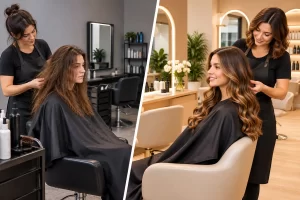
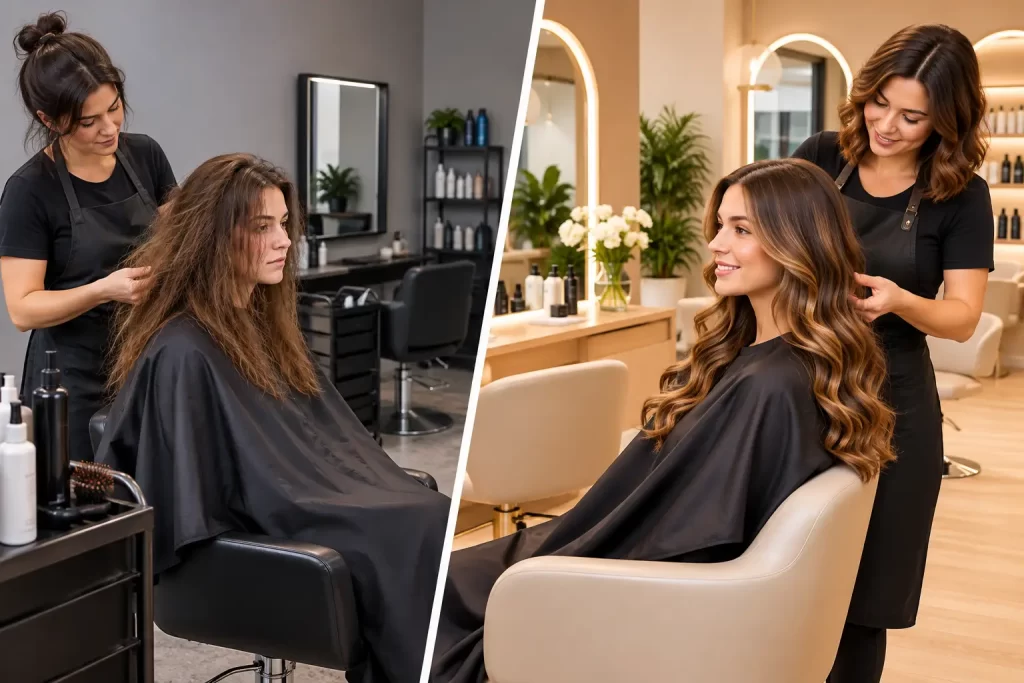
A striking salon makeover before and after is rarely about one dramatic step. The most beautiful transformations begin with a stylist who listens closely, studies the hair in front of them, and creates a plan that fits the client’s features, lifestyle, and long-term hair goals. The finished look may appear effortless, but the process behind it should be thoughtful.
For some guests, a makeover means softening an old color, correcting uneven tones, or bringing back shine after months of heat styling. For others, it is a precision cut that gives fine hair more movement or removes weight from thick hair without losing length. The goal is not to make every client look the same. It is to create a result that feels polished, healthy, and distinctly theirs.
A Salon Makeover Before and After Starts With a Consultation
The “before” portion of a makeover is more than a photo. It is where a professional stylist assesses what the hair needs and what is realistically achievable in one appointment. Hair history matters. Previous color, at-home box dye, chemical services, frequent hot tools, medications, water quality, and natural texture can all influence the approach.
A strong consultation also makes room for what the client wants to avoid. Maybe you love brightness around your face but do not want high-maintenance roots. Maybe you want a shorter cut but need enough length for a ponytail at the gym. Perhaps you are ready to cover gray but do not want one flat, solid color. These details help shape a service plan that works after you leave the salon, not just while you are sitting in the chair.
Bringing inspiration photos can be helpful, especially when they show colors or shapes you are drawn to. Still, they should start a conversation rather than serve as a guarantee. The same shade can look very different depending on the starting level, underlying warmth, density, and condition of the hair. A skilled stylist will explain what can be created now, what may take more than one session, and how to protect the integrity of your hair along the way.
The Best Transformations Balance Change and Hair Health
Big color changes can be exciting, but healthy-looking results require patience. Moving from deep brunette to bright blonde, removing years of dark color, or correcting banding often takes a series of carefully planned appointments. Trying to force that process in one day can compromise condition and leave the hair feeling dry, fragile, or uneven.
This does not mean a first appointment cannot make a meaningful difference. Strategic highlighting, dimensional lowlights, glossing, toning, face-framing brightness, or a refined root blend can create a noticeable change while respecting the hair’s limits. Sometimes the smartest makeover is not the lightest possible blonde or the boldest possible red. It is the color that looks luminous, wears beautifully, and leaves the hair feeling good.
The same principle applies to cutting. Removing damaged ends can instantly make hair look fuller and more polished, even when the overall length changes very little. For clients with curls or natural texture, the right shape can help hair sit better without asking it to behave like a completely different texture. For those with thick hair, internal weight removal and intentional layering can improve movement while maintaining a full-looking perimeter.
Professional recommendations should always be clear about trade-offs. A cooler blonde may require more regular toning. A vivid fashion shade may fade faster than a natural-looking brunette. Curtain bangs can frame the face beautifully, but they often need styling and more frequent trims. Good salon guidance gives you the information to choose the version of a look that suits your routine.
What Changes in a Meaningful Makeover
The best after photos show more than a new color or a freshly curled finish. They show balance. The cut complements the face shape and hair texture. The color has dimension instead of harsh lines. The style has movement, shine, and an intentional finish.
A makeover can also make daily styling easier. A well-placed cut may help hair air-dry more attractively. A lived-in color placement can make regrowth feel less obvious. A richer gloss can refresh faded ends and give the overall color a more expensive-looking finish. Those practical improvements are often what make a guest feel confident weeks after the appointment.
It is also worth remembering that salon lighting, professional blow-drying, and finishing techniques enhance an after photo. That is part of the salon experience, but it should not be the only reason the look works. Ask your stylist how to recreate the finish at home and which steps make the greatest difference for your particular hair. In many cases, a heat protectant, correct brush, or improved drying technique matters more than adding a cabinet full of products.
How to Prepare for a Salon Makeover
Come in with clean, dry hair unless the salon has given you different instructions. Be ready to share recent color history as accurately as possible, including at-home color or henna. Mention any changes in your hair or scalp health, and let your stylist know how much time you normally spend styling each day.
Wear something that helps you picture the result in real life. If you usually dress casually, do not choose a transformation based only on a highly styled red-carpet photo. If you frequently wear your hair up for work or exercise, say so before a major cut. The right makeover should support your actual routine.
It also helps to be open about your maintenance preferences and budget. Service pricing can vary based on hair thickness, length, starting condition, and the complexity of the color work. More importantly, future upkeep matters. A great stylist can suggest options that fit whether you prefer regular color maintenance or want a softer grow-out between appointments.
Keeping the After Looking Its Best
The salon appointment creates the foundation, but home care protects the result. Color-treated hair benefits from salon-recommended cleansing and conditioning products chosen for its needs, particularly if it has been lightened. Lower water temperatures and heat protection can help preserve tone and reduce dryness. If your hair is prone to brassiness, your stylist can advise when a toning product is useful and when it may be too drying.
Schedule maintenance based on your service, not a one-size-fits-all calendar. Bang trims, gray coverage, glosses, highlights, and extensions all follow different timelines. Your stylist should help you understand when to return so the look stays intentional instead of reaching the point where it needs extensive correction.
At Visions Hair Studio, a makeover is approached as a partnership: careful consultation, current professional techniques, and a plan that respects both your vision and your hair. That level of care is especially valuable when you are considering a major change or repairing the effects of a past color experience.
The most rewarding before-and-after moment is often not the mirror reveal itself. It is the day a few weeks later when your hair still feels like you, only more polished, more manageable, and easier to wear with confidence.