
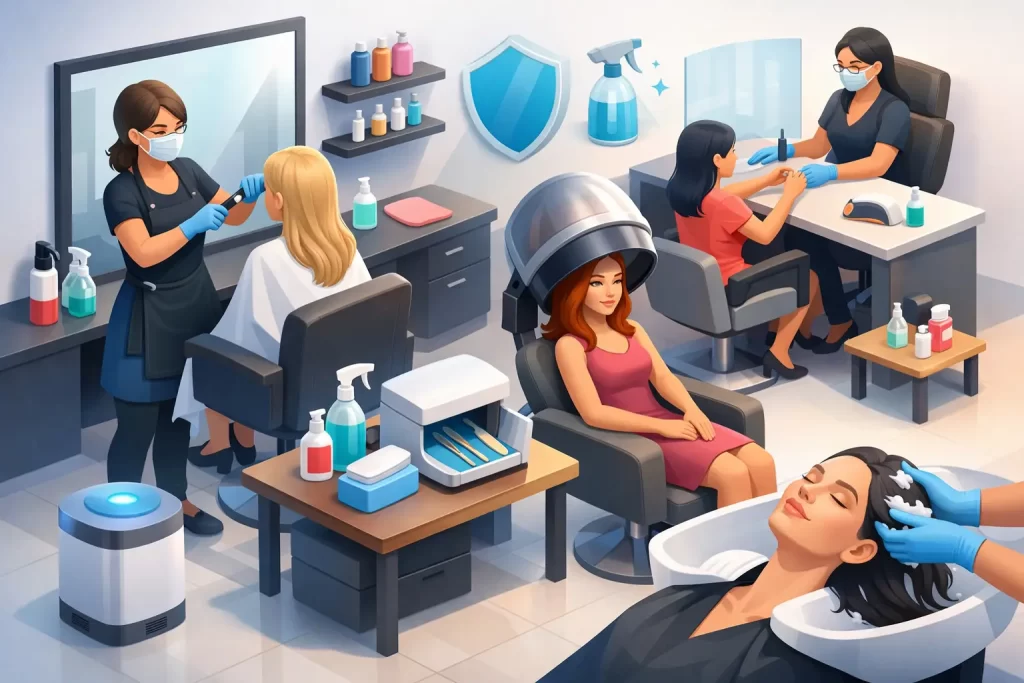
A great haircut or color service should leave you feeling confident, not wondering whether the tools, products, and space were properly cared for. Salon safety is part of the experience from the moment you check in through the final style check. It protects your comfort, supports healthier hair and scalp care, and helps create the trust that makes a salon relationship last.
For clients, safety does not need to feel clinical or complicated. It should be visible in the details: a clean workstation, freshly prepared tools, an attentive consultation, and a stylist who takes your concerns seriously. At Visions Hair Studio, care for the client and care for the craft go together.
What Salon Safety Looks Like in Practice
A clean-looking salon is a good start, but professional standards go further than appearance. Effective safety practices are consistent, not saved for a busy day, a first-time guest, or a special service. They are built into how the salon operates.
Clean tools and prepared stations
Combs, brushes, clips, shears, razors, and other reusable implements should be cleaned and disinfected between clients according to professional and product guidelines. Single-use items, including certain neck strips, applicators, or disposable tools, should not be reused.
A stylist’s station should also be reset before your service begins. That means removing hair, wiping down work surfaces, and preparing clean capes and towels. These steps may seem small, but they are a meaningful sign that the salon respects every client who sits in the chair.
Not every tool is sanitized in the same way. Some require washing before disinfection, while others need to be discarded after one use. A professional team understands the difference and follows the proper process rather than relying on a quick wipe-down.
Careful use of color and chemical services
Hair color, lightener, smoothing treatments, and perm solutions can produce beautiful results when selected and applied correctly. They also require training, attention, and honest communication. The right service depends on your hair history, scalp condition, desired result, and the condition of your hair today.
A thorough consultation helps a stylist identify potential concerns before color is mixed. This includes previous color, at-home treatments, recent chemical services, medications or changes that may affect the hair, and any history of skin sensitivity. If a stylist recommends adjusting the plan, scheduling a test strand, or breaking a major color correction into more than one appointment, that is not a lack of confidence. It is professional judgment.
Patch testing may be appropriate for some color services, particularly when a client has had a prior reaction, is using a new product, or has not received that type of color before. It depends on the product instructions and your individual history. Tell your stylist about itching, burning, swelling, rashes, or any past reaction to hair color, even if it happened years ago.
A consultation that makes room for the real details
The best consultation is not only about inspiration photos. It is also a conversation about what your hair can safely achieve and how to maintain it. Your stylist should listen to your goals, assess your hair, and explain the service in clear terms.
Clients are sometimes hesitant to mention scalp concerns, hair shedding, allergies, pregnancy, recent medical treatment, or a home color experiment. There is no need to feel embarrassed. These details can influence product choices, timing, and whether it is best to proceed that day. The more your stylist knows, the better they can personalize the service.
A consultation is also where expectations become realistic. Going lighter, correcting uneven color, or changing a heavily processed style may require extra time and care. Protecting the integrity of your hair is worth more than rushing toward a result that may not hold up.
Salon Safety Is Also About Client Comfort
Physical cleanliness matters, but client well-being extends beyond sanitation. A safe salon is one where you can speak up, ask questions, and feel respected throughout the appointment.
If your scalp feels uncomfortable during a color application, shampoo, blow-dry, or styling service, say so right away. Mild sensations can sometimes be expected with certain services, but burning, significant irritation, or persistent discomfort should never be ignored. A trained stylist can assess the situation, rinse or adjust the service when needed, and help determine the appropriate next step.
Comfort also includes practical considerations. Let your stylist know if you are sensitive to fragrance, have difficulty reclining at the shampoo bowl, need a break during a longer appointment, or have a preference around heat styling. Personalized service means adapting where possible, not expecting every client to fit the same routine.
For parents bringing children, a salon environment should also support clear supervision and safe movement around hot tools, sharp implements, cords, and busy work areas. An appointment can feel relaxed without losing awareness of the equipment and activity around it.
Why Training Matters to Salon Safety
Professional education is one of the strongest protections a salon can offer. Techniques change, product formulas evolve, and service trends move quickly. Ongoing training helps stylists refine not only their creative skills but also their understanding of application methods, processing, hair integrity, and client care.
This matters most when a service is complex. Balayage, vivid color, blonding, extensions, corrective work, and texture-focused services all call for more than a standard formula. The stylist must recognize how the hair is responding and know when to change direction.
Training does not mean a stylist will promise every look in one visit. In fact, the opposite is often true. An experienced professional will explain limitations, recommend a thoughtful plan, and prioritize the health of your hair over an unrealistic timeline. That approach protects both the service result and your confidence in it.
Questions You Can Ask Before Booking
You do not need to be an expert to choose a salon with strong standards. A few direct questions can help you feel more comfortable, especially before a new color service, a significant transformation, or an appointment after a previous reaction.
Ask how the salon handles tool cleaning between clients, whether your hair history calls for a patch or strand test, and what the stylist recommends for maintaining your result safely at home. You can also ask about the expected appointment length, the products being used, and what to do if your scalp feels irritated after your service.
The answers should be clear and respectful. A professional salon will not make you feel difficult for asking about hygiene, ingredients, pricing, or the condition of your hair. Those questions are part of making an informed choice.
Your Role in a Safer, Better Appointment
Salon safety is a shared effort. Arrive with clean, dry hair when requested, especially for color consultations or services where buildup may affect the result. Be open about your recent hair history, including box dye, henna, relaxers, keratin treatments, swimming exposure, or other chemical services.
Follow aftercare advice, particularly after color or chemical treatments. Using recommended products, limiting excessive heat, and returning for maintenance at the right time can help preserve your hair’s condition. If you experience an unexpected reaction after a service, contact the salon promptly and seek medical care when symptoms are severe or do not improve.
The goal is not to make a salon visit feel intimidating. It is to make it feel well managed, personal, and dependable. When cleanliness, consultation, education, and communication are treated as everyday standards, you can settle into the chair knowing your beauty goals and your comfort are receiving the same careful attention.