Frizz often shows up at the exact moment you want your hair to look polished: after a fresh blowout, during a humid Florida afternoon, or when dry ends begin catching the light. Learning how to reduce frizz safely is less about fighting your natural texture and more about protecting the hair’s moisture balance, cuticle, and overall condition.
A little frizz is normal, especially for wavy, curly, color-treated, or high-porosity hair. The goal is not to weigh hair down with product or rely on damaging shortcuts. It is to use a routine that leaves hair smoother, healthier-looking, and still like itself.
Why Hair Gets Frizzy in the First Place
Frizz develops when the hair cuticle is lifted or uneven. Instead of reflecting light smoothly, the surface catches humidity and lets strands swell in different directions. Dryness, friction, heat styling, chemical processing, rough towel-drying, and even an overdue trim can all contribute.
Humidity is a major factor in Wellington and throughout Palm Beach County. When hair is thirsty or damaged, it tends to pull moisture from the air. That can make a carefully styled look expand, lose definition, or feel rough within hours.
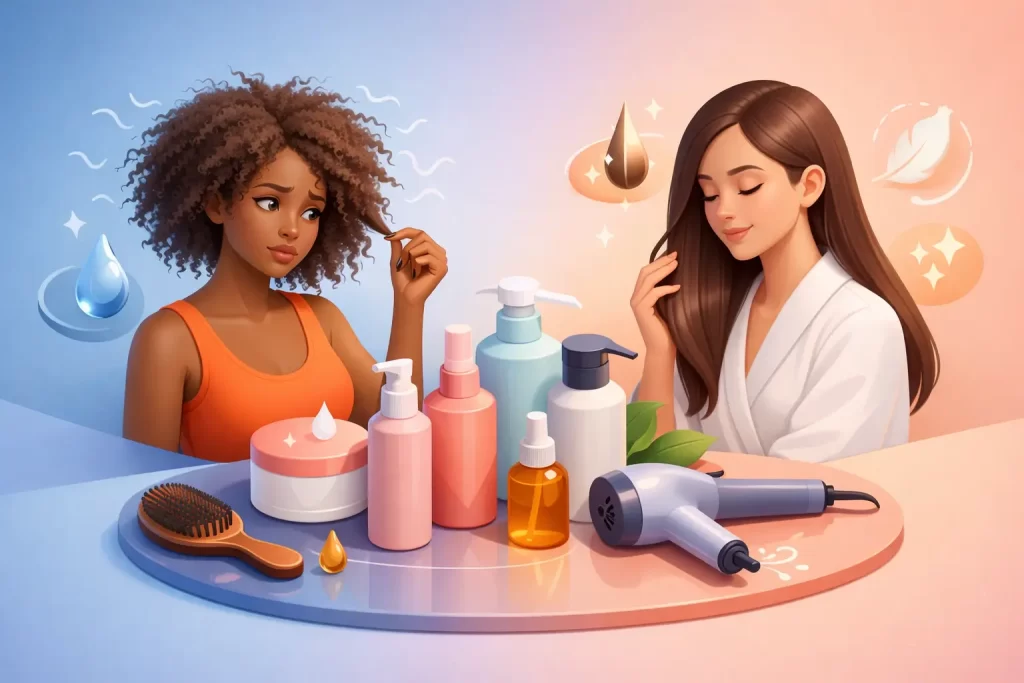
Your hair type matters, too. Fine hair may become frizzy when it is overloaded with heavy oils and creams. Coarse or curly hair may need more moisture and a stronger hold product to keep its pattern defined. A routine that works beautifully for someone else may not be the right one for your density, texture, color history, or styling habits.
How to Reduce Frizz Safely at Wash Day
The healthiest anti-frizz routine starts in the shower. Washing too often can remove the natural oils that help protect the hair shaft, while waiting too long between washes can lead to buildup that makes hair feel dull and difficult to style. The right schedule depends on your scalp, activity level, texture, and the products you use.
Choose a shampoo that cleanses your scalp without leaving your lengths squeaky or stripped. If your hair is dry, curly, color-treated, or frequently heat-styled, a moisturizing formula is often a better fit than a harsh clarifying shampoo for regular use. Clarifying can be useful occasionally when buildup is present, but it should not become the answer to every bad hair day.
Follow with conditioner from mid-lengths through ends. Let it sit for a minute or two, then detangle gently with your fingers or a wide-tooth comb. Tugging through tangles after rinsing is one of the easiest ways to create breakage and more frizz over time.
Rinse with lukewarm rather than very hot water. Hot water can feel relaxing, but repeated exposure may leave both the scalp and hair feeling dry. A brief cooler rinse at the end can help hair feel smoother, though it is not necessary to make yourself uncomfortable.
Use a Towel That Does Not Rough Up the Cuticle
Rubbing wet hair with a traditional bath towel creates friction when hair is at its most vulnerable. Instead, gently squeeze out water with a soft microfiber towel or clean cotton T-shirt. For curls and waves, scrunch upward rather than twisting or aggressively blotting.
Apply your leave-in conditioner, curl cream, smoothing product, or lightweight serum while hair is still damp. This helps seal in hydration before the hair begins drying. Start with a small amount, especially if your hair is fine, and add more only where needed.
Style With Less Heat and More Protection
Heat can create a smooth finish, but frequent high-temperature styling can gradually weaken the hair and make frizz harder to manage. You do not need to give up your blow-dryer or flat iron completely. The safer approach is to use heat thoughtfully.
Always apply a heat protectant before blow-drying, curling, or straightening. Work in sections so you are not repeatedly passing hot tools over the same area. If your tool has adjustable settings, choose the lowest effective temperature. Hair that is fine, lightened, or fragile usually needs less heat than thick, resistant, or very coarse hair.
For a smoother blowout, aim the dryer nozzle downward from roots to ends. Use a brush that provides gentle tension without pulling, and make sure each section is fully dry before moving on. Damp spots can swell in humidity and undo the finish quickly.
Flat ironing hair that is not fully dry is particularly risky. The sizzling sound is not a sign of extra smoothing power. It is a sign that water is being heated inside or on the hair, which can contribute to damage. If you frequently need a flat iron to make your hair manageable, a professional consultation can help identify whether the issue is dryness, an unsuitable haircut, overprocessing, or a product mismatch.
Choose Products for Your Hair, Not the Label Promise
Anti-frizz products can be helpful, but more is not always better. Layering too many oils, creams, sprays, and silicone-based serums can leave hair coated, limp, or prone to buildup. On the other hand, skipping moisture and hold entirely can leave textured hair exposed to humidity.
A simple approach is often enough: a leave-in conditioner for hydration, a styling product for control or definition, and a finishing serum or spray only where needed. Curly hair may benefit from a gel or mousse that forms a soft cast as it dries, helping the curl pattern stay together. Straight or fine hair may prefer a light smoothing spray and a small amount of serum on the ends.
Avoid applying rich oils directly to the scalp unless a professional has recommended it for your specific needs. Oils can make some scalp conditions worse and may leave roots looking greasy without actually correcting dryness in the hair shaft. If you try a new product, patch test when appropriate and stop using it if you notice itching, redness, flaking, or irritation.
Protect Hair Between Styling Days
Frizz control is also about the hours when you are not actively doing your hair. Cotton pillowcases, tight ponytails, frequent brushing, and repeated touching can all disturb the cuticle and your style.
A smooth pillowcase or a loose protective style can reduce overnight friction, particularly for curls. Use snag-free hair ties and avoid pulling the same area tightly every day. If your hair is prone to tangling, gently detangle from the ends upward rather than starting at the root and forcing the brush through.
Regular trims matter because split ends do not repair themselves. Conditioning products can temporarily improve how damaged ends look and feel, but they cannot permanently fuse a split hair back together. Removing worn ends helps prevent splits from traveling higher up the strand, where they can create a rougher overall appearance.
Be Careful With Chemical Smoothing Treatments
Chemical smoothing, relaxing, and certain keratin-style services can make hair appear less frizzy, but they are not interchangeable and are not right for every client. Results, maintenance needs, and potential risks depend on the formula, your hair’s condition, previous color services, and how the service is performed.
Never assume that a treatment described as natural, formaldehyde-free, or gentle will be risk-free for your hair or scalp. Ask what the service is designed to do, how long it lasts, what home care it requires, and whether it is compatible with your color history. A qualified stylist should assess your hair before recommending a service, particularly if it is lightened, fragile, or already showing signs of breakage.
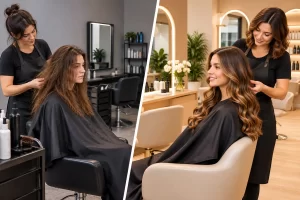
At Visions Hair Studio, a consultation-led approach makes room for those details. Sometimes the best path is a conditioning plan, a reshaped cut, and improved styling techniques rather than a chemical service.
When Frizz May Be a Sign to Get Professional Help
If your hair suddenly becomes much drier, rougher, or more fragile than usual, pause before adding stronger products or more heat. Breakage, excessive shedding, scalp discomfort, or major texture changes can have several causes. A stylist can evaluate visible signs of damage and help adjust your cut, color plan, and home routine. For persistent scalp symptoms or unusual hair loss, a medical professional is the right resource.
The most reliable anti-frizz routine is one you can maintain without stressing your hair. Treat moisture, gentle handling, and smart heat use as the foundation, then tailor the details to your texture and lifestyle. With the right care, smoother hair does not have to come at the expense of healthy hair.