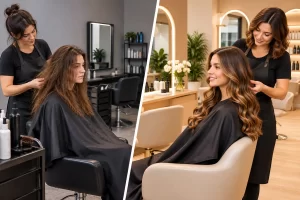
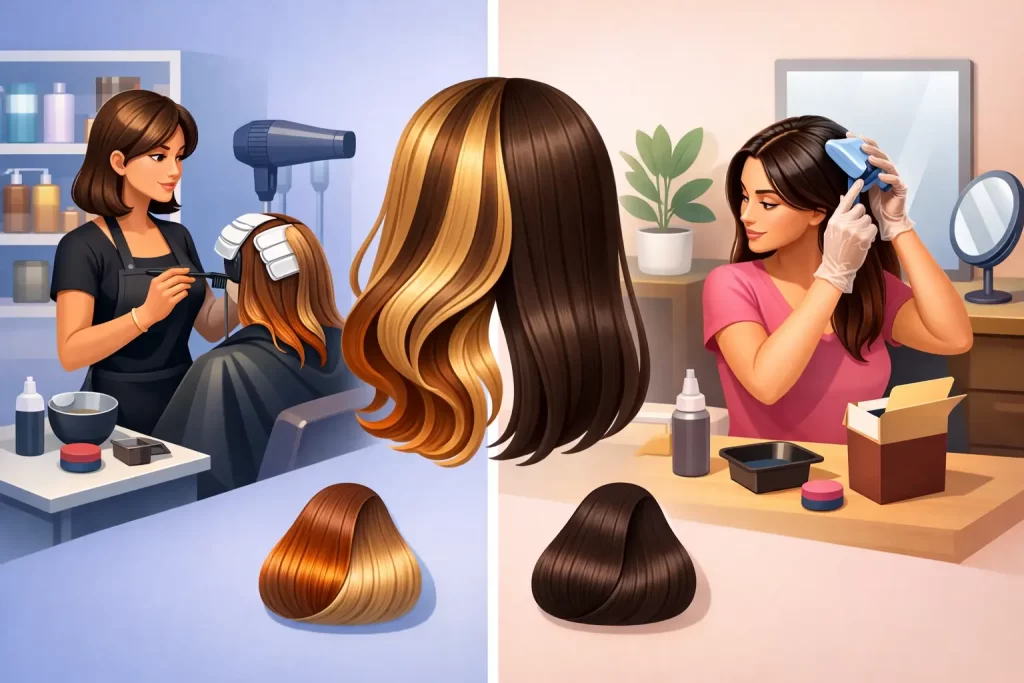
You usually notice the difference between salon color versus box dye a few weeks later, not just the day you color your hair. The first mirror check might look fine either way. What tends to reveal the real gap is how the color fades, how your hair feels, and how easy it is to maintain the result without creating a bigger correction later.
That is why this comparison matters. Hair color is not just about making hair lighter, darker, or shinier for the moment. It is also about protecting the condition of the hair, choosing the right tone for your skin and goals, and making sure the result works with your natural base, previous color, and long-term maintenance plan.
Salon color versus box dye: the real difference
The biggest difference is customization. Box dye is made to work for as many people as possible, which means it is designed as a one-size-fits-most product. Salon color is selected, mixed, and applied for one person sitting in one chair with one specific hair history.
That distinction changes everything. A professional color service takes into account your natural level, whether your hair has previous permanent color, how much gray you have, the thickness of your hair, your porosity, and what result you actually want. Warm blonde, cool beige brunette, dimensional copper, soft gray coverage, bright fashion tones – these are not interchangeable goals, and they do not respond to the same formula.
With box dye, the formula inside the package cannot adjust itself to your hair. It does not know if your mids are porous, if your ends have old highlight damage, or if the front hairline processes faster than the back. It gives a standard formula and a standard processing expectation. For some people, that may seem convenient. For many, it leads to uneven color, excess warmth, banding, dullness, or unnecessary stress on the hair.
Why salon color looks more natural
Natural-looking color is usually not one solid shade from roots to ends. Real hair has variation. Even a rich brunette often has subtle depth changes, soft reflect, and dimension that keeps it from looking flat.
In a salon, that dimension is built intentionally. A stylist can adjust root color separately from the ends, refresh faded pieces without overprocessing everything, and place lighter or deeper tones where they create movement. That is especially important if your hair has been colored before. Previously colored hair rarely absorbs color the same way from top to bottom.
Box dye often deposits a single tone all over, which can create that heavy, uniform look people sometimes describe as “helmet hair” or “shoe polish dark.” Even when the shade on the front of the box looks soft and glossy, the actual result depends on what is already on your hair. If your ends are dry, they may grab too dark. If your roots are virgin hair, they may lift warmer than expected.
The chemistry matters more than most people realize
Professional color is not magic, but it is controlled. That control matters. A trained stylist understands how developers, undertones, lifting power, deposit, and timing work together. Just as important, they know when not to push the hair further.
This is one of the biggest advantages in salon color versus box dye. Many boxed colors use stronger, broad-use formulas because the brand has to make the product effective across many hair types. That can mean more aggression than your hair actually needs. If your goal is simple gray blending or refreshing a faded brunette, using a stronger formula than necessary may leave the hair feeling rougher without giving a better result.
In a salon, the formula can be gentler and more precise because it is chosen for your starting point. That may help preserve shine, elasticity, and softness over time. It also lowers the chances of ending up with a result that needs correction.
Gray coverage is where people often get frustrated
Box dye is often marketed as an easy answer for gray coverage, and sometimes it can work reasonably well for a single-process touch-up. But gray hair is not all the same. Some gray is resistant and wiry. Some areas, especially around the hairline, process differently. Some clients want full coverage, while others want a softer blend that grows out less obviously.
A salon approach lets you choose the finish you actually want. Full coverage, blended coverage, brighter dimension around the face, softer regrowth, or a tone that complements your skin – these details make the result look intentional rather than simply darker. That is especially helpful if you color regularly and want consistency from visit to visit.
When box dye seems cheaper, and when it is not
On the shelf, box dye almost always looks like the budget-friendly option. The upfront cost is lower, and that can make it appealing when you want a fast change. But price and value are not always the same thing.
If the color turns out too dark, too warm, patchy, or damaging, fixing it usually costs more than doing it professionally in the first place. Color correction is a separate service for a reason. Removing stubborn artificial pigment or balancing uneven bands takes time, expertise, and often multiple steps to protect the hair while improving the result.
That does not mean every box color leads to correction. It does mean the margin for error is much smaller than many people expect. Dark box color is especially difficult to lift back out cleanly. If you think you may want highlights, balayage, or a lighter look later, that choice matters.
Who might be okay with box dye?
There are situations where box dye may feel sufficient. If someone has healthy, uncolored hair, wants to stay close to their current depth, and understands the risks, they may get an acceptable result. Some people are also comfortable trading customization for convenience.
But acceptable is different from tailored. If you care about tone, dimension, hair health, predictable gray coverage, or a result that grows out gracefully, professional color usually offers a better experience and a better outcome. That is especially true if your hair is highlighted, chemically treated, curly and porous, resistant gray, or previously colored with dark pigment.
When salon color is the smarter choice
Professional color is usually the better route if you want a noticeable change, a lighter result, correction from past color, gray coverage that looks polished, or any service that involves dimension. It is also the safer choice if your hair has a complicated history and you are not fully sure what has been used on it before.
A consultation is part of what makes that process work. Before mixing color, a stylist can assess the current condition of your hair, ask about your routine, and explain what is realistic in one appointment. That honest conversation protects your hair and your expectations. Sometimes the best plan is not the fastest one, and a good stylist will tell you that.
At a salon that values education and consultation-led service, the difference is not just the product bowl. It is the judgment behind every choice – shade selection, developer strength, placement, timing, and how to maintain the look after you leave.
Salon color versus box dye for long-term hair health
Hair color is never only about the appointment itself. It affects what your hair can handle next. Repeated use of the wrong formula, overlapping color unnecessarily, or chasing tone with repeated boxed applications can leave the hair dry, dull, and harder to manage.
Salon color tends to support a longer view. A professional can refresh only what needs refreshing, avoid repeatedly processing fragile ends, and recommend timing that keeps your hair looking consistent without unnecessary damage. That matters if you want your color to feel like part of your routine instead of a cycle of quick fixes.
For many clients, the real benefit is peace of mind. You know your hair is being assessed before it is processed. You know the service is adjusted to your texture, density, and goals. You know someone is paying attention to both the immediate result and the condition of your hair afterward.
If you have been weighing salon color versus box dye, the better question may be this: do you want the fastest option, or the most dependable one for your hair? Those are not always the same. And when color affects how confident you feel every day, having a professional guide the process is often worth far more than the box suggests.