
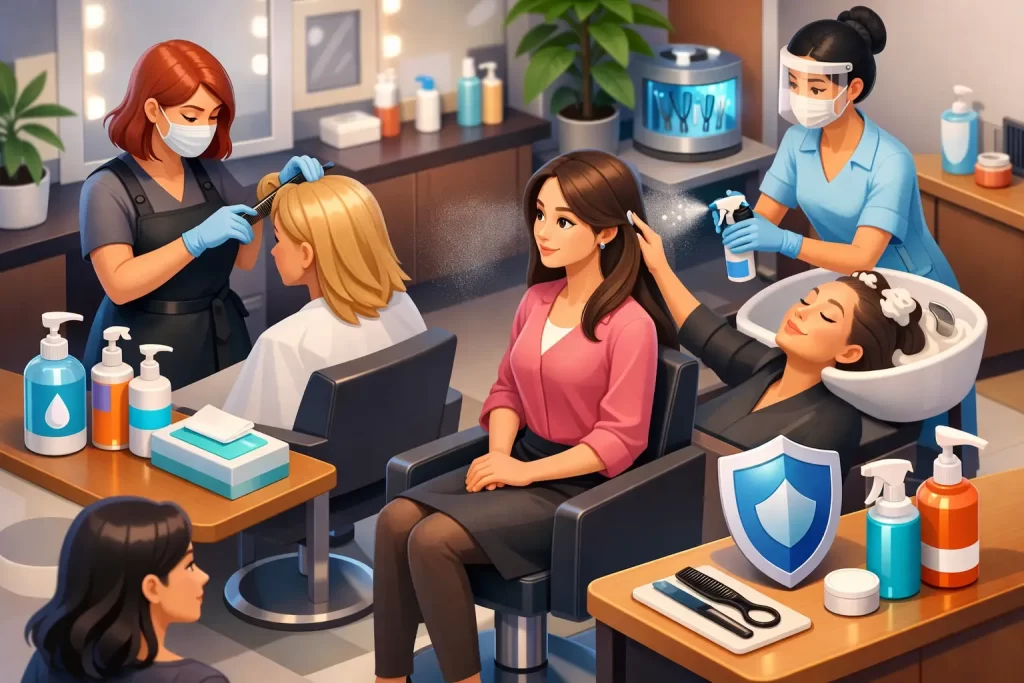
You can usually tell within a few minutes whether a salon takes safety seriously. Stations feel organized. Tools are handled with purpose. Your stylist asks the right questions before mixing color or starting a service. Strong hair salon safety practices are not just about appearances. They protect your health, support better results, and make the entire appointment feel more comfortable from start to finish.
For many clients, safety is part of trust. You are sitting close to someone, often for a long appointment, while they work with sharp tools, heated appliances, and chemical products near your skin. That only feels relaxing when the environment is clean, the process is thoughtful, and the team clearly knows what they are doing. A good salon does not treat safety as a box to check. It builds it into every service.
Why hair salon safety practices matter
Safety affects more than sanitation. It also shapes service quality. Clean combs, properly disinfected shears, fresh capes, and a tidy workstation reduce the chance of irritation, cross-contamination, and mistakes. Clear consultations help prevent avoidable problems like allergic reactions, scalp sensitivity, or color services that are too aggressive for the condition of the hair.
There is also a confidence factor. Clients want to feel cared for, not rushed through a chair. When a stylist pauses to review your hair history, asks about medications or recent treatments, and explains what they are using, that attention signals professionalism. It says your comfort matters just as much as your final look.
The trade-off is that careful salons may take a little more time. A thorough consultation, proper cleanup between clients, and product testing where needed are not shortcuts. Most clients would rather spend a few extra minutes on process than deal with preventable issues later.
Clean tools are the baseline, not the bonus
The most visible part of salon safety is tool care, and it should be visible. Brushes, combs, clips, razors, and shears all come into direct contact with hair and skin. If they are not cleaned and disinfected correctly between clients, the risk is not theoretical. Skin irritation and contamination become more likely.
A professional salon should have a consistent routine for cleaning tools and work surfaces throughout the day. This includes disinfecting chairs, shampoo bowls, countertops, and any reusable items that move from one client to another. Fresh neck strips, clean towels, and capes that are regularly laundered matter too. These details may seem small, but they are part of a larger standard of care.
Clients do not need a tour of the back room to notice whether a salon is well managed. You can see it in how stations are reset, how waste is handled, and whether used tools are separated from sanitized ones. Order is often a sign that the salon has systems, not just good intentions.
Consultations are a safety practice too
Many people think of consultations as a style discussion, but they are also one of the most important safety steps in any salon. Before a haircut, color service, smoothing treatment, or extension appointment, a stylist should understand your hair history, your goals, and any concerns that could affect the service.
That includes previous color, at-home products, chemical treatments, allergies, scalp conditions, and how your hair has been behaving lately. Hair that looks healthy at first glance may still be fragile from recent bleaching, heat damage, or overlapping services. A stylist who asks detailed questions is not being cautious for no reason. They are trying to protect the integrity of your hair and choose the safest path to your result.
Sometimes the safest choice is not the fastest one. A color correction may need to happen over multiple visits. A lightening service may need a more conservative formula. A client with scalp sensitivity may need a different product approach altogether. Good salons explain these decisions clearly instead of promising unrealistic results.
Product knowledge protects your hair and scalp
Professional products are not all interchangeable. Different color lines, developers, toners, and treatment systems behave differently, especially when combined with existing color, texture services, or compromised hair. That is why product knowledge is a safety issue, not just a technical one.
Stylists who stay educated are better equipped to identify risk before it becomes damage. They know when hair can handle a service and when it needs strengthening, trimming, or a different timeline. They know how to watch for signs of overprocessing and when to stop a service that is not developing safely.
This is where ongoing education matters. Trends change, formulas evolve, and client expectations keep rising. A salon that invests in training is better prepared to deliver current looks without cutting corners on hair health. At Visions Hair Studio, that commitment to craft and continued learning supports both beautiful results and a safer appointment experience.
Scalp health deserves more attention than it gets
A healthy scalp is part of a safe salon experience. If the scalp is irritated, broken, sunburned, or unusually sensitive, certain services may need to be adjusted or postponed. The same goes for clients who have recently used strong at-home treatments or are dealing with dryness, flaking, or tenderness.
A careful stylist pays attention before the service begins and during it. If something stings more than expected, feels too hot, or looks unusual, that should be addressed right away. Clients should never feel like they have to sit through discomfort to avoid being difficult. Speaking up is part of a good appointment.
Salons also help protect scalp health by applying products carefully, avoiding unnecessary overlap, and choosing service plans based on real hair condition rather than idealized inspiration photos. Not every look is worth the stress it puts on the hair and scalp in one visit.
Air quality, comfort, and the overall environment
Safety is not only about what touches the hair. It is also about the salon environment. Ventilation matters when color, lightener, sprays, and other professional products are used throughout the day. A salon should feel fresh, not heavy with lingering fumes.
Comfort plays a role too. Clean restrooms, uncluttered walkways, stable seating, and organized electrical cords all contribute to a better experience. These things may sound operational, but they affect how secure and cared for clients feel while they are in the salon.
This is especially relevant during longer appointments. If you are coming in for a major color service, smoothing treatment, or full styling session, you want to know the space is being maintained with the same attention given to your hair. A polished environment supports peace of mind.
What clients can do before and during an appointment
Salon safety is led by the salon, but clients have a role as well. The best results happen when communication is honest. If you colored your hair at home, had a recent treatment elsewhere, started a new medication, or have a history of reactions, say so early. That information helps your stylist make safer decisions.
It also helps to arrive with realistic expectations. Bringing inspiration photos is useful, but your stylist still needs to assess whether that result is healthy and achievable for your hair right now. If they recommend a slower plan, that is often a sign of professionalism, not reluctance.
During the service, mention discomfort immediately. Burning, excessive tension, dizziness, or unusual scalp sensitivity should never be ignored. A quality salon wants feedback in the moment so adjustments can be made.
How to recognize a salon that takes safety seriously
You do not need technical training to spot strong standards. Look for cleanliness that feels consistent rather than staged. Notice whether the stylist asks thoughtful questions, explains the process, and handles tools and products with care. Pay attention to whether the team appears rushed or in control.
A trustworthy salon also respects limits. If your hair cannot safely handle a service, the right professional will tell you. That honesty may cost the salon a bigger same-day ticket, but it builds long-term trust, protects your hair, and usually leads to better results over time.
The best hair salon safety practices are rarely flashy. They show up in preparation, professionalism, and the calm confidence of a team that knows exactly how to care for clients well. When safety is built into the service, beauty feels easier to enjoy. And that is the kind of salon experience people come back to.