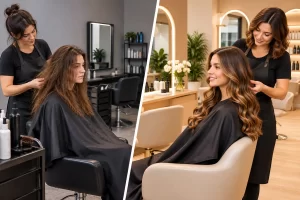
Thick hair can look beautiful, but anyone who has it knows the daily reality is not always glamorous. One haircut feels bulky by week two, another turns into a triangle, and a style that looked polished in the salon can quickly become hard to manage at home. Finding the best haircut for thick hair usually comes down to one thing: choosing a shape that removes weight in the right places without making the hair look choppy, puffed out, or harder to style.
That is why thick hair should never be approached with a one-size-fits-all formula. Density, texture, wave pattern, face shape, and styling habits all matter. The right cut can make thick hair feel lighter, move better, dry faster, and hold its shape longer. The wrong one can leave it heavy at the bottom, too short in the wrong area, or dependent on daily heat styling just to sit correctly.
What makes the best haircut for thick hair?
The best haircut for thick hair is usually one that creates internal movement while keeping a clean outer shape. In simple terms, that means your stylist is not just taking length off. They are controlling bulk, balancing volume, and shaping the cut so the hair works with your natural texture instead of fighting it.
For some clients, that means long layers that soften weight without making the ends look thin. For others, it means a textured bob that removes heaviness near the jawline. If your hair is thick and wavy, a cut that supports the wave pattern often performs better than one designed for straight hair. If your hair is thick and straight, too much layering can sometimes make it flip out or look uneven.
This is where consultation matters. A great thick-hair haircut is customized not just to how your hair looks when styled, but to how it behaves on a regular Tuesday when you have ten minutes and a brush.
The most flattering haircut options for thick hair
Long layers remain one of the most reliable choices for thick hair because they reduce bulk without sacrificing length. When done well, long layers prevent that heavy, one-length effect that can make thick hair feel dense and hard to move. They are especially helpful for clients who wear their hair down often and want more softness around the face and through the ends.
A layered lob is another strong option. Sitting somewhere between a bob and longer hair, the lob gives structure while still offering enough length to pull back or style in different ways. For thick hair, this length can feel fresh and manageable, but the layering has to be intentional. Too blunt, and the shape can feel boxy. Too heavily thinned, and it can look frayed rather than polished.
Bobs can absolutely work on thick hair, but they need the right architecture. A slightly longer bob with internal weight removal often looks better than a short, blunt shape that builds too much width. If your hair naturally expands at the sides, your stylist may recommend keeping a little extra length in front or softening the perimeter so the cut falls closer to the head.
For clients who like medium-length styles, shoulder-grazing cuts with strategic layers tend to offer the best balance. They are long enough to feel versatile, but short enough to reduce some of the drying and styling time that thick hair often demands. This length also works well for women who want movement without going fully short.
If your hair is very thick and textured, a shag-inspired shape can be flattering when tailored correctly. The key is control. A modern shag should create movement and softness, not leave you with too much volume in the wrong areas. It works best when the stylist understands how your texture lives naturally and cuts with that in mind.
Should thick hair have layers?
Usually, yes, but not all layers are helpful.
This is one of the biggest misunderstandings around thick hair. Clients often hear that layers are the answer, then end up with too many short pieces and an overall shape that feels bigger instead of better. Layers should remove weight and improve movement, but they also need to preserve strength through the perimeter.
If the top layers are cut too short, thick hair can puff up. If the ends are over-texturized, the haircut can lose its polished finish. In many cases, longer, blended layers create a more expensive-looking result than aggressive layering throughout.
There is also a difference between layering and thinning. Thinning shears can be useful in skilled hands, but they are not the solution for every head of thick hair. On some textures, too much thinning creates frizz, uneven growth patterns, or weak-looking ends. A better approach is often controlled weight removal through the haircut itself.
Matching the cut to your texture
Thick straight hair usually benefits from shape and structure. Without it, the hair can look flat on top and heavy on the bottom. Soft layers, face-framing pieces, and a strong baseline often help straight thick hair feel sleek without becoming too stiff.
Thick wavy hair needs a haircut that respects the natural bend. If the layers are placed correctly, waves can separate beautifully and create easy movement. If not, the hair may bunch up or widen at the sides. A stylist who cuts with the wave pattern in mind can make a major difference in how the style falls between appointments.
Thick curly hair often does best with deliberate shaping rather than simple length removal. Curls spring up differently depending on where they sit on the head, so balance matters. A haircut that looks even when wet may not behave the same way once dry. This is why texture-aware cutting is so important for dense, curly hair.
Length matters more than people think
A haircut can be technically well done and still not be the best choice if the length does not suit your hair density.
Very short styles on thick hair can be striking, but they require commitment. The density that feels beautiful at one length can become difficult at another, especially if your hair grows quickly or has strong natural movement. Short cuts often need more frequent maintenance to stay polished.
Long hair gives thick strands room to settle, which can reduce puffiness and create a smoother silhouette. The trade-off is maintenance. Longer, thicker hair takes more time to wash, dry, and style. If you love length but struggle with heaviness, long layers or face framing may give you the best of both worlds.
Mid-length cuts are often the sweet spot. They remove some bulk, still feel feminine and versatile, and usually offer easier day-to-day styling. For many women, this is where thick hair starts to feel more cooperative without losing body.
How to know if your current haircut is working against you
If your hair feels wider instead of more balanced, your cut may be holding too much weight in the wrong places. If the ends look bulky and shapeless, there may not be enough internal movement. If your style only looks good after a blowout, your haircut may not be aligned with your natural texture.
Another sign is rapid loss of shape. Thick hair grows out fast visually because there is so much of it. A cut that is not designed well can look overgrown much sooner than expected. That does not always mean you need to go shorter. It may mean you need a better structure from the start.
What to ask for at your appointment
The best salon conversations are specific. Instead of saying you just want less bulk, explain what bothers you most. Maybe your hair gets too wide near the bottom. Maybe it feels heavy at the crown. Maybe you want movement, but not thin ends.
Photos can help, but they should start the conversation, not end it. Your stylist will also need to consider your texture, density, maintenance routine, and how often you come in for trims. A style that looks great on someone with fine hair and a daily blowout routine may not be realistic for someone with very thick hair who air-dries most days.
At Visions Hair Studio, this is exactly why consultation-led haircutting matters. Thick hair responds best when the stylist takes time to assess how it grows, how it lays, and how you actually live with it.
The best haircut for thick hair is the one you can live with
A beautiful haircut should still feel beautiful a week later, when you style it yourself. That is the standard worth aiming for. The best haircut for thick hair is not simply the trendiest one or the shortest one or the one with the most layers. It is the cut that gives your hair shape, removes the right amount of weight, and fits your texture, routine, and personal style.
If your hair has been feeling heavy, hard to manage, or never quite right, the answer may not be more product or more heat styling. It may be a better haircut, designed with intention. The right shape can change how your hair looks, but more importantly, it can change how it feels every day.