A beautiful cut, fresh color, and thoughtful consultation all begin with trust. Clients should be able to settle into the chair knowing that every comb, shear, brush, and clip used during their appointment has been properly cared for. Knowing how to sanitize salon tools is not simply a behind-the-scenes task. It is part of the professional standard that protects guests, supports stylists, and makes a salon feel genuinely comfortable.
At a professional salon, sanitation is a consistent routine rather than a quick wipe-down when the day slows down. Each tool has its own cleaning needs, and the right process depends on whether it is reusable, porous, electrical, or likely to come into contact with skin. The goal is simple: remove visible debris, disinfect reusable implements correctly, and keep clean items protected until they are needed.
Start with the difference between cleaning and disinfecting
These words are often used interchangeably, but they describe two separate steps. Cleaning removes hair, product buildup, oils, and other visible residue. Disinfecting uses an approved product to reduce harmful germs on a clean, nonporous surface.
A disinfectant cannot reliably do its job through a layer of hair spray, color residue, or skin oils. For that reason, every reusable tool should be cleaned first, then disinfected according to the product label. Skipping the cleaning stage may save a minute, but it compromises the entire process.
Sterilization is different again. It is a medical-level process designed to destroy all microbial life, including spores. It is not generally the standard approach for everyday hair tools, but salon professionals should always follow Florida licensing requirements and any additional guidance that applies to their services.
How to sanitize salon tools in the right order
A dependable process keeps sanitation manageable during a busy schedule. Rather than waiting until the end of the day, handle each item immediately after use whenever possible. This prevents residue from drying onto the tool and helps prevent a used implement from finding its way back into the clean supply.
1. Remove hair and visible residue
Start by removing all hair from combs, brushes, clips, shears, clipper guards, and other implements. A dedicated brush or tool designed for this purpose is helpful for clipper blades and brush bases. Then wash nonporous tools with warm water and soap or a suitable cleaning solution, following the manufacturer’s instructions.
Pay attention to hinges, teeth, brush beds, and other small areas where product can collect. Shears should be handled carefully to avoid dulling blades or exposing anyone to an accidental cut. After cleaning, rinse tools as directed and dry them before moving to the disinfection step when the product requires it.
2. Disinfect reusable, nonporous tools
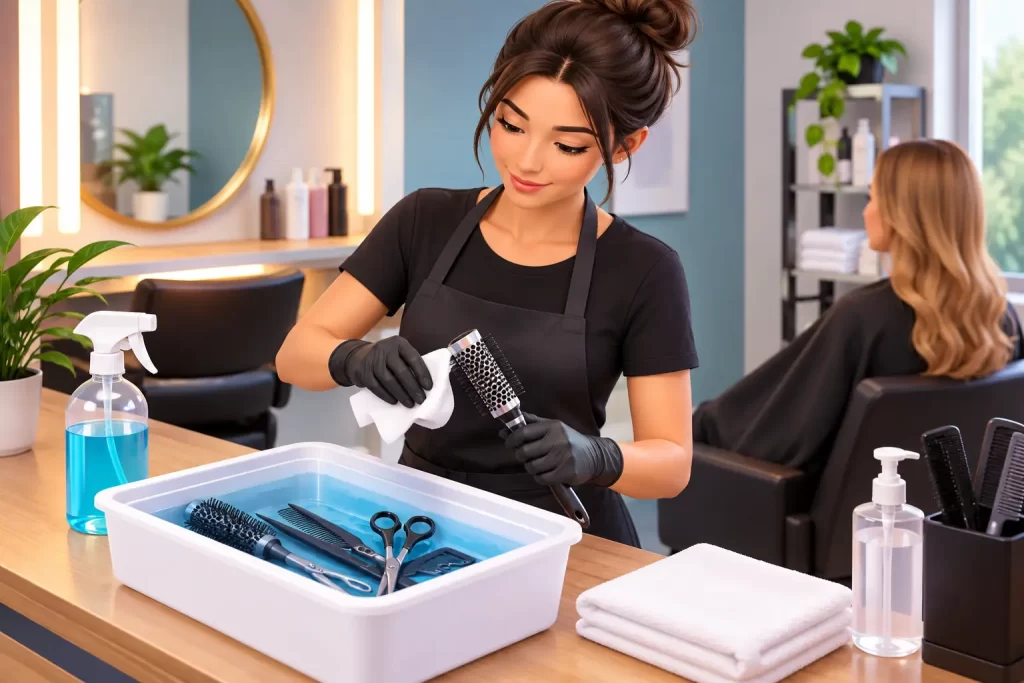
Combs, shears, metal clips, color bowls, certain brushes, and clipper guards are generally nonporous and can be disinfected when they are in good condition. Use an EPA-registered disinfectant labeled for salon tools and follow its directions exactly. The correct dilution, full contact time, and rinsing requirements vary by product.
Immersion is often the most reliable method for tools that can safely be submerged. The item must remain completely covered for the stated contact time, not merely dipped in and removed. If a tool cannot be immersed, use a compatible disinfectant spray or wipe and make sure the surface stays visibly wet for the full required time.
Do not combine disinfectants, guess at dilution ratios, or extend use beyond the solution’s stated replacement schedule. More product is not always better, and improperly mixed products can be ineffective or damaging to tools.
3. Treat electrical tools with extra care
Clippers, trimmers, blow dryers, curling irons, and flat irons require a different approach because water and immersion can damage their electrical components. First remove loose hair and visible debris. For clippers and trimmers, clean the blades with the manufacturer-approved brush and use a compatible disinfectant product intended for the equipment.
Allow electrical tools to cool and unplug them before cleaning. Never spray liquid directly into a motor, outlet area, or heated surface. Wipe exterior surfaces carefully, follow the manufacturer’s care instructions, and let the tool dry fully before it is returned to service. Clippers may also need blade oil after sanitation to maintain performance and prevent corrosion.
4. Separate clean tools from used tools
Sanitizing a tool is only half the job. Once it is clean and disinfected, it needs a protected place to stay that way. Store ready-to-use implements in a clean, covered container, closed drawer, or other protected area that is clearly separate from used tools.
A labeled container for soiled implements can make the workflow much easier, especially when several stylists are moving between appointments. Used tools go in one designated place; cleaned and disinfected tools go in another. This simple separation reduces confusion and supports consistency even during a full day of color, cuts, and styling.
Know what should be discarded
Not every item can be adequately disinfected. Porous or single-use items should be disposed of after one client when they cannot be cleaned and disinfected effectively. This can include neck strips, cotton, applicators, certain files and buffers, wooden sticks, and damaged tools with cracks or worn surfaces.
The same principle applies to tools that no longer clean well. A cracked comb, frayed brush, rusted clip, or worn clipper guard can hold residue in places that are difficult to reach. Replacing it is the responsible choice. Quality tools are an investment, but so is client confidence.
Towels and capes deserve the same attention. Fresh linens should be used for every guest, while used towels and capes should be placed in a covered hamper or closed container until laundering. Wash them with detergent using an appropriate hot-water setting and dry thoroughly before storing them in a clean area. Never reuse a towel or cape simply because it looks clean.
Build sanitation into every appointment
The most effective salons do not treat cleanliness as an interruption to creative work. They build it into the rhythm of service. Before a client arrives, the station is prepared with disinfected tools. During the appointment, items that touch the client are kept organized and off unclean surfaces. After the appointment, used items are cleared, processed, and stored before the next guest is seated.
This routine also includes the station itself. Disinfect countertops, chair arms, shampoo bowls, trays, and other frequently touched nonporous surfaces between clients. Sweep hair promptly, keep color areas orderly, and replace any supplies that are single-use. A polished station signals the same attention to detail clients expect from their finished hair.
There are practical trade-offs to consider. A salon that offers detailed color services or works with a high volume of styling tools may need more duplicate implements so there is never pressure to rush a disinfection cycle. A stylist using specialty brushes may need to check whether the brush materials can be immersed or require a different approved cleaning method. The right system is one that follows product directions and can be repeated reliably all day.
Train, check, and refresh the routine
Sanitation standards are strongest when every team member follows the same process. New stylists and assistants should be trained on where clean tools are stored, how disinfectants are mixed and changed, how long tools must remain wet or immersed, and which items must be discarded after use.
Regular checks help, too. Review product labels, inspect tools for damage, and make sure containers are clean and properly labeled. If a salon changes disinfectant brands, brings in new equipment, or updates a service menu, the sanitation routine may need to change as well. Continued education is not only about the latest cutting or color technique. It is also about protecting the people who trust professionals with their care.
At Visions Hair Studio, a calm, polished appointment is supported by the work clients see and the careful routines they may not. When sanitation is handled with consistency and respect, guests can focus on the reason they came in: feeling listened to, cared for, and confident when they leave the chair.