
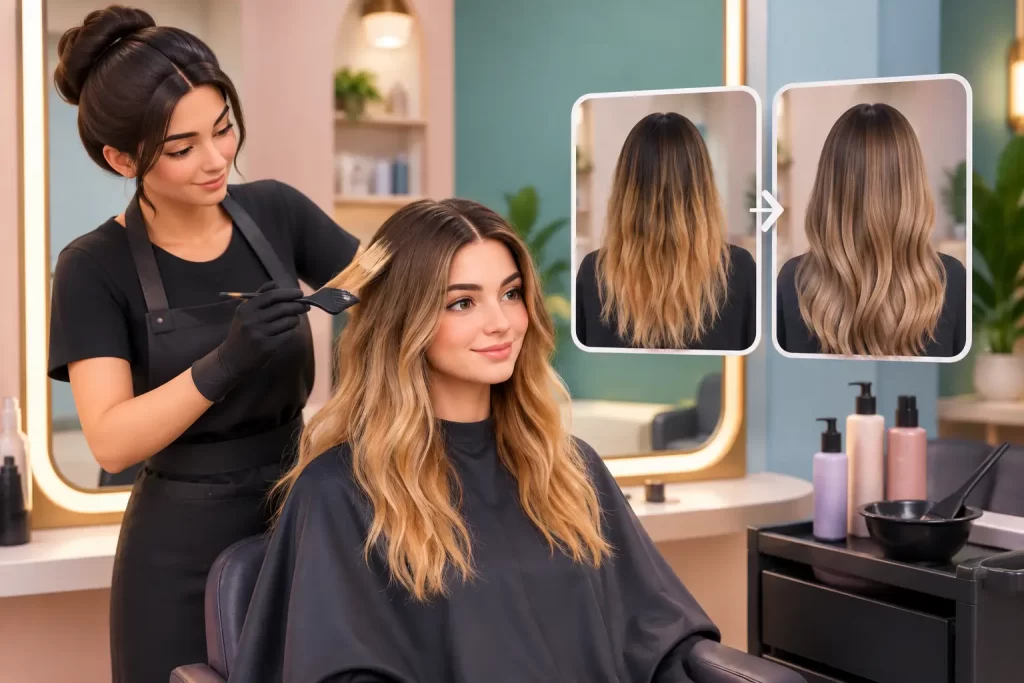
A bright band near the roots, darker ends, warm spots that show up in sunlight, or highlights that no longer blend can make every glance in the mirror feel frustrating. Can salons fix uneven color? In many cases, yes. The right correction can create a more balanced, polished result while protecting the condition of your hair. The key is starting with an honest consultation rather than rushing into another all-over color.
Uneven color is not one problem with one solution. It can be caused by home color, faded professional color, mineral buildup, overlapping lightener, previous highlights, sun exposure, or simply hair that absorbs color differently from section to section. A skilled stylist looks at the full history of your hair before deciding what it can safely handle.
Can Salons Fix Uneven Color Without Damage?
A salon can often improve uneven color significantly, but the safest route depends on what is currently on your hair and where the unevenness appears. Correcting color is not always about making every strand identical. Natural-looking hair has dimension. The goal is usually a cohesive result with intentional depth, brightness, and tone.
If your ends are too dark and your roots are lighter, a stylist may use a gentle color-removal approach, strategic highlights, or a gloss to blend the difference. If your roots are brassy while the rest of your hair is cool, targeted toning may be enough. When highlights look striped or patchy, lowlights and carefully placed foils can soften the contrast and restore a more natural pattern.
The biggest trade-off is timing. Hair that has been repeatedly lightened or colored may not be ready for a dramatic correction in one appointment. Trying to force a major change too quickly can lead to dryness, breakage, or unpredictable color. A responsible stylist will explain whether your desired result is realistic for that day or better achieved through a phased plan.
Why hair history matters
Color services are chemistry, and previous services change how hair responds. Permanent color, box dye, henna, direct dyes, bleach, smoothing treatments, and pool or well water can all affect the correction process. Even a color applied months ago may remain in porous areas of the hair.
That is why openness matters during your consultation. Let your stylist know about every color product, lightening service, and chemical treatment you remember, including at-home products. Bring photos of your hair in natural light if the unevenness is difficult to see at the salon, and bring inspiration photos that show the color you hope to achieve. A photo helps define the destination, but your hair history determines the route.
What Happens During an Uneven Color Correction?
A thoughtful color correction begins before color is mixed. Your stylist should examine your hair in good lighting, assess its elasticity and porosity, and talk through your color history, routine, and expectations. They may recommend a strand test if there is uncertainty about how your hair will lift or absorb pigment.
From there, the service may include one technique or a combination of approaches. A gloss can refine unwanted warmth and add shine. Lowlights can add depth to overly light sections. Highlights can break up a dark or flat-looking result. Root melting and color blending can soften visible lines of demarcation. In some situations, a corrective formula is used to lift or remove artificial pigment before the hair can be recolored.
The service can take longer than a standard color appointment because sections need individual attention. Pricing may also vary based on hair length, thickness, density, the amount of correction needed, and the time required. This is not a vague extra cost. It reflects the additional product, skill, and careful work required to protect the integrity of your hair while creating a balanced result.
At Visions Hair Studio, a complimentary consultation offers the space to discuss those details before making a plan. It is an opportunity to ask direct questions, understand the recommended process, and feel comfortable with the expected maintenance before your service begins.
When a correction may take more than one visit
Some color corrections are straightforward. A toner, gloss, or a few strategically placed lowlights may make a noticeable difference in one appointment. More complex situations often need time.
Multiple visits may be recommended when hair has uneven bands from repeated coloring, very dark artificial color that needs to become much lighter, significant bleach damage, or multiple tones layered throughout the hair. Your stylist may focus first on neutralizing harsh tones and improving blend, then gradually adjust the overall depth or brightness at later appointments.
This approach can feel slower, but it is usually kinder to your hair and more reliable than chasing a dramatic change in a single session. A good correction plan should include both the immediate improvement and the next steps needed to keep your color looking intentional.
How to Prepare for Your Color Appointment
Come to your appointment with clean, dry hair unless the salon gives you different instructions. Avoid covering uneven areas with root sprays, temporary color, or heavy styling products if possible, since your stylist needs to see the true condition and tone of your hair.
Be prepared to discuss what you do not like as specifically as you can. Saying, “My color looks off,” is understandable, but details help: Is the issue too much orange at the crown? Are the ends too dark? Do the highlights look chunky? Does the color appear different indoors than it does outside? Clear observations help your stylist choose the right technique.
It also helps to stay open to a professional recommendation. The image you bring in may be possible, but perhaps not safely in one appointment. Your stylist may suggest a close alternative that flatters your complexion, works with your current level, and keeps your hair in better condition. That is not settling. It is choosing a result that will look beautiful beyond the first day.
What to Avoid Before and After a Correction
Avoid trying another box color to cover the problem before your appointment. While it may seem like a quick fix, adding more pigment can make future correction more complicated, especially if the formula grabs unevenly. Skip at-home bleach, harsh clarifying treatments, and repeated toning experiments as well. These can alter the canvas your stylist needs to work with.
After your service, follow the maintenance guidance you receive. Color-safe shampoo and conditioner, heat protection, and reasonable spacing between washes can help preserve tone and shine. If your stylist recommends a purple or blue shampoo, use it exactly as directed. Overusing a toning shampoo can leave light or porous hair looking dull, overly cool, or uneven again.
Sun, chlorine, hard water, and frequent hot styling all influence how color fades. For some clients, a gloss or toner appointment between full color services keeps the shade balanced without repeating a more intensive process. Maintenance is especially valuable after a correction because it prevents small shifts in tone from becoming a bigger issue later.
Questions Worth Asking During Your Consultation
The best salon experience is collaborative. Ask what is causing the unevenness, what your stylist recommends for the first appointment, and what result you can realistically expect when you leave. Ask whether your hair needs a strand test, whether the plan involves lightening, and how many sessions may be needed to reach your long-term goal.
You can also ask about at-home care, maintenance timing, and how the proposed color will grow out. These questions are not difficult or demanding. They help you make an informed decision and give your stylist the information needed to create a plan that fits your lifestyle.
Uneven color can be discouraging, but it does not mean your hair is beyond help. Give a trained colorist the clearest possible history, allow room for a condition-first plan, and choose the next step based on what will keep your hair looking healthy as well as beautiful.